Pull to refresh

My feed

Rating limit
Level of difficulty
Format
Warning
To set up filters sign in or sign up
Article

Why Would AI Models Self‑Replicate? Maybe It's Not the Models

Level of difficultyEasy
Reading time6 min
Reach and readers4.5K

In a recent Anthropic paper, "AI models may be capable of self-replicating without access to a datacenter", researchers examined how lightweight open-weight models could copy themselves onto compromised consumer and IoT devices and set up local inference there.

The researchers argue that they can. I believe it makes no economic sense.

In this article I look at what the spread of AI actually means, and what it will most likely look like in practice.

Read more
Article

Codex on Your Phone: Remote Setup, Test Results, and Code Review

Level of difficultyEasy
Reading time7 min
Reach and readers3.1K

Codex can run commands on your development computer while you control the task from the ChatGPT app on your phone. The project files, installed tools, and running application stay on the computer. The phone gives you a way to send instructions, answer approval requests, and review the result.

Read more
Article

Crypto Marketing Agencies Sell Reach. Here Are Five On-Chain Metrics Founders Should Ask for Instead

Level of difficultyMedium
Reading time7 min
Reach and readers4.1K

Most agency reports I see before a TGE could be swapped between projects and nobody would notice. Impressions are up. The KOL posts went out on schedule, a quest leaderboard has thousands of entries, and somebody has a screenshot of the ticker trending on X for an afternoon.

Then the token lists.

The holder chart rarely does what the deck implied. The call after launch tends to follow a script: the agency talks about awareness while the founder watches price, and nobody in the room can say how many actual people the campaign brought in (because nobody set out to count them). On-chain metrics fix that, and they’re the reason I think founders should stop treating reach as the main thing they buy from a crypto marketing agency.

The stakes went up last year. CoinGecko counted roughly 11.6 million tokens that stopped trading in 2025, which says a lot about how many launches got attention and kept nobody. Your wallet data is public. You can check which kind of launch you’re paying for.

Read more
Article

Four Paradoxes of the St. Petersburg Game: A Bank That Cannot Go Bankrupt and a Fifth Paradox. Part 2

Level of difficultyMedium
Reading time17 min
Reach and readers4K

Let me recall the game. Peter tosses a coin until it lands heads. If heads comes up on the first toss, Peter pays Paul 1 ducat, on the second 2, on the third 4, and every further toss doubles the payout. The average of this game is infinite, yet no reasonable person will pay twenty ducats for it. That is the first of the four paradoxes from the first part.

The last of the four was about Peter rather than Paul. To run the game, Peter has to promise any payout: heads on the 41st toss, for example, means more than a trillion ducats, 17 times all the gold ever mined. In 1977 the American mathematician Lloyd Shapley titled a paper about this as a question: «The St. Petersburg Paradox: A Con Game?»

Can the St. Petersburg game be run honestly? Nobody can honestly promise an unlimited payout, but Peter can promise a share of the bank instead of a sum: then the promise never exceeds what the bank holds, and the bank does not go bankrupt. We will go step by step through how this works and what happens to each paradox, starting with the fourth: it gives us the bank on which the other sections are built. A fifth paradox will appear along the way.


Read more
Article

How AI Detectors Are Killing Higher Education

Level of difficultyEasy
Reading time5 min
Reach and readers6.1K

Students increasingly use LLMs to write essays, term papers, theses — any assignment that isn't done under an instructor's continuous supervision. Naturally, the higher education system is unhappy about this and is trying to fight back. And the simplest solution is to detect AI-generated texts and reject them.

This article is about the non-obvious ways AI detectors affect education.

Read more
Article

I Spent Five Months Taming GoClaw. Then I Gave Up and Built My Own System

Level of difficultyMedium
Reading time12 min
Reach and readers8.5K

Or why ten users can teach you more than a thousand GitHub stars.

Let me start with a strong opinion: at any company with more than three or four people, local agent harnesses should be banned. Maybe confiscate the developer’s keyboard while you’re at it.

A local harness is a great way to indulge a programmer’s ego, lose everything they’ve learned when they leave, waste hours setting up MCP servers, services, and development environments all over again — and eventually let an agent do something spectacularly stupid on a machine where it has local administrator privileges.

The problem is that there are hardly any mature, multi-tenant harnesses available off the shelf. And the few options that exist often require assembling a complicated system from separate parts.

Read more
Article

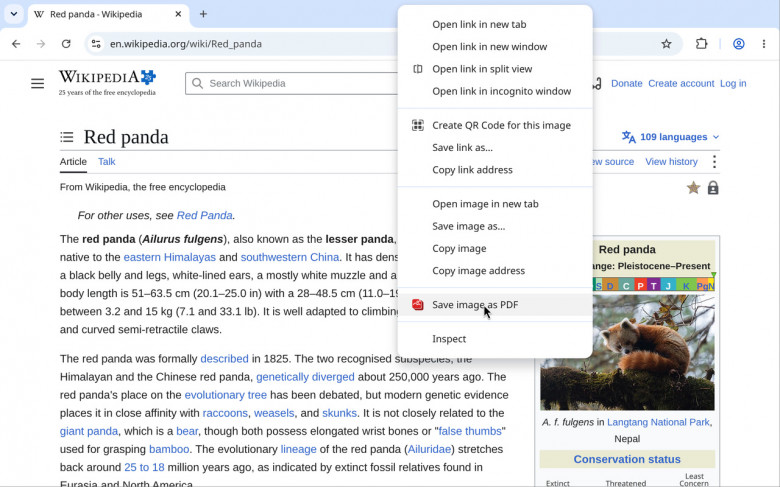
A Right-Click with a Memory: Why I Store a Counter in a Chrome Menu Item's id

Level of difficultyMedium
Reading time5 min
Reach and readers7.1K

My hobby projects are small Chrome extensions and little single-purpose websites. One of those extensions, PDF to PNG, unexpectedly climbed to first place in Chrome Web Store searches for “pdf to png” (well, most of the time), and nearly 500 people use it - which is amazing!

Once PDF to images worked, I immediately wanted to do the reverse - images -> PDF, only better: right-click an image on any page, have an easy(!) way to adjust the settings, and do everything locally in the browser without uploading the images anywhere!

Read more
Article

Four Paradoxes of the St. Petersburg Game: One Coin, Three Centuries and Four Nobel Laureates. Part 1

Level of difficultyMedium
Reading time18 min
Reach and readers6.2K

Two people are playing: Peter and Paul. Peter tosses a coin until it lands heads. If heads comes up on the first toss, Peter pays Paul 1 ducat. If on the second, 2 ducats. If on the third, 4 ducats. And so on: every toss without heads doubles the payout. Paul pays Peter in advance for the right to play. This is the form in which Daniel Bernoulli studied the game in his paper of 1738.

Imagine that Paul is you. How much would you pay Peter for a single game? Answer right away, in ducats, and remember your answer: you will need it at the end of the article. For now, let us assume that 1 ducat equals $10. What a ducat is really worth is in the spoiler after the first paradox.

18th-century mathematicians calculated the price of this game by correct rules and got an answer they themselves found absurd. This is the paradox. The dispute over where the error lies lasted almost three hundred years and led to three more paradoxes. Four future Nobel laureates took part in it.

Read more
Article

Is LLM Interpretability Proven?

Level of difficultyEasy
Reading time3 min
Reach and readers6.9K

A recently published research essay claims that the difficulty of neural network interpretability has been overstated. In his essay on goodfire.com, Nick Cammarata argues that neuron polysemanticity is caused not by superposition but by ordinary, mostly fixable issues — and that most neurons, even in massive models, perform a single, understandable job. The author himself calls the text a working hypothesis: the technical paper with a full description of the experiments has not been released yet. However, as usual, a bold headline and strong claims have sparked numerous retellings in which the hypothesis has turned into established fact.

Below is a quick look at this hypothesis.

Read more
Article

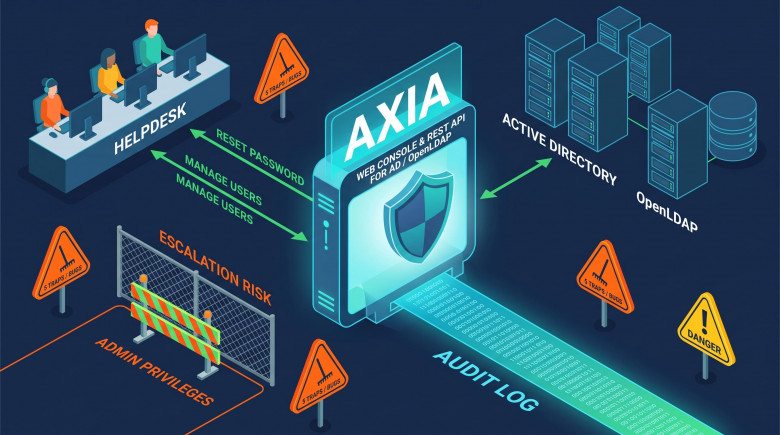
How a helpdesk role could take over the admin: five traps in a web console for Active Directory and OpenLDAP

Level of difficultyMedium
Reading time12 min
Reach and readers5.7K

In Axia 0.1.0, a user allowed to edit accounts and move OUs could reset an administrator’s password in four requests. None of the four broke the rule written to prevent exactly that.

Axia is an open-source web console and REST API for Active Directory and OpenLDAP (.NET 10, React). It exists for a routine every company with a directory knows: create an account, reset a password, add someone to a group, disable a leaver. That work belongs with helpdesk, but helpdesk must not be able to promote itself, and every action must leave a trace.

This is not a feature tour. It is five places where the obvious implementation turned out to be a hole or a bug, and what fixed each one. Most of them have nothing to do with Axia: anyone who builds access control on top of LDAP will run into them.

Read more
Article

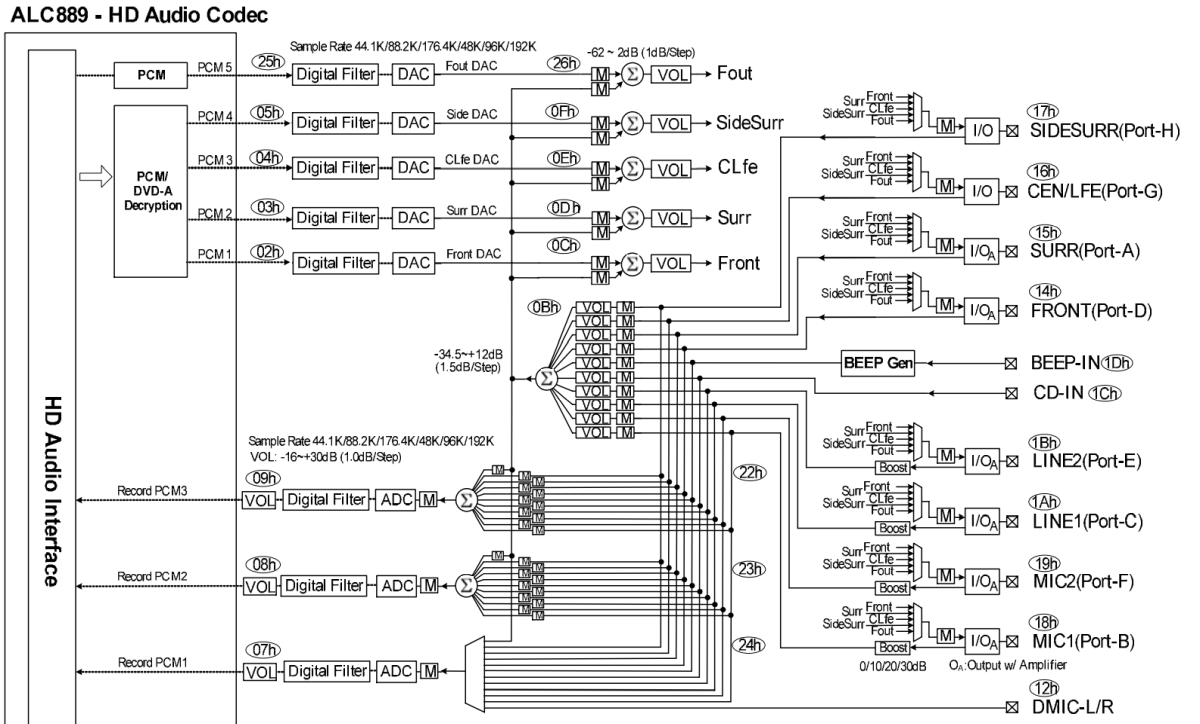
Implementation of the HDA Link interface on RP2040

Level of difficultyMedium
Reading time13 min
Reach and readers6.6K

If you’re looking to set up 10-channel audio output at a 192 kHz sample rate using a MCU, read on. This article explains how to implement multi-channel audio on an RP2040 using an ALC889 HD audio codec. It includes a brief overview of the HDA link interface, along with links to a couple of functional demo projects and descriptions of how they work.

Read more
Article

PostgreSQL 19: CommitFest 2026-03 Part 5.4 (SQL, DEV1, DEV2)

Level of difficultyMedium
Reading time7 min
Reach and readers8K

We’re wrapping up our review of the March CommitFest for PostgreSQL 19. This fourth and final article in the series covers the changes related to SQL and to our DEV1 and DEV2 courses.

As a reminder, here’s the plan for our coverage of the final PostgreSQL 19 CommitFest:

Part 5.1 (QPT)

Part 5.2 (DBA1, DBA2)

Part 5.3 (DBA3, DBS)

Part 5.4 (SQL, DEV1, DEV2) – you are here 🙂

For the earlier CommitFests, see: 2025-07, 2025-09, 2025-11, 2026-01.

Read more
Article

UX design in healthcare apps: a short guide on its peculiarities

Level of difficultyEasy
Reading time7 min
Reach and readers6.1K

Healthcare app development has skyrocketed in recent years, establishing itself as one of the most critical sectors in mobile product design. The demand surged dramatically with the start of the pandemic in 2020 when safety concerns forced the mass cancellation of in-person appointments, driving an abrupt shift toward remote consultations. Today, with the global market value surpassing $300 billion and annual downloads exceeding 300 million, the competition is incredibly fierce. Apart from that, healthcare apps are considered to be among the most complex and challenging software products to build from a UX design perspective. Launching a basic app is no longer enough – you must deliver a flawless, high-performance product that seamlessly caters to a diverse range of users, including patients of all ages and of different health conditions, doctors of various specialities and administrative staff. Above all, a premium healthcare app demands an impeccable interface that strictly adheres to both medical design principles and rigid digital health regulations. 

In this guide we’ve collected the core principles of healthcare UX, along with the typical challenges designers face and the key mistakes to watch out for.  

Read more
Article

Where to Buy Telegram Stars: Prices and a Python Guide to Fragment

Level of difficultyMedium
Reading time5 min
Reach and readers4.8K

I wanted to buy Telegram Stars for less, so I compared the same packages on three websites. SMMESE had the lowest listed price of the three: $15.31 for 1,000 Stars, compared with $16.50 on TgSuperstars and $16.67 on MyStars.tg.

I then traced how a service finds the recipient, pays from its own wallet, and confirms the order. The Python implementation below can become the part of your own Stars website that fulfills purchases.

Read more
Article

PostgreSQL 19: CommitFest 2026-03 Part 5.3 (DBA3, DBS)

Level of difficultyMedium
Reading time9 min
Reach and readers4.9K

We’re continuing our review of the March CommitFest for PostgreSQL 19. This third article in the series covers the changes related to our DBA3 and DBS courses.

As a reminder, here’s the plan for our coverage of the final PostgreSQL 19 CommitFest:

Part 5.1 (QPT)

Part 5.2 (DBA1, DBA2)

Part 5.3 (DBA3, DBS) – you are here 🙂

Part 5.4 (SQL, DEV1, DEV2)

For the earlier CommitFests, see: 2025-07, 2025-09, 2025-11, 2026-01.

Read more
Article

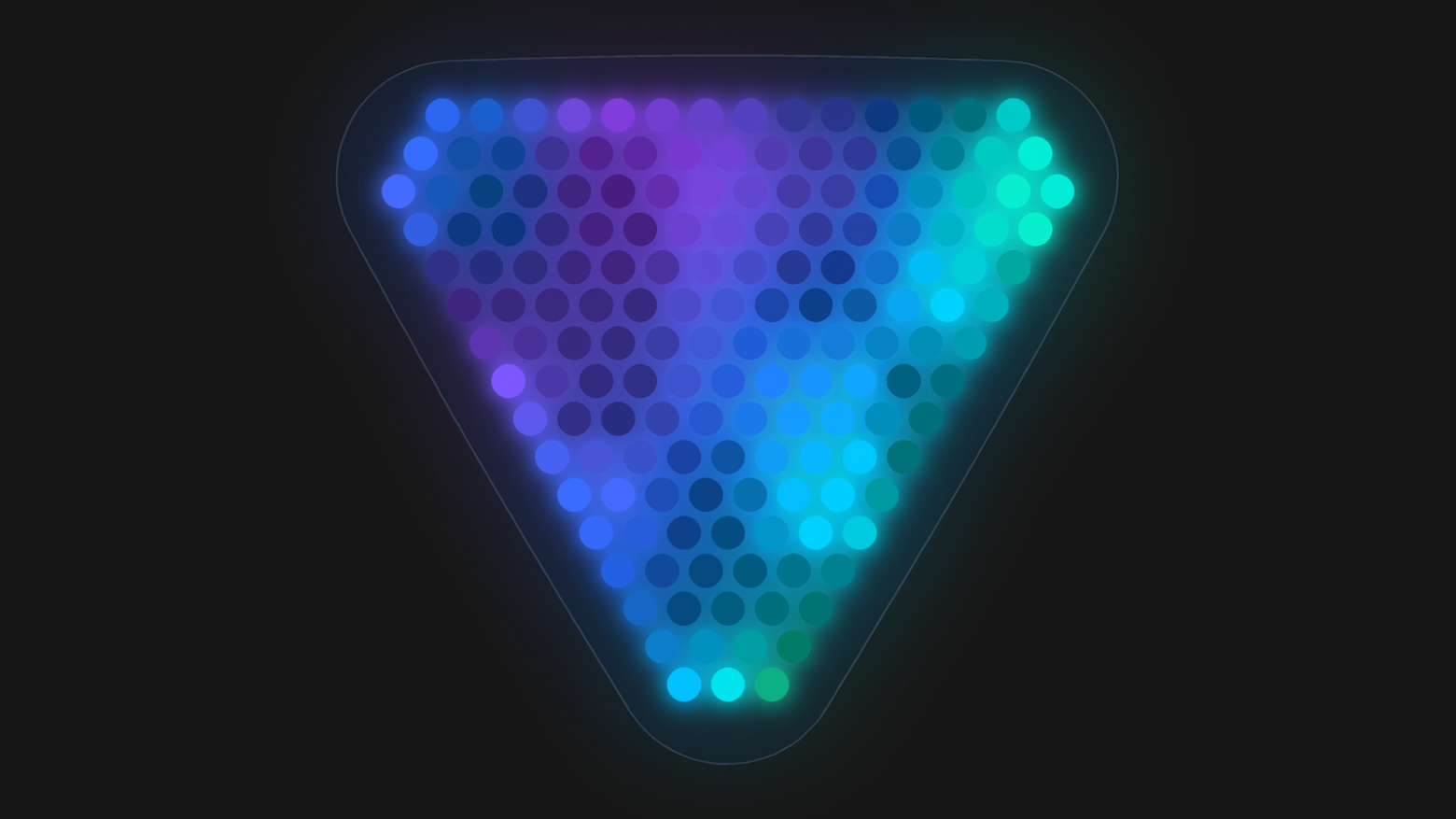
Why the Flydigi dock's lighting looks cheap, and how I wrote my own

Reading time5 min
Reach and readers4.3K

I have a Flydigi Vader 5 Pro controller and its Charging Dock 2 Pro. The dock has 162 RGB LEDs, and the LEDs themselves are good, but the effects in Flydigi's Space Station app look cheap: slow animations step, gradients turn muddy in the middle.

I wondered whether the hardware or the software was to blame. Spoiler: the software. I figured out how the dock receives frames, rewrote the effects from scratch and made my own lighting editor.

Read more
1
23 ...