Pull to refresh
256K+

C++ *

General-purpose programming language. It has imperative, object-oriented and generic programming features, while also providing facilities for low-level memory manipulation

320,48
Rating
Show first
Rating limit
Level of difficulty

How to Get Nice Error Reports Using SARIF in GitHub

Reading time7 min
Reach and readers2K

Let's say you use GitHub, write code, and do other fun stuff. You also use a static analyzer to enhance your work quality and optimize the timing. Once you come up with an idea - why not view the errors that the analyzer gave right in GitHub? Yeah, and also it would be great if it looked nice. So, what should you do? The answer is very simple. SARIF is right for you. This article will cover what SARIF is and how to set it up. Enjoy the reading!

Читать далее

COVID-19 Research and Uninitialized Variable

Reading time2 min
Reach and readers1.3K

0796_covid_sim/image1.png
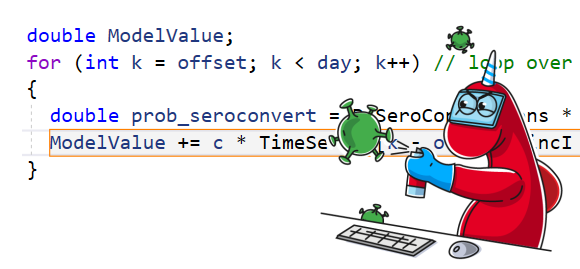
There is an open project COVID-19 CovidSim Model, written in C++. There is also a PVS-Studio static code analyzer that detects errors very well. One day they met. Embrace the fragility of mathematical modeling algorithms and why you need to make every effort to enhance the code quality.

Read more →

Espressif IoT Development Framework: 71 Shots in the Foot

Reading time28 min
Reach and readers1.2K

0790_Espressif_IoT_Development_Framework/image1.png
One of our readers recommended paying heed to the Espressif IoT Development Framework. He found an error in the project code and asked if the PVS-Studio static analyzer could find it. The analyzer can't detect this specific error so far, but it managed to spot many others. Based on this story and the errors found, we decided to write a classic article about checking an open source project. Enjoy exploring what IoT devices can do to shoot you in the foot.

Read more →

Android interop with SWIG (a guide). From simple to weird. Part 1 — simple

Reading time18 min
Reach and readers6K

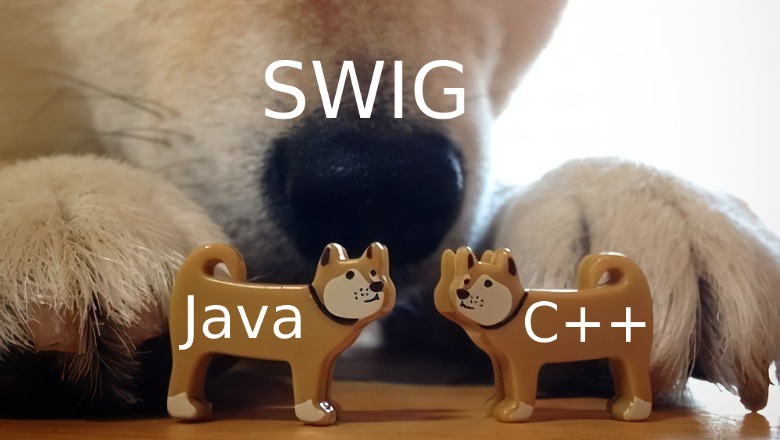
SWIG is a tool for generating cross-language interfaces - it provides interoperability of C++ and other languages (C++ and Java in our case). SWIG just simplifies and automizes cross-language interaction; otherwise, you may end up with thousands of lines of handwritten JNI code - but SWIG covers this for you.

This guide is for newbies (Part 1) and for those who experienced in SWIG (part 2). I'm starting from basic setup and usage and ending with complex & weird cases encountered in development. The latter cases are not so complex, rather usual for modern languages, which SWIG doesn't support yet (as lambdas).

This guide is practical. In opposition to overcomplicated huge-volume SWIG documentation, this guide is showing the cases practically. The bits developed by myself while working on the different projects or taken from StackOverflow. This guide allows you to quick-start an Android Studio project and giving practical examples of using SWIG. The link to the Android Studio project is here.

This guide is Android-first. The goal was to make it simple to onboard for Android developers. There are many articles about SWIG, but they are mainly for desktop Java applications, and it is quite an overhead to just try them on Android to check if the solution for the particular problem is working. While this guide includes an Android Studio project, with which you can play around instantly. Of course, all the information given here applies to any Java application.

Warning! I should warn you, that nowadays cross-platform development offers powerful tools. If you are developing a new application it is much more cost-efficient in practice to use ReactNative, Flutter of Kotlin-Native than the SWIG. While SWIG is more suitable to connect the C++ library or existing C++ application core.

Read more

GTK: The First Analyzer Run in Figures

Reading time5 min
Reach and readers1.2K

For some people, the introduction of a static analyzer into a project seems like an insurmountable obstacle. It is widely believed that the amount of analysis results issued after the first run is so large that only two options seem reasonable: do not mess with it at all or refocus all people on fixing warnings. In this article, we will try to dispel this myth by implementing and configuring the analyzer on a GTK project.

Читать далее

Did It Have to Take So Long to Find a Bug?

Reading time2 min
Reach and readers1.9K
image1.png

Have you ever wondered which type of project demonstrates higher code quality – open-source or proprietary? Our blog posts may seem to suggest that bugs tend to concentrate in open-source projects. But that's not quite true. Bugs can be found in any project, no matter the manner of storage. As for the code quality, it tends to be higher in those projects where developers care about and work on it. In this small post, you will learn about a bug that took two years to fix, although it could have been done in just five minutes.
Read more →

The Code Analyzer is wrong. Long live the Analyzer

Reading time6 min
Reach and readers780
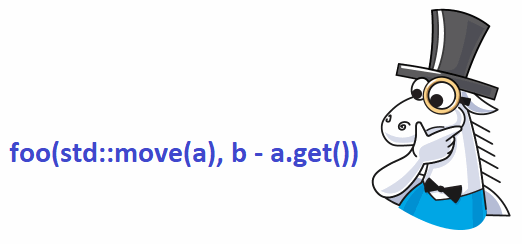
Foo(std::move(buffer), line_buffer - buffer.get());

Combining many actions in a single C++ expression is a bad practice, as such code is hard to understand, maintain, and it is easy to make mistakes in it. For example, one can instill a bug by reconciling different actions when evaluating function arguments. We agree with the classic recommendation that code should be simple and clear. Now let's look at an interesting case where the PVS-Studio analyzer is technically wrong, but from a practical point of view, the code should still be changed.
Read more →

How static code analysis helps in the GameDev industry

Reading time7 min
Reach and readers1.5K
image1.png

The gaming industry is constantly evolving and is developing faster than a speeding bullet. Along with the growth of the industry, the complexity of development also increases: the code base is getting larger and the number of bugs is growing as well. Therefore, modern game projects need to pay special attention to the code quality. Today we will cover one of the ways to make your code more decent, which is static analysis, as well as how PVS-Studio in practice helps in the game project development of various sizes.
Read more →

Why PVS-Studio Doesn't Offer Automatic Fixes

Reading time4 min
Reach and readers845
Why PVS-Studio Doesn't Offer Automatic Fixes

Static analyzer PVS-Studio can detect bugs in pretty complex and intricate parts of code, and coming up with appropriate fixes for such bugs may be a tough task even for human developers. That's exactly the reason why we should avoid offering any options for automatic fixing at all. Here are a couple of examples.
Read more →

ConcurrenCpp — The C++ concurrency library

Reading time31 min
Reach and readers6.5K

Repository


concurrencpp allows applications to write asynchronous code easily and safely by using executors and coroutines.


By using concurrencpp applications can break down big procedures that need to be processed asynchronously into smaller tasks that run concurrently and work in a co-operative manner to achieve the wanted result.


concurrencpp also allows applications to write parallel algorithms more easily by using parallel coroutines.


concurrencpp main advantages are:


  • Being able to write non-blocking, asynchronous code easily by using the C++20 coroutines and the co_await keyword.
  • Being able to write modern concurrent code without having to rely on low-level concurrency primitives like locks and condition variables.
  • The concurrency runtime manages all low-level resources such as threads automatically.
  • Reducing the possibility of race conditions, data races and deadlocks by using high-level objects with built-in synchronization.
  • concurrencpp provides various types of commonly used executors with a complete coroutine integration.
  • Applications can extend the library by using their own provided executors.
  • Applications automatically scale-up to use all hardware processors (cores).
Read more →

Checking Clang 11 with PVS-Studio

Reading time10 min
Reach and readers1.5K
PVS-Studio: I'm still worthy

Every now and then, we have to write articles about how we've checked another fresh version of some compiler. That's not really much fun. However, as practice shows, if we stop doing that for a while, folks start doubting whether PVS-Studio is worth its title of a good catcher of bugs and vulnerabilities. What if the new compiler can do that too? Sure, compilers evolve, but so does PVS-Studio – and it proves, again and again, its ability to catch bugs even in high-quality projects such as compilers.
Read more →

Checking a Header-Only C++ Library Collection (awesome-hpp)

Reading time17 min
Reach and readers1.3K
PVS-Studio and Awesome hpp

Somehow, we've happened to check most of the libraries making up a collection called "Awesome hpp". These are small header-only projects in C++. Hopefully, the information about the bugs we've found will help make the libraries better. We'll also be happy to see the developers use PVS-Studio on a regular basis thanks to the free-license option we provide.
Read more →

Amnesia: The Dark Descent or How to Forget to Fix Copy Paste

Reading time14 min
Reach and readers860
image1.png

Just before the release of the "Amnesia: Rebirth" game, the vendor "Fractional Games" opened the source code of the legendary "Amnesia: The Dark Descent" and its sequel "Amnesia: A Machine For Pigs". Why not use the static analysis tool to see what dreadful mistakes are hidden in the inside of these cult horror games?
Read more →

Checking the Code of DeepSpeech, or Why You Shouldn't Write in namespace std

Reading time13 min
Reach and readers681
DeepSpeech is an open-source speech recognition engine developed by Mozilla. It's pretty fast and ranks high, which makes its source code an interesting target for static analysis. In this article, I'll show you some of the bugs found in DeepSpeech's C++ code.

image1.png

Introduction


We have already scanned a few projects based on machine learning before, so there was nothing new about DeepSpeech to us in this respect. No wonder since the project is quite popular: as of this writing, it has 15k stars on GitHub.
Read more →

Part 2: Upsetting Opinions about Static Analyzers

Reading time4 min
Reach and readers1.2K
Единорог грустит

By writing the article "Upsetting Opinions about Static Analyzers" we were supposed to get it off our chest and peacefully let it all go. However, the article unexpectedly triggered robust feedback. Unfortunately, the discussion went in the wrong direction, and now we will make a second attempt to explain our view of this situation.
Read more →

Upsetting Opinions about Static Analyzers

Reading time2 min
Reach and readers1.4K
Static analysis tools have advanced far over the time they've been around. They no longer resemble the "linters" that were in active use 20 years ago. But some programmers still view them as extremely primitive tools. And that's very sad. It hurts to see the static analysis methodology in general and our PVS-Studio analyzer in particular treated that way.

Read more →

Why it is important to apply static analysis for open libraries that you add to your project

Reading time7 min
Reach and readers971
PVS-Studio and Awesome header-only C++ libraries

Modern applications are built from third-party libraries like a wall from bricks. Their usage is the only option to complete the project in a reasonable time, spending a sensible budget, so it's a usual practice. However, taking all the bricks indiscriminately may not be such a good idea. If there are several options, it is useful to take time to analyze open libraries in order to choose the best one.
Read more →