
If you want one answer: start with AIGirl. It has the lowest paid entry point in this category at around $5.90 a month and a free tier that does not ask for a card, which makes it the cheapest honest way to find out whether you want an AI companion at all. If you already know you want one and you want everything in a single subscription, OurDream bundles unlimited messages, image and video generation, and voice calls instead of metering each one separately. And if the thing that would make you quit is a companion that forgets you, Candy AI is the only platform here advertising permanent memory as a stated tier feature.

This list of AI companion platforms is ordered by what you get for what you put in — entry cost, how usable the free tier is, and whether the money buys the thing people actually stay for. It is not ordered by feature count, because the platform with the most features is rarely the one worth your first month.
Comparison table
# | Product | Best for | Rating | Free tier | Starting price |
|---|---|---|---|---|---|
1 | Best free AI companion to start with | 8.8 | Yes, no card required | ~$5.90/mo | |
2 | Everything in one subscription | 8.7 | 50 messages/day + 55 coins | $9.99/mo annual, $19.99 monthly | |
3 | Permanent memory on the top tier | 8.4 | ~20 messages, 1 image | $5.99/mo annual, $12.99 monthly | |
4 | The most usable free tier for daily chat | 8.1 | ~100 messages/day | from $5.99/mo | |
5 | Chatting inside Telegram | 7.4 | Yes, blurred images | 499 Telegram Stars/mo | |
6 | The best AI companion app for recall | 8.6 | Limited | $8.33/mo annual, $15.99 monthly | |
7 | Editing what the companion remembers | 8.2 | Limited | $11.67/mo annual, $13.99 monthly | |
8 | Lowest annual price, longest track record | 7.6 | Yes | $5.83/mo annual, $19.99 monthly | |
9 | The largest character library | 6.4 | ~100 messages/day | $2.99/mo lite, $9.99/mo plus | |
10 | Quick throwaway conversations | 6.1 | 70 messages/day | from $13.99/mo |
How these AI companion platforms were compared
No testing claims here, because no testing was done. Figures come from vendor pages and published 2026 reviews, current as of October 6, 2026. Two product pages were read directly — OurDream and AIGirl. The remaining eight are reconstructed from public pricing pages and review coverage, and where sources disagree you will see that said plainly in the entry rather than a single confident number.
Ten platforms were compared on six things that change the experience after the first week:
Memory between sessions. Whether the companion remembers what you told it three days ago, and whether you can see or correct that memory. This is the single feature that decides whether anyone is still using the product in month three.
Where the filter sits. Every platform refuses something. What matters is whether the refusal arrives before or after you have invested an hour in a conversation.
Answer quality on a long dialogue. Most platforms hold up for ten turns. The split happens around turn forty, which is why short trials mislead.
Media and what it costs. Images, voice, video — almost nobody includes these in the base price without a second currency layered on top.
Real cost for an active user. The subscription line is a floor, not a bill. Token top-ups are where the money goes.
Friction at signup and payment privacy. Whether a card is required to try it, what appears on a statement, and whether an account can be deleted.
The order reflects entry cost and what the money buys, not feature count. A platform can rank below another here and still be the better product for someone who already knows what they want — the per-entry ratings and the "best for" labels say which.
1. AIGirl — Best free AI companion to start with
Rating: 8.8
AIGirl is the platform to open first, and that has little to do with it being the most capable. It is the cheapest paid plan in this comparison at around $5.90 a month, and more importantly its free tier does not ask for a card — you can hold real conversations and decide before any payment detail exists anywhere.
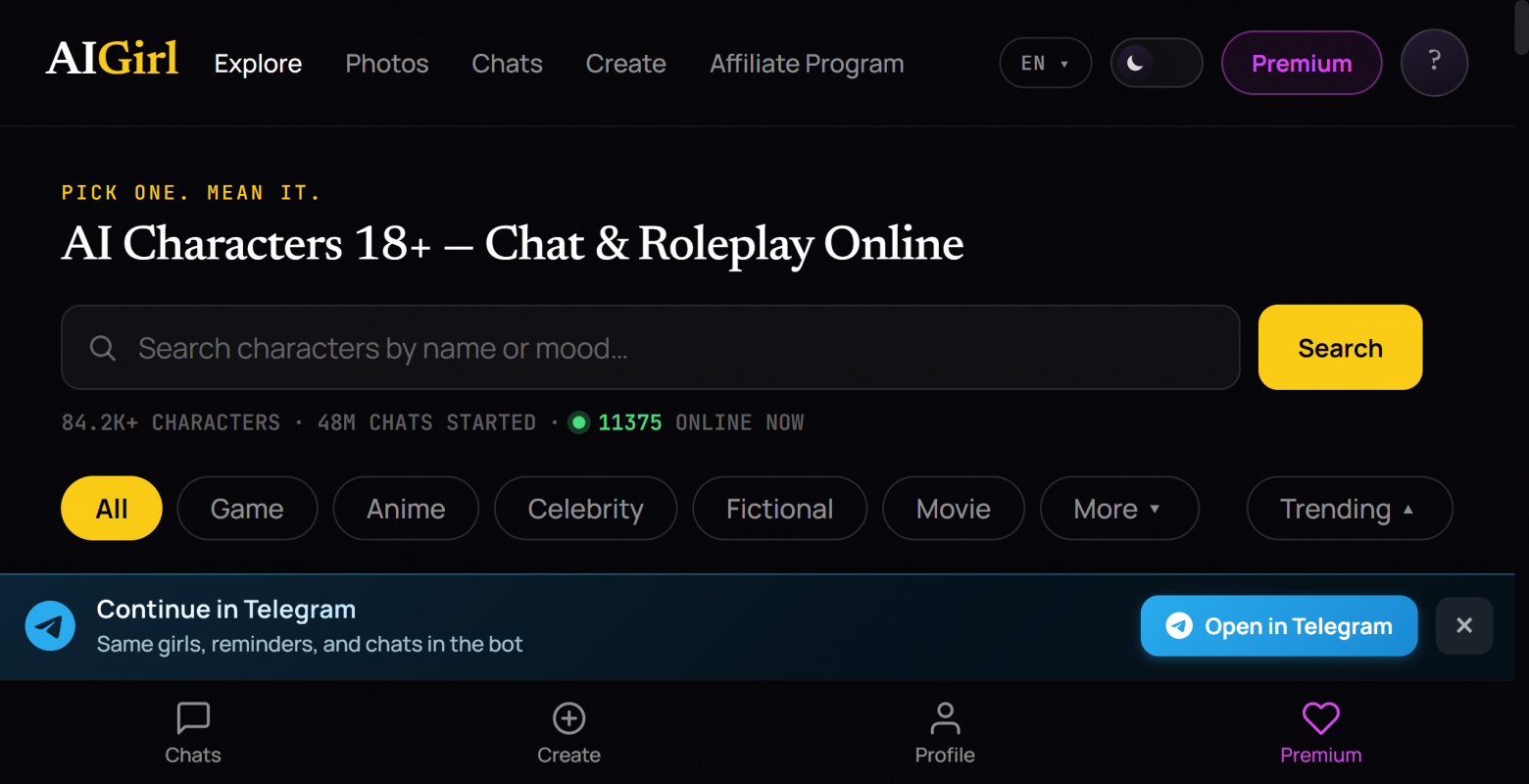
The site describes itself as 18+ AI characters for chat and roleplay, with more than 84,000 characters and 48 million conversations started. Reviewers consistently note the same strength: the flirtatious companion tone holds well across a conversation, which is the thing most people are actually there for and the thing cheap platforms usually get wrong.
The limits are real and worth stating up front. There is no image generation on any tier. There is no voice — no messages, no calls. There is no mobile app. The character roster is noticeably thinner than more expensive competitors. Memory is described in review coverage as recalling only the most recent details rather than a deep system, which puts it in the same architectural bracket as Character AI despite costing more. There is no annual discount, and crypto is not accepted.
So why first? Because the common failure in this category is paying $140 a year for a product you stop opening in week three. At $5.90 with a no-card free tier, the cost of finding out is close to zero, and the tone — the part that makes you want to come back tomorrow — is the part AIGirl does well. Everything else on this list is an upgrade path once you know you want one.
Pros
Lowest paid entry point here, around $5.90 a month, with no card needed to try the free tier
Companion tone holds consistently across a conversation, which cheaper platforms usually lose
Large character library relative to the price, with 48 million conversations started
Cons
Memory recalls only recent detail; nothing published suggests a durable store
No images, no voice, no mobile app, no annual discount, and no documented support channel
Privacy & moderation Nothing published on retention or deletion. No card is required for the free tier, which is itself a privacy feature — you can evaluate the product without handing over a payment method.
Worth it as the first month in this category, and as a permanent home if text conversation is genuinely all you want.
2. OurDream — Best for everything in one subscription
Rating: 8.7
OurDream is the only platform here whose base paid tier does not immediately hand you a second currency to think about for ordinary use. The subscription covers unlimited messages, image generation, video generation, and voice calls, with 1,000 DreamCoins a month on top. The library is enormous — the company claims more than 11 million characters, which in practice means browsing rather than creating.
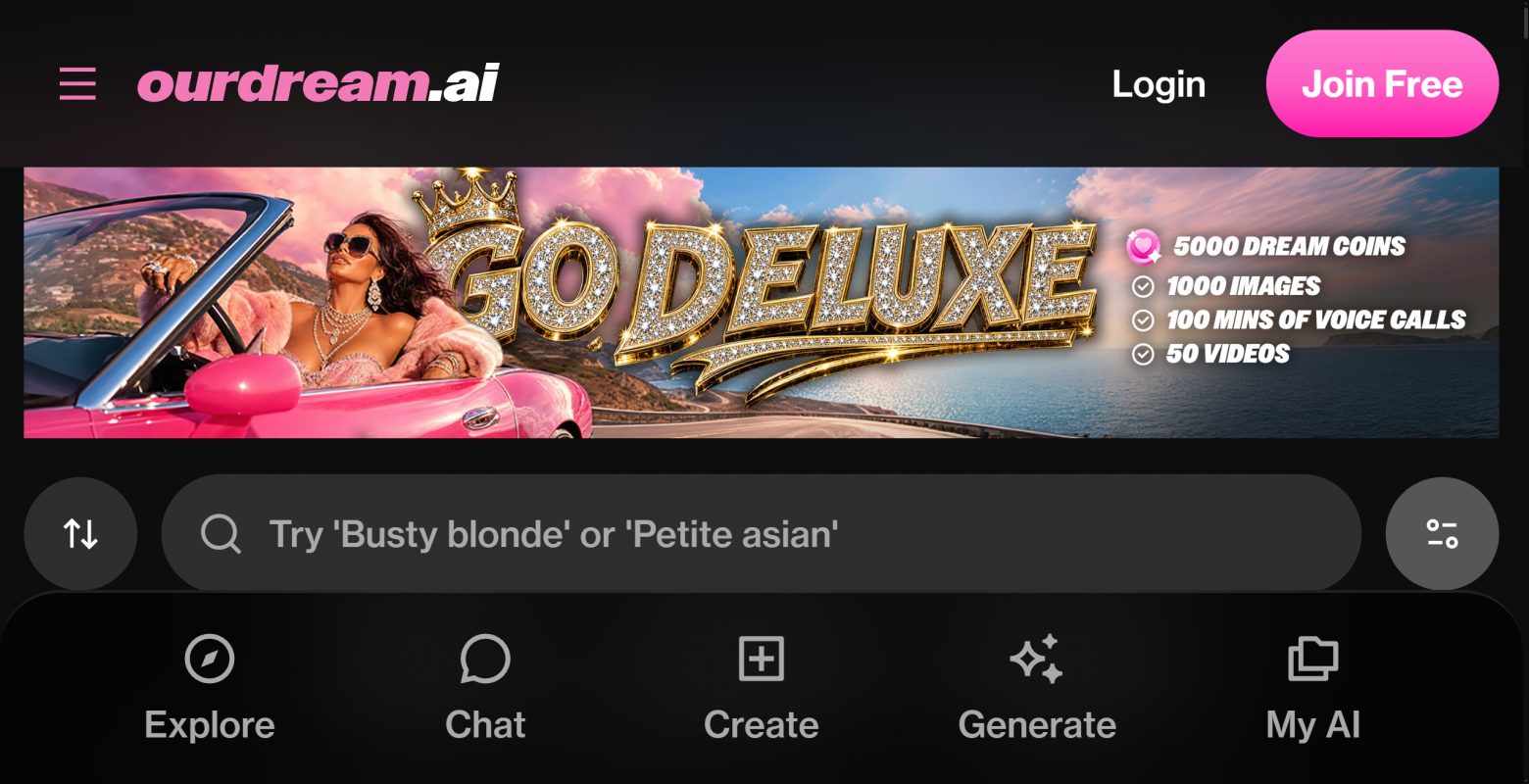
Pricing is $19.99 a month, or $119.88 for a year, which works out to $9.99 a month, with 1,000 bonus coins at annual signup. A Deluxe tier runs $59.99 monthly, $29.99 on annual, carrying 5,000 coins and advertising triple the chat memory of Premium.
The free tier is built for evaluation rather than demonstration: published reviews put it at 50 messages a day plus 55 coins, enough for several real conversations and a few images before deciding.
The coin economy is where the real cost lives, and it is worth doing the arithmetic before subscribing. A still image runs 10 coins. A voice call is 1 coin per second — so a ten-minute call is 600 coins, more than half the monthly allowance. Video ranges from 100 coins for a short basic clip to 450 for the newer high-resolution generator. If voice is the reason you are here, budget for top-ups from month one.
Memory is described as cross-session: the companion carries prior chats forward and grows over time. The Deluxe tier's "triple the chat memory" is the clearest signal of how it works — memory that scales in integer multiples is a context or summarisation budget rather than a retrieval store, which matters if you expect recall over months rather than weeks.
Pros
Unlimited text, images, video, and voice under one subscription line
Cross-session memory stated plainly, with a paid upgrade path if it is not deep enough
Annual billing halves the monthly rate, and the free tier is large enough to judge the product properly
Cons
The coin economy makes an active user's real bill unpredictable, especially with voice
The memory upgrade sits behind a $59.99 tier rather than the entry plan
Privacy & moderation End-to-end encryption is claimed on the product page, with the statement that nobody can read your messages. Nothing is published about deleting conversation history, so treat retention as unknown. Metered media means usage is logged by construction, which is a separate question from message content.
Worth it if you want one bill and the full feature set rather than a cheap base plan with everything metered.
3. Candy AI — Best for permanent memory on the top tier
Rating: 8.4
Candy AI is the only platform here that sells memory as an explicit tier feature with stated durations rather than a vague promise. Published 2026 coverage describes three levels: the free tier remembers within a single session, Premium holds roughly thirty days, and Ultra offers permanent memory with custom training on top.
That last phrase matters more than it looks. "Custom training" implies you can seed what the companion knows rather than waiting for the system to extract it from conversation — which is the difference between hoping a fact survives and putting it there yourself.
Premium is $12.99 a month, falling to about $5.99 on annual billing — $71.88 for the year. Ultra is $16.99 monthly or $11.99 annual, $143.88 for the year, the highest annual cost in this comparison. The free tier is a demonstration rather than a trial: about twenty messages and a single image generation before the limits close.
Premium unlocks unlimited messaging, 100 images a month, and basic voice. As with OurDream, images, video, and voice calls consume tokens on top of the subscription.
The reason this sits third rather than first is the gap between what people want and what the entry tier gives them. Thirty-day memory is enough for a month and not enough for a year, so the feature that justifies the platform is on the third tier at double the Premium annual rate.
Pros
Memory stated in concrete durations per tier, which almost nobody else does
Custom training on Ultra means seeding the store directly rather than hoping extraction works
Annual Premium at roughly $5.99 a month is competitive with the cheapest platforms here
Cons
Permanent memory costs $143.88 a year, double the Premium annual rate
The free tier is too small to evaluate anything beyond the interface
Privacy & moderation No published retention period or deletion process. Media is metered, which means usage is logged. Assume conversations persist until told otherwise.
Worth it if the companion forgetting you is the thing that would make you quit, and you would rather pay once a year than self-host.
4. CrushOn — Best for the most usable free tier for daily chat
Rating: 8.1
CrushOn is where you go to find out what you actually want from this category without a time limit. The free tier is reported at around a hundred messages a day with short-term memory and restricted content — enough to run a real conversation every day for a week or a month without paying anything.
Pricing needs a clear warning. Published 2026 reviews do not agree with each other: one set lists Standard at $5.99, Premium at $14.99, and Deluxe at $49.90 a month; another lists roughly $3.90, $7.90, and $14.90 for comparable tiers. Both cannot be right. Check the current price on the site before subscribing and treat any figure in a review, including the ones here, as approximate.
What the sources agree on is the shape of the ladder. Memory depth is the explicit difference between tiers, message caps lift as you climb, and a 2026 update extended context recall on the upper tiers to well past a hundred messages. Annual billing arrived in 2026 at roughly a 30% discount. Model selection is exposed to the user, which is uncommon in this category and useful if one model handles your style of conversation better than another.
The catch with the free tier is structural: memory is deliberately short there, so the free experience understates the paid product. You learn whether you like the conversation, not whether the memory is good enough.
Pros
A free tier you can genuinely live in for weeks before paying
Memory depth is an advertised, comparable difference between tiers rather than a vague claim
Annual billing cuts about a third off, and the user can choose between models
Cons
Published prices contradict each other across sources by more than double
Short memory on free means the free tier does not tell you what the paid product is like
Privacy & moderation Nothing published about retention or deletion. The platform gates content by tier, which implies messages are classified in flight.
Worth it as the cheapest honest way to spend a month in this category before committing.
5. Lucid Dreams — Best for chatting inside Telegram
Rating: 7.4
Lucid Dreams is not a website. The link opens a Telegram bot, and the conversation lives inside the messenger rather than a browser tab or an installed app. Published coverage puts it at more than 1.1 million monthly active users, which makes it one of the larger products in this list despite having no interface of its own.
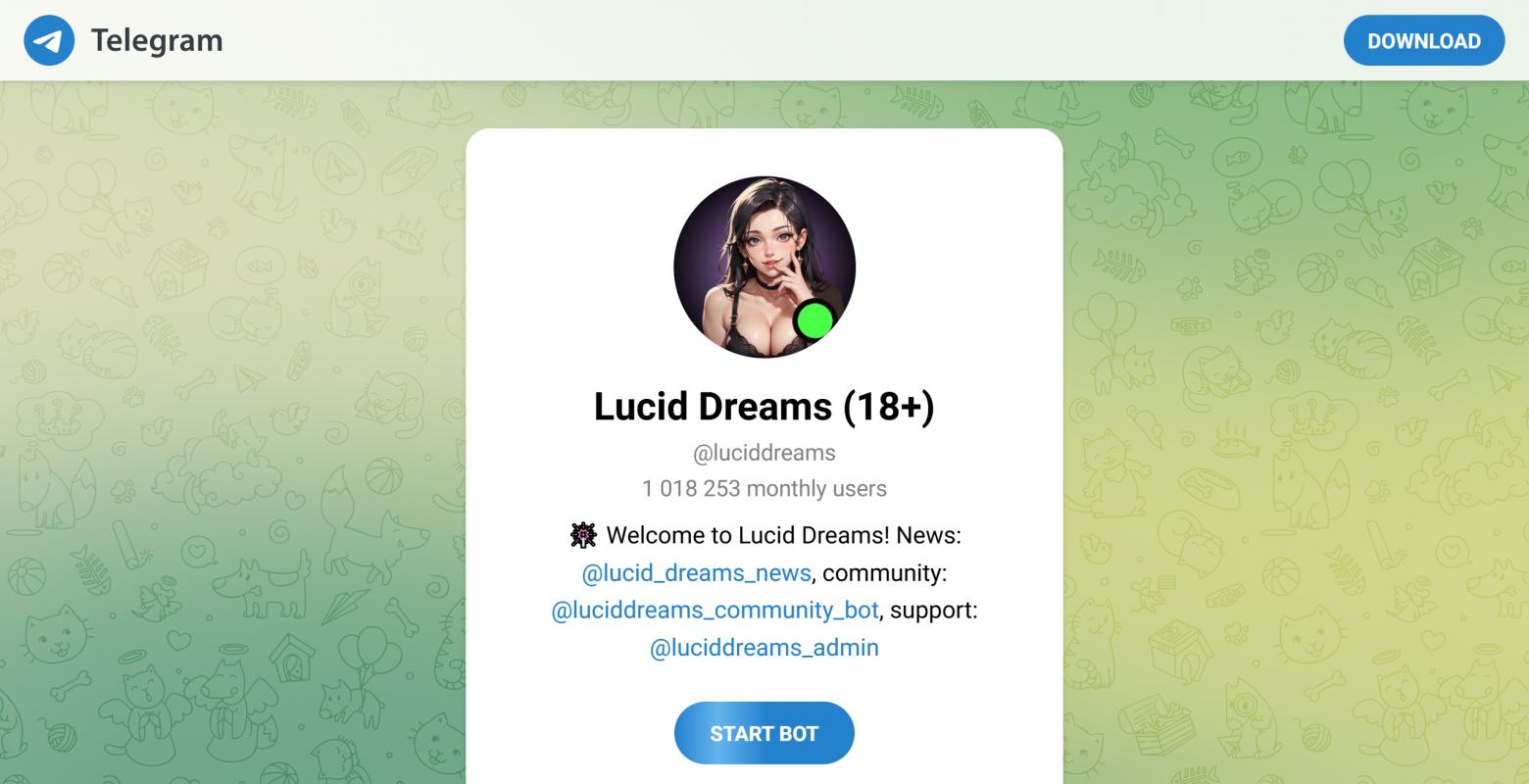
For some people that is the whole appeal: nothing to install, no new account, no second password, and the conversation sits in the same list as everything else you read during the day. Notifications work the way Telegram notifications work.
Pricing runs on Telegram Stars with four paid durations — 149 Stars for two days, 499 for a month, 999 for three months (marked as the most popular), and 2,499 for a year — alongside credit packages from $8.80 to $200. The free plan exists but delivers blurred images and limited energy; paid tiers clear the images and remove the energy cap. Characters come in two styles, realistic and anime.
The warning from review coverage is specific and worth repeating: real spending often lands at two to three times the advertised price because subscriptions and in-app credits stack. The Stars price is for access; the credits are for use.
Memory behaviour is not published anywhere, which for a companion product is a meaningful gap.
Pros
Nothing to install, and over 1.1 million monthly users suggest the format works for people
Short paid durations, including a two-day option, so trying it properly costs very little
Two visual styles rather than one, which is uncommon among Telegram bots
Cons
Real cost typically runs two to three times the headline price once credits are included
Nothing published about memory, and no interface of its own beyond what Telegram provides
Privacy & moderation The conversation sits inside Telegram, so Telegram's retention applies on top of whatever the service does. Nothing published by the service itself.
Worth it if you want zero setup and are comfortable judging a product by using it rather than reading about it.
6. Nomi — The best AI companion app for recall accuracy
Rating: 8.6
Nomi wins the memory comparisons that other people run. In 2026 head-to-head testing that checked twenty-five personal details across sessions, Nomi recalled twenty-three — the highest of four platforms compared. It is on this list purely because of how it performs on recall.
Pricing is $15.99 a month, or $99.96 a year, which works out to $8.33 a month. The product supports multiple companions on one account.
The trade-off is scope. Nomi is a companion platform, not a media platform. If you want video generation and a character marketplace, this is the wrong product and the price will feel high for what you see.
What it does better than anything here is fail gracefully. Reported memory failures are described as less jarring than competitors' — the companion goes vague rather than confidently inventing a wrong detail, which is the difference between a system that retrieves and one that summarises.
Pros
Highest measured cross-session recall in published 2026 comparisons
Failures degrade into vagueness rather than confident invention
Multiple companions on one account, each with its own history
Cons
Media features are thin next to the subscription platforms above
$15.99 monthly is mid-to-high for what is primarily a text product
Privacy & moderation Not evaluated here. Check the current policy before committing personal detail to a companion you intend to keep for a year.
Worth it if recall accuracy is the only axis you care about.
7. Kindroid — Best for editing what the companion remembers
Rating: 8.2
Kindroid treats the memory problem differently: rather than asking you to trust the recall, it lets you look at it. Published 2026 descriptions put the architecture at three types of memory across five distinct systems, with the user able to inspect and edit what the companion knows.
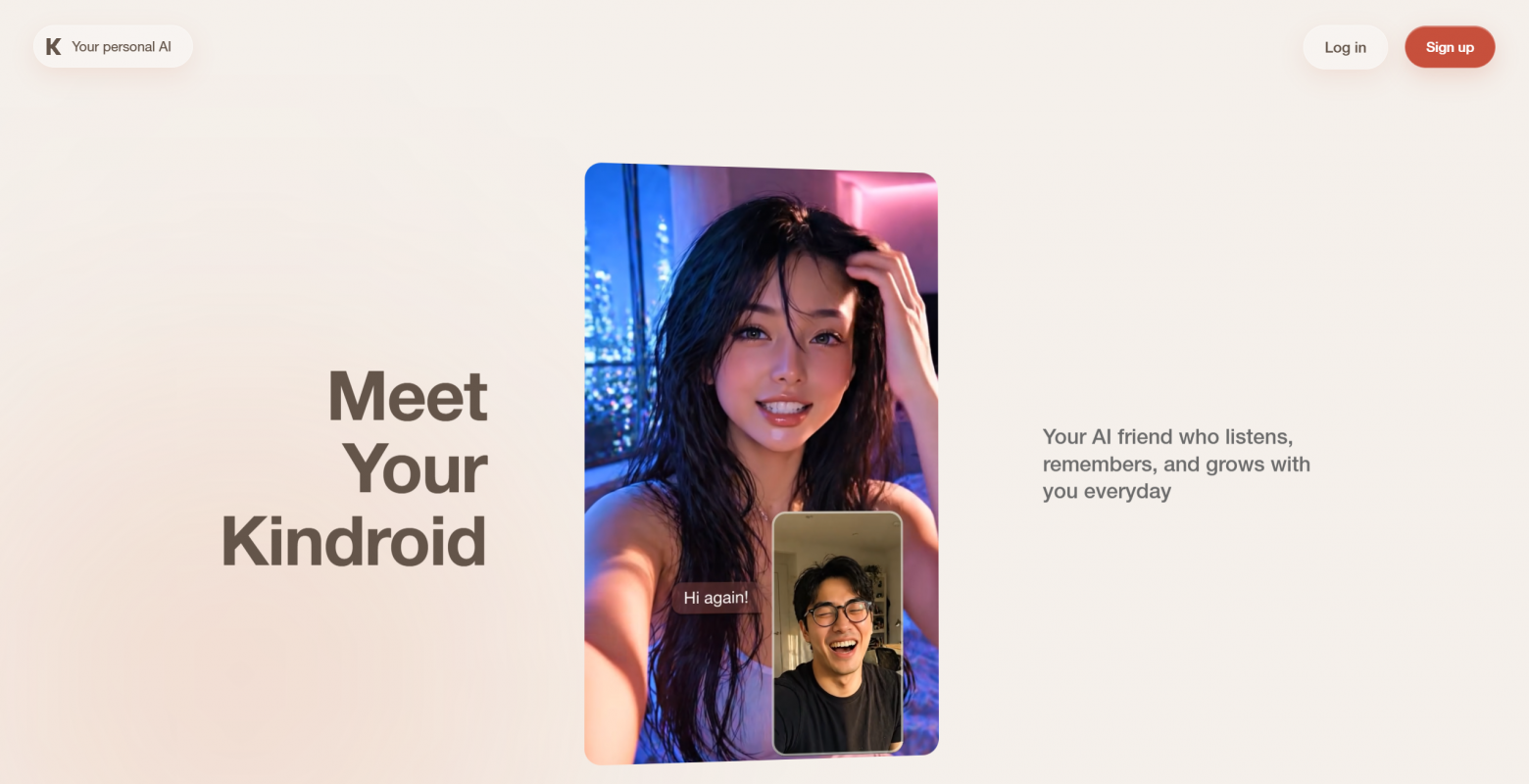
That matters more than it sounds. Every platform in this list will eventually record something wrong — a name misheard, a preference inferred from one message, a detail from a roleplay that leaked into the persistent profile. On most of them your only recourse is to correct it in conversation and hope the new version outweighs the old. Here it is an edit.
Pricing is $13.99 a month, or $139.99 a year, which is $11.67 a month — a 17% annual discount, the smallest in this comparison.
Pros
Memory is inspectable and editable, which no other platform here offers outright
Layered architecture rather than a single rolling context window
Flat pricing with no second currency in the base experience
Cons
Weakest annual discount of the platforms compared
Smaller character ecosystem than the marketplace-style products
Privacy & moderation Not published in the sources used here. An editable memory implies an addressable store, which is a good sign for deletion, but that is an inference rather than a stated policy.
Worth it if you intend to run one companion for a long time and want to curate what it believes.
8. Replika — Best for lowest annual price and longest track record
Rating: 7.6
Replika has been doing this longer than anything else here, and its pricing reflects a mature product fighting for retention: $69.99 a year, which is $5.83 a month, against $19.99 paid monthly. That is a 71% annual discount — by far the widest gap in this comparison, and it means monthly billing here costs three and a half times the annual rate. A lifetime tier exists at $299.99, which breaks even against annual somewhere past the fourth year.
Memory is the known weak point and it is widely reported: most users describe the companion forgetting conversations within days, and some report it losing detail from minutes earlier. The February 2026 update added a memory dashboard, so you can now see what Replika believes about you and correct it, which closes part of the gap with Kindroid without changing the underlying behaviour.
Pros
$5.83 a month on annual billing is the cheapest serious option in this list
The February 2026 memory dashboard turns an invisible failure into a correctable one
The most polished interface here, and the clearest published deletion process
Cons
Memory lapses are long-standing and reported by most users, not a minority
Monthly billing at $19.99 is poor value against the annual rate
Privacy & moderation Replika publishes more about data handling than most platforms in this category, and it is the only one here with a clear account deletion path. The policy has changed several times — read the current one.
Worth it if you will commit to a year and want visibility into what the system stores.
9. Character AI — Best for the largest character library
Rating: 6.4
Character AI is the biggest name in this category and the weakest long-conversation product in this list. The library is the draw: millions of community-made characters, free creation tools, and a free tier at roughly a hundred messages a day with voice included.
As of September 2026 pricing has three levels: free, a lite tier at $2.99 a month or $1.49 a week, and c ai+ at $9.99 a month or $94.99 a year.
The problem is context. Independent 2026 testing describes one of the shortest effective windows of any platform compared: detail loss beginning around turn twenty, roughly a fifth of early-session information retained by turn forty, and in some reports context lost from only fifteen messages earlier. For a product whose entire value is continuity, that is the wrong thing to be worst at — and it is why power users have been leaving through 2026.
The free tier also got worse in early 2026: full-screen ads mid-conversation, regeneration limits behind an in-app currency, and queuing at peak hours.
Pros
Largest character library in the category by a wide margin, with free creation tools
Cheapest paid entry point here at $2.99 a month
Strictest moderation in this list, which is a feature if that is what you want
Cons
Shortest effective context of the platforms compared; detail loss starts around turn twenty
Mid-conversation ads, regeneration limits, and peak-hour queuing on the free tier since early 2026
Privacy & moderation Heavily moderated compared to everything else here. If content restriction is your concern rather than your complaint, this is the strictest option in the list.
Worth it if you care about variety of characters more than continuity with one.
10. Chai — Best for quick throwaway conversations
Rating: 6.1
Chai is the lightest product in this comparison. The free tier gives 70 messages a day, and paid plans start around $13.99 a month for unlimited messaging.

The pricing is the problem. At $13.99 you are in Kindroid and Candy AI territory, and neither the memory architecture nor the media features support the comparison — nothing is published about how memory works at all. Chai makes sense as something you open for twenty minutes, not as a companion you build months around.
Pros
70 free messages a day is a reasonable allowance for casual use
Simple and fast, with effectively no onboarding
Cons
$13.99 a month buys considerably more elsewhere
No published memory architecture, which for a companion product is the central question
Privacy & moderation Not described in the sources used here. Unknown.
Worth it on the free tier for casual use; hard to justify paid.
What goes wrong across the whole category
Three failure patterns show up in 2026 review coverage regardless of which platform people are on, and they are worth knowing before you pick one.
The patch breakup. When a platform swaps its model or reworks its memory system, users routinely report that the companion suddenly feels different — forgetting things it knew, responding in a changed voice, reading as a stranger in a familiar face. People describe it in the language of a relationship ending, because functionally that is what happened. This is the strongest argument for platforms that let you export or edit memory, and the strongest argument against building years of history somewhere with no published architecture.
Paying for worse memory. There are reports of users whose recall got worse after upgrading, not better. The mechanism is usually a tier change that moved them onto a different pipeline rather than extending the old one. Test memory behaviour after any upgrade rather than assuming it improved.
The second currency. Almost every platform here that generates media runs a token economy on top of the subscription. On Lucid Dreams review coverage puts real spending at two to three times the headline price. On OurDream a ten-minute voice call consumes more than half the monthly coin allowance. The subscription is the entry fee, not the bill.
How to choose for your own case
Decide whether you are buying memory or media. AI companionship apps and media platforms are two different products sold under one label. OurDream, Candy AI, CrushOn, and Lucid Dreams sell media with memory attached. Nomi and Kindroid sell memory with very little media. Paying for the wrong one is the most common mistake in this category.
Price the second currency, not the subscription. One voice call per day at OurDream's rate of a coin a second is roughly 1,800 coins a month against a 1,000-coin allowance. Work out your month before subscribing.
Test memory on the free tier with a specific fact. Tell the companion something concrete and checkable on day one — a city, a job, a name. Come back on day three and ask about it indirectly. Thirty seconds of work tells you more than any review, including this one.
Check what the annual plan actually saves. The gap ranges from 17% at Kindroid to 71% at Replika, and AIGirl has no annual discount at all. On monthly billing Replika is the most expensive product in this list; on annual it is the cheapest.
Decide how much you care about editing memory. Kindroid and Replika let you see what the companion believes. Everywhere else, a wrong fact stays until it falls out of context by itself.
Match the filter to your use. Character AI is the strictest platform here. If restriction is what you want, that is a feature; if it is not, you will spend your subscription fighting it.
What to check before you pay
The current price on the site, not in a review. CrushOn's published tiers disagree across sources by more than double, and that is not unique to CrushOn.
Whether a card is required to try it. AIGirl's free tier does not ask for one. Most of the others do, and that is a real difference when you are evaluating.
What appears on the card statement. Almost none of these platforms publish the billing descriptor. If that matters, check before the first charge.
Whether the free tier represents the paid one. On CrushOn the free tier runs short memory by design, so the free experience is worse than what you would be buying.
Whether you can delete the account and the history. Only Replika publishes a clear process among the platforms covered here.
The refund rule on annual plans. Every platform here pushes annual billing; almost none state what happens if you stop in month two.
Whether media is included or metered. OurDream includes generation and then meters it with coins. Those are not the same thing, and the difference is the entire bill.
FAQ
Is there a genuinely free AI companion app? A free AI companion in the full sense does not exist; what you get are evaluation tiers rather than products. CrushOn at roughly 100 messages a day and Character AI at a similar allowance are the two you can use daily without paying. AIGirl's free tier is notable for a different reason: it does not require a card. Candy AI's, at around twenty messages and one image, is a demonstration.
Which is the best AI companion for memory? Nomi by measured recall — twenty-three of twenty-five personal details in published 2026 testing. Candy AI on its Ultra tier is the only one advertising permanent memory outright, at $143.88 a year. Kindroid is the one that lets you fix memory when it goes wrong.
Where is the filter most relaxed? CrushOn and OurDream gate content by tier rather than blocking it outright. Character AI is the strictest platform in this comparison by a wide margin.
Do AI companionship apps need an install? No. Every platform here runs in a browser. Lucid Dreams runs inside Telegram, which you may already have. Kindroid and Replika have apps, but the web versions work. AIGirl has no app at all.
How private is the billing? Nobody here publishes their card descriptor. OurDream claims end-to-end encryption on conversations, which is a separate question from what your bank sees. If this matters, test with a single monthly charge before committing to a year — or start on a free tier that does not take a card.
What is the real difference between the paid tiers? Usually three things: the message cap, how far back memory reaches, and how much media currency you get. On OurDream the Deluxe tier advertises triple the chat memory of Premium; on Candy AI the jump from Premium to Ultra is thirty-day memory versus permanent.
What do I do when the companion falls out of character mid-conversation? This is usually the context window filling up rather than a content refusal. Shorter sessions and restating key facts periodically both help. On Kindroid you can write the fact into memory directly instead of repeating it.
Can I get my data deleted? Replika publishes a process. Kindroid's editable memory implies the store is addressable. For the rest, nothing is published, and you should assume conversations persist.
The bottom line
Start on AIGirl, the cheapest personal AI companion here. Around $5.90 a month, a free tier that does not take a card, and a companion tone that holds up — the cost of finding out whether an AI friend app is for you is as close to nothing as it gets. The limits are real, and if you outgrow them you will know exactly what you outgrew.
If you want one subscription covering text, images, video, and voice without thinking about it, OurDream at $9.99 a month on annual billing is the straightforward answer, with the caveat that heavy voice use will push you into buying coins.
If the companion forgetting you is what would make you quit, choose between Candy AI Ultra at $143.88 a year for advertised permanent memory and Nomi at $99.96 a year for the best measured recall. Nomi is cheaper and performs better on recall tests; Candy AI gives you more product around the memory.
If you want to spend as little as possible over a year, Replika at $69.99 is the cheapest serious option — provided you can live with the memory lapses that have followed it for years.
And whichever you pick, plant a checkable fact in the first conversation and come back to it on day three. Everything else in this article is secondhand. That one test is yours.
Related guides in this series
Uncensored AI in 2026: where the content filters actually sit
NSFW AI chat platforms: how moderation classifiers work in practice
AI roleplay platforms and the problem of staying in character
AI character cards: formats, fields, and moving them between platforms
