Pull to refresh
107.89

C# *

Multi-paradigm programming language encompassing strong typing, imperative, declarative, functional, generic, object-oriented (class-based), and component-oriented programming disciplines

Show first
Period
Level of difficulty

Announcing free C#, .NET, and ASP.NET for beginners video courses and tutorials

Reading time1 min
Reach and readers1.4K
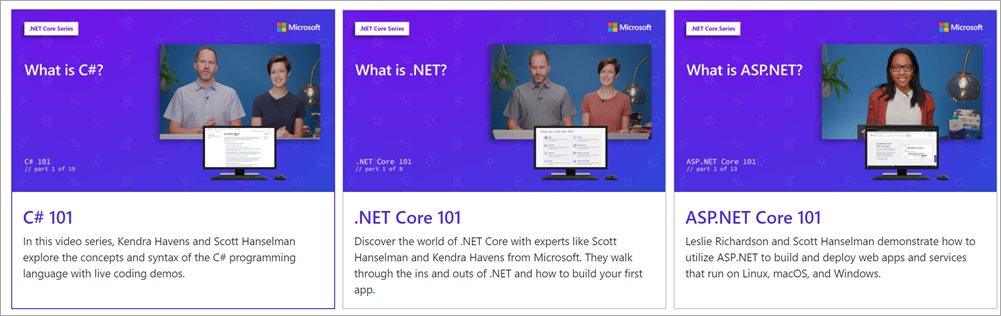
If you've been thinking about learning C#, now is the time to jump in! I've been working on this project for months and I'm happy to announce http://dot.net/videos 

There's nearly a hundred short videos (with more to come!) that will teach you topics like C# 101, .NET, making desktop apps, making ASP.NET web apps, learning containers and Dockers, or even starting with Machine Learning. There's a ton of great, slow-paced beginner videos. Most are less than 10 minutes long and all are organized into Playlists on YouTube!

If you are getting started, I'd recommend starting with these three series in this order — C#, .NET, then ASP.NET. After that, pick the topics that make you the happiest.

Read more →

Demystifying the new .NET Core 3 Worker Service

Reading time2 min
Reach and readers2.4K
Premier Developer Consultant Randy Patterson discusses the benefits of using the new Worker Service project template introduced in .NET Core 3.

.NET Core 3 introduced a new project template called Worker Service. This template is designed to give you a starting point for cross-platform services. As an alternate use case, it sets up a very nice environment for general console applications that is perfect for containers and microservices.


Some of the benefits of using this template include the following areas.

Read more →

Azure SDK for .NET: Story about a Difficult Error Search

Reading time12 min
Reach and readers894

Picture 2


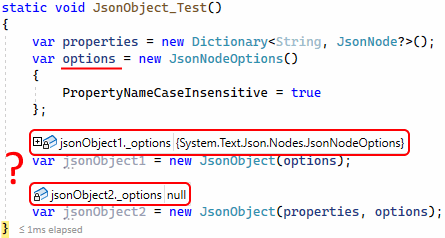
When we decided to search for errors in the Azure SDK for .NET project, we were pleasantly surprised by its size. «Three and a half million lines of code,» we kept saying, studying the project's statistics. There might be so many findings. Alas and alack! The project turned out to be crafty. So what was the zest of the project and how it was checked — read in this article.
Read more →

Building Modern Cloud Applications using Pulumi and .NET Core

Reading time6 min
Reach and readers1.2K
We are excited to announce .NET Core support for Pulumi! This announcement means you can declare cloud infrastructure — including all of Azure, such as Kubernetes, Functions, AppService, Virtual Machines, CosmosDB, and more — using your favorite .NET language, including C#, VB.NET, and F#. This brings the entire cloud to your fingertips without ever having to leave your code editor, while using production-ready «infrastructure as code» techniques.

Read more →

.NET – Tools for working with multithreading and asynchrony – Part 2

Reading time13 min
Reach and readers8.4K
I have originally posted this article in CodingSight blog.
It's also available in Russian here.


This article comprises the second part of my speech at the multithreading meetup. You can have a look at the first part here and here. In the first part, I focused on the basic set of tools used to start a thread or a Task, the ways to track their state, and some additional neat things such as PLinq. In this part, I will fix on the issues you may encounter in a multi-threaded environment and some of the ways to resolve them.

Contents


Read more →

Breaking down the fundamentals of C #: allocating memory for a reference type on the stack

Reading time6 min
Reach and readers7.6K
This article will show you the basics of types internals, as of course an example in which the memory for the reference type will be allocated completely on the stack (this is because I am a full-stack programmer).


Disclaimer


This article does not contain material that should be used in real projects. It is simply an extension of the boundaries in which a programming language is perceived.

Before proceeding with the story, I strongly recommend you to read the first post about StructLayout, because there is an example that will be used in this article (However, as always).
Read more →

Spans in C#: Your Best Friend for Efficient Coding

Level of difficultyEasy
Reading time5 min
Reach and readers2.7K

I’ve been wanting to sort it out about String memory optimization and all these ways to improve the performance and memory usage for Collections and Arrays in C#(as you remember String is an array of chars, loaded a bit differently but anyway) code. I finally managed to find some time to dive deeper into the System.Span.

I have put together this guide to share what I’ve learned. It’s filled with practical tips and examples to help you leverage Spans in your own projects. If you want to optimize your C# code, this guide is a great place to start!

Read more

Unity: What is a Coroutine and why is there an IEnumerator

Reading time5 min
Reach and readers18K

The title of the article is a question I was asked in an interview for a Middle position. In this article, we will look at Unity coroutines, what they are, and at the same time we will capture the topic of Enumerator \ Enumerable in C # and a little secret of foreach. The article should be very useful for beginners.

Read more

Vulnerabilities due to XML files processing: XXE in C# applications in theory and in practice

Reading time16 min
Reach and readers1.9K

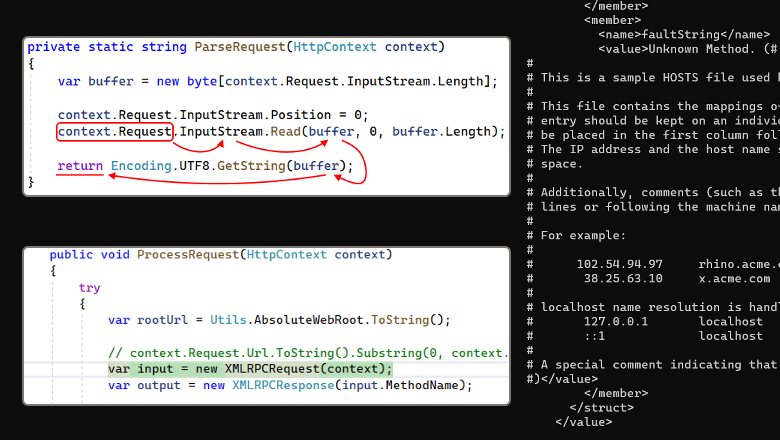
How can simple XML files processing turn into a security weakness? How can a blog deployed on your machine cause a data leak? Today we'll find answers to these questions, learn what XXE is and how it looks like.


0918_XXE_BlogEngine/image1.png

Read more →

Re-checking PascalABC.NET

Reading time8 min
Reach and readers1K

Welcome all fans of clean code! Today we analyze the PascalABC.NET project. In 2017, we already found errors in this project. We used two static analysis tools (more precisely, plugins for SonarQube): SonarC# and PVS-Studio. Today, we analyze this project with the latest version of the PVS-Studio analyzer for C#. Let's see what errors we can find today, especially when our analyzer has become more advanced and got new features: it can find more exquisite errors and potential vulnerabilities.


0912_PascalABCNET_2/image1.png

Read more →

Errors and suspicious code fragments in .NET 6 sources

Reading time19 min
Reach and readers1.3K

0903_NET6/image1.png


The .NET 6 turned out to be much-awaited and major release. If you write for .NET, you could hardly miss such an event. We also couldn't pass by the new version of this platform. We decided to check what interesting things we can find in the sources of .NET libraries.

Read more →

XSS: attack, defense — and C# programming

Reading time11 min
Reach and readers2.8K

XSS - or cross-site scripting - is one of the most common vulnerabilities in web applications. It has been on the OWASP Top 10 list (the list of the most critical security risks to web applications) for a while now. So let's figure out together how your browser can acquire and execute a script from a third-party website, and what this may lead to (spoiler: your cookies could get stolen, for example). And while we're at it, we'll talk about ways you can protect yourself from XSS.

Read more

How static code analysis helps in the GameDev industry

Reading time7 min
Reach and readers1.5K
image1.png

The gaming industry is constantly evolving and is developing faster than a speeding bullet. Along with the growth of the industry, the complexity of development also increases: the code base is getting larger and the number of bugs is growing as well. Therefore, modern game projects need to pay special attention to the code quality. Today we will cover one of the ways to make your code more decent, which is static analysis, as well as how PVS-Studio in practice helps in the game project development of various sizes.
Read more →

Tree Structure in EF Core: How to configure a self-referencing table and use it

Reading time4 min
Reach and readers32K

One of the very common questions I am getting from .NET community is how to configure and use the tree structures in EF Core. This story is one of the possible ways to do it.


The common tree structures are file tree, categories hierarchy, and so on. Let it be folders tree for example. The entity class will be a Folder:


public class Folder
{
    public Guid Id { get; set; }
    public string Name { get; set; }      
    public Folder Parent { get; set; }
    public Guid? ParentId { get; set; }
    public ICollection<Folder> SubFolders { get; } = new List<Folder>();
}
Read more →

Authors' contribution