Pull to refresh
256K+

JavaScript *

High-level, interpreted programming language. It is a language which is also characterized as dynamic, weakly typed, prototype-based and multi-paradigm

155,57
Rating
Show first
Rating limit
Level of difficulty

Details

Reading time6 min
Reach and readers1.4K
How often do you get to 404 pages? Usually, they are not styled and stay default. Recently I’ve found test.do.am which interactive character attracts attention and livens up the error page.

Probably, there was just a cat picture, then they thought up eyes movement and developer implemented the idea.imageNow user visits the page and checks out the effect. It’s cool and pleasant small feature, it catches, then user discusses it with colleagues or friends and even repeats the feature. It could be this easy, if not:

Another way to write cross-platform apps: Neutralinojs internals and comparison with Electron and NW.js

Reading time5 min
Reach and readers9.4K


I am Shalitha Suranga from Sri Lanka. I started Neutralinojs project with other two members as our research project at university.


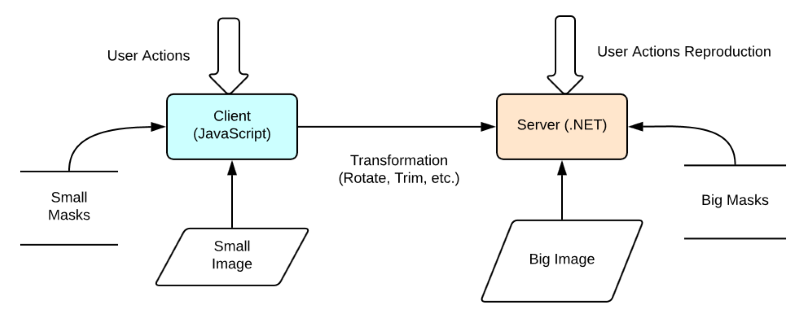
Cross-platform application development is extremely useful among software development organizations because a large end-user audience can be targeted. Earlier there were several approaches, such as writing multiple codebases per each platform, writing a single codebase using conditionals for platform selection, or using a programming language which has a cross-platform virtual machine at run-time. There were drawbacks of each like complexity of design, limited low-level accessibility and slow learning rate. Cross-platform application development with web technologies came [1] after. Electron and NW.js are most popular frameworks which allow developers to make cross-platform applications using Javascript. Basically, these popular frameworks combine embedded chromium browser and node run-time [2], [3].


These frameworks are being used to create numerous cross-platform applications. Whereas the community pointed out several unseen drawbacks of these frameworks. Large bundled application size, high memory consumption and long development workflow are the key things which were criticized through internet forums and websites [4], [5], [6], [7], [8]. Table 1.1 shows the advantages and disadvantages of Electron/NW.js.


Table 1.1: Advantages and Disadvantages of Electron/NW,js


Advantages of Electron and NW.js Disadvantages of Electron and NW.js
Development is very easy since Javascript is used Application bundle is considered as bloatware (High disk space usage)
Access native functions via node runtimeSingle codebase for all supported platforms Linux, Windows and macOS High memory consumption and slowness
Many Node modules need to be installed
Read more →

Functional components with React Hooks. Why it's better?

Reading time5 min
Reach and readers24K

When React.js 16.8 was released we got the opportunity to use React Hooks. Hooks make us able to write fully-functional components using functions. We can use all React.js features and do in in more convenient way.


A lot of people don't agree with Hooks conception. In this article I'd like to tell about some important advantages React Hooks give you and why we need to write with Hooks.


I will not talk about how to use hooks. It is not very important for the examples. If you want to read something on this topic, you can use official documentation. Also, if this topic will be interesting for you, I will write more about Hooks.

Read more →

Generating multi-brand multi-platform icons with Sketch and a Node.js script — Part #2

Reading time16 min
Reach and readers2K


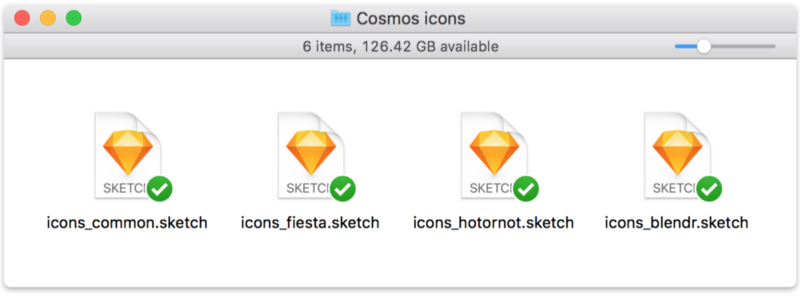
This is the second part of a post about the creation of a pipeline that can take a Sketch file and export all the icons included in the file, in different formats, for different platforms, with the possibility of AB testing each icon.

You can read the first part of the post here.


The Sketch files, with all the icons collected, styled and properly named, were ready. Now it was time to start writing the code.

Suffice to say, the process was very much a trial and error: after the important initial code core, developed by my team lead Nikhil Verma (who set the script foundations), I went through an incremental process that required at least three phases of refactoring and quite a few revisions. For this reason, I won’t go into too much detail on how the script was developed, but rather focus on how the script works today, in its final shape.
Read more →

Generating multi-brand multi-platform icons with Sketch and a Node.js script — Part #1

Reading time10 min
Reach and readers2.6K


TL;DR


Using a custom build script in Node JS, it is possible to manipulate a series of Sketch files, and then, using an internal Sketch tool, automatically export their assets, to generate multiple icon libraries, for multiple platforms and different brands, that support dynamic colourisation of the assets via design tokens, and also AB testing of the assets via naming convention. Easy peasy :)


Well, actually it’s not that easy, but it can certainly be done. This post is a detailed explanation of how we did it, and what we discovered along the way.

The problem we were trying to solve


At Badoo we build a dating app. Actually, multiple dating apps. For multiple platforms (iOS, Android, Mobile Web, Desktop Web), across multiple teams.

We use hundreds of icons in our apps. Some of them are the same across different apps, some are very specific to the brands the apps reflect. The icons are continuously evolving, in sync with the evolution of the design. Sometimes completely new icons are added, while others get updated, and still others get dropped (although, they often remain in the codebase).
Read more →

Vue mixins, the explicit way (by an example of BEM modifiers plugin)

Reading time3 min
Reach and readers7.4K


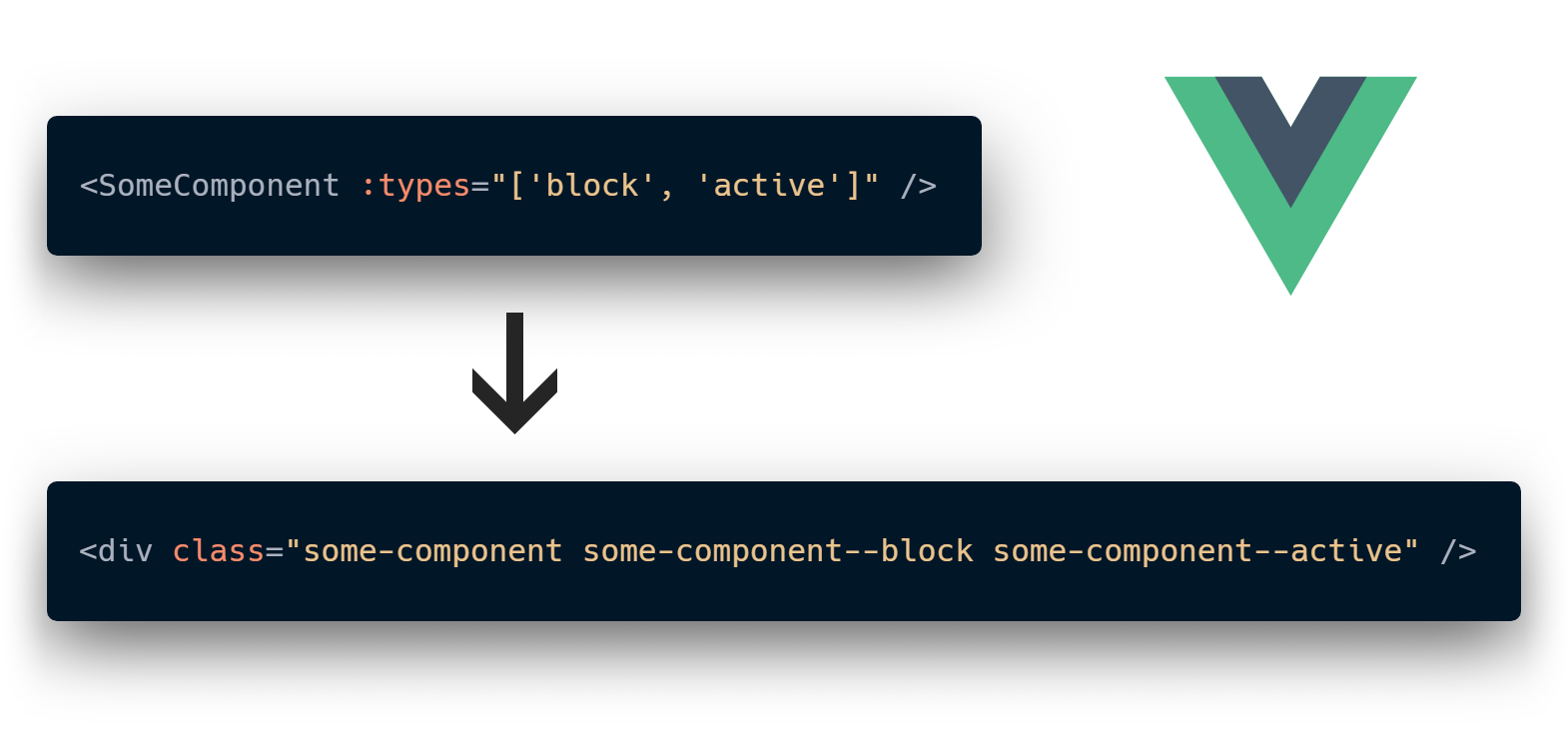
Vue mixins are the recommended way of sharing common functionality between components. They are perfectly fine until you use more than one for them. That's because they are implicit by design and pollute your component's context. Let's try to fix this by giving them as much explicitness as we can.

Read more →

The Overview of JavaScript Frameworks: Which One to Choose for Your Project?

Reading time4 min
Reach and readers1.9K
Ten years ago, companies who wanted to create cross-platform projects would have to cooperate with different development teams and experts. However, 2009 has changed the game, because the developers from Nitobi (later purchased by Apache) presented Cordova – a fresh framework that was able to convert web applications into mobile systems. Linking the devices’ APIs via plugins, developers could access smartphones and tablets. Cordova is a JavaScript-based tech compatible with various platforms.

In this guide, we will review three more JS-driven systems, look at their unique features and compare them.
Read more →

SAPUI5 for dummies part 5: A complete step-by-step exercise

Reading time4 min
Reach and readers7.2K


Introduction & Recap


In the previous blog post, we learned how to create a second level of drill-down (detail of detail) and how to interact with OData and ODataModel (v2) in order to delete a database record.


What will be covered on this exercise


With Part 5 of this series of blog posts, we will learn how to create a SimpleForm within a Dialog that will allow us to update the information of a Sales Order Item.


Before updating the database order we have to check that everything typed by the user validates our constraints.


  • ODataModel: we have already used it to display server-side information about our Business Partner, Sales Order, and Sales Order Items. We’ve also used it to delete a database record. We’re now going to use it to update a record thanks to the submitChanges method or remove what we’ve done with the resetChanges method.
  • Expression Binding: an enhancement of the SAPUI5 binding syntax, which allows for providing expressions instead of custom formatter functions
  • SimpleForm: a layout that allows users to create a pixel-perfect form
Read more →

Vue, Storybook, TypeScript—starting a new project with the best practices in mind

Reading time12 min
Reach and readers23K


(originally published on Medium)


I like writing React code. This might be an odd introduction to a story about Vue, but you need to understand my background to understand why I’m here discussing Vue.


I like writing React code and I hate reading it. JSX is a neat idea for assembling the pieces together fast, Material-UI is amazing solution for bootstrapping your next startup’s UI, computing CSS from JS constants allows you to be very flexible. Yet reading your old JSXs feels awful – even with scrupulous code review practices you might scratch your head not once as you try to figure the intricate nesting of the components.


I’ve heard many things about Vue—the not so new kid on the block—and I finally decided to get my feet wet; bringing in all my mental luggage of React and Polymer (and Angular, but let’s not talk about that).

Read more →

The ever-lasting strife of static vs dynamic typing – TypeScript won’t help

Reading time6 min
Reach and readers5.4K


When my friend and I were of school age and aspiring to become software developers, we daydreamed of designing some cool stuff together – like a game or a mega-useful app.

I chose to learn C++ and C#, he picked JavaScript. We finished school, graduated from our universities, served in the army and started our jobs. We had a pretty busy time in industrial software engineering, with lots of different jobs and positions, and after it all started to wear on us, we recalled where it all had begun.

Having finally got together as mature developers, we decided to work on our own project – a 2D video game. Since my friend’s domain was front-end and I was a full-stack developer, our immediate choice of development platform was an Internet browser. As I was only used to working with TypeScript when designing front-end, we thought, ok, no problem, after all, TS is just JavaScript at scale. Let’s use it and things will go smoothly. If I only knew how wrong I was! When we started discussing the project, we ran into an extensive chasm of misunderstanding between us.
Read more →