Pull to refresh

All streams

Show first
Rating limit
Level of difficulty

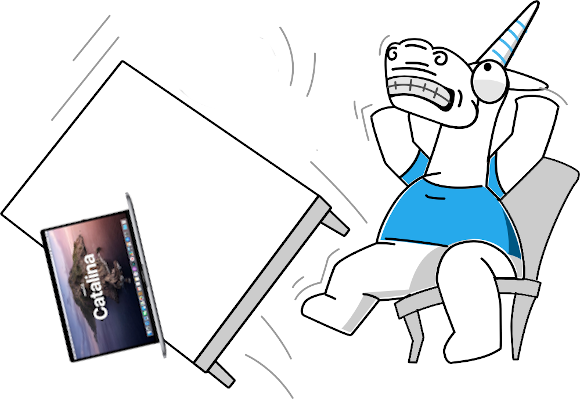
MacOS 10.15 no longer supports 32-bit apps. What can you do?

Reading time2 min
Reach and readers1.9K

Picture 2

On October 7, 2019, Apple released a new version of its Mac operating system, macOS Catalina. Version 10.15 contains many changes and improvements. One of the significant is the complete phasing out of 32-bit applications. As a developer of such macOS apps, what can you do? That's right, port the app to the 64-bit platform. Will the application work properly from the first attempt? Perhaps, it's possible. Depends on the complexity and amount of the code. But most likely, developers will face a lot of non-obvious errors, which can previously detected using PVS-Studio.
Read more →

Checking Telegram Open Network with PVS-Studio

Reading time7 min
Reach and readers1.5K

Picture 3

Telegram Open Network (TON) is a platform by the same team that developed the Telegram messenger. In addition to the blockchain, TON provides a large set of services. The developers recently made the platform's code, which is written in C++, publicly available and uploaded it to GitHub. We decided to check the project before its official release.
Read more →

How we made landmark recognition in Cloud Mail.ru, and why

Reading time11 min
Reach and readers3K


With the advent of mobile phones with high-quality cameras, we started making more and more pictures and videos of bright and memorable moments in our lives. Many of us have photo archives that extend back over decades and comprise thousands of pictures which makes them increasingly difficult to navigate through. Just remember how long it took to find a picture of interest just a few years ago.

One of Mail.ru Cloud’s objectives is to provide the handiest means for accessing and searching your own photo and video archives. For this purpose, we at Mail.ru Computer Vision Team have created and implemented systems for smart image processing: search by object, by scene, by face, etc. Another spectacular technology is landmark recognition. Today, I am going to tell you how we made this a reality using Deep Learning.
Read more →

Handling Objections: Static Analysis Will Take up Part of Working Time

Reading time5 min
Reach and readers1.1K
bugTalking to people at conferences and in comments to articles, we face the following objection: static analysis reduces the time to detect errors, but takes up programmers' time, which negates the benefits of using it and even slows down the development process. Let's get this objection straightened out and try to show that it's groundless.
Read more →

Configuration of the Warnings Next Generation plugin for integration with PVS-Studio

Reading time3 min
Reach and readers1.8K

Picture 4


The PVS-Studio 7.04 release coincided with the release of the Warnings Next Generation 6.0.0 plugin for Jenkins. Right in this release Warnings NG Plugin added support of the PVS-Studio static code analyzer. This plugin visualizes data related to compiler warnings or other analysis tools in Jenkins. This article will cover in detail how to install and configure this plugin to use it with PVS-Studio, and will describe most of its features.
Read more →

The best is the enemy of the good

Reading time11 min
Reach and readers1.5K

Picture 6

This article is the story how we once decided to improve our internal SelfTester tool that we apply to test the quality of the PVS-Studio analyzer. The improvement was simple and seemed to be useful, but got us into some troubles. Later it turned out that we'd better gave up the idea.
Read more →

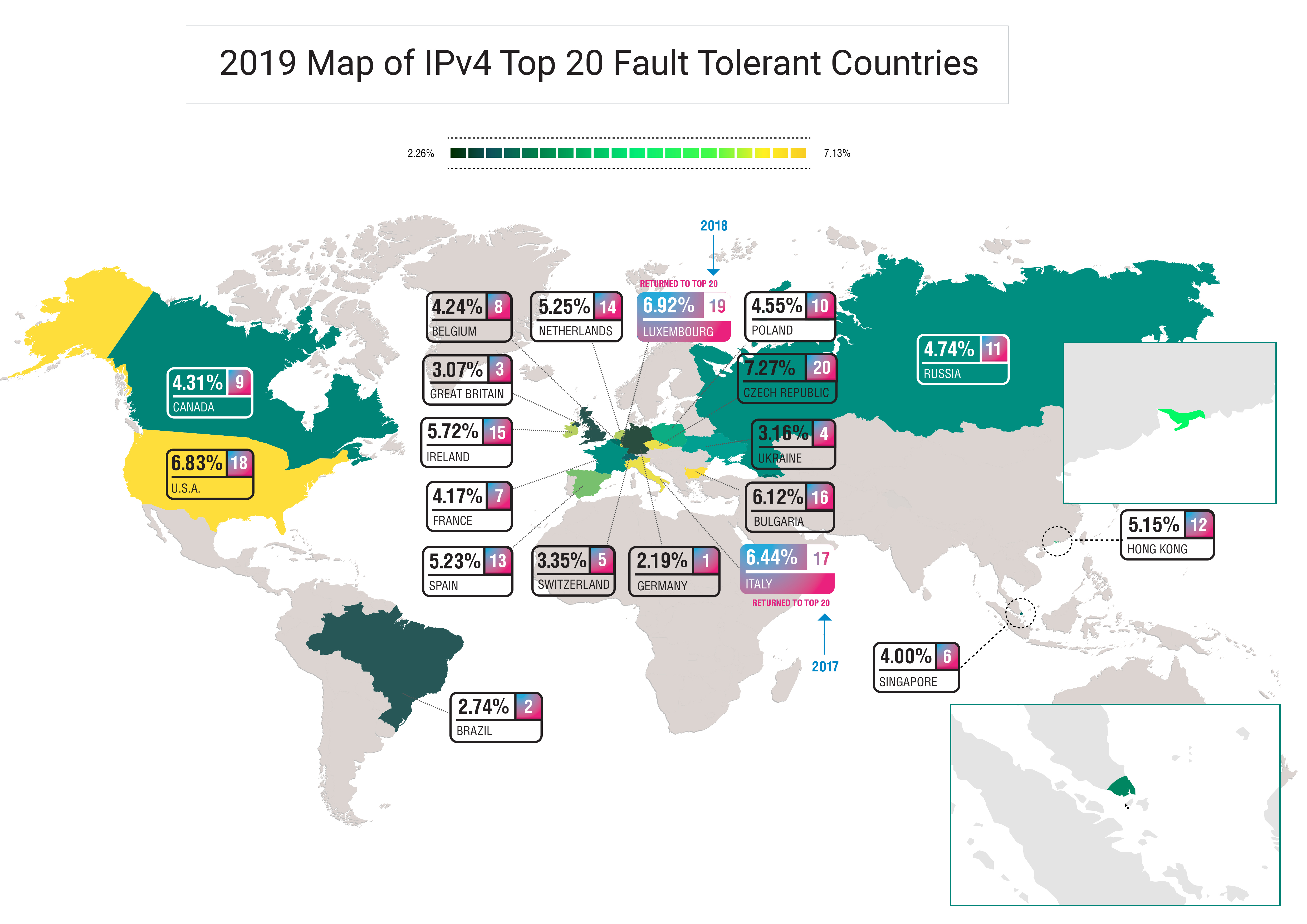
2019 National Internet Segments Reliability Research & Report

Reading time9 min
Reach and readers4K


This report explains how the outage of a single AS can affect the connectivity of the impacted region with the rest of the world, especially when it is the dominant ISP on the market. Internet connectivity at the network level is driven by interaction between autonomous systems (AS’s). As the number of alternate routes between AS’s increases, so goes the fault-resistance and stability of the internet across the network. Although some paths inevitably become more important than others, establishing as many alternate routes as possible is the only viable way to ensure an adequately robust system.

The global connectivity of any AS, regardless of whether it is a minor provider or an international giant, depends on the quantity and quality of its paths to Tier-1 ISPs. Usually, Tier-1 implies an international company offering global IP transit service over connections to other Tier-1 providers. But there is no guarantee that such connectivity will be maintained. Only the market can motivate them to peer with other Tier-1’s to deliver the highest quality service. Is that enough? We explore this question in the IPv6 section below. For many ISPs at all levels, losing connection to just one Tier-1 peer would likely render them unreachable in some parts of the world.

Measuring Internet Reliability


Let’s examine a case where an AS experiences significant network degradation. We want to answer the following question: “How many AS’s in the region would lose connectivity with Tier-1 operators and their global availability along with it?”
Read more →

How to Make Emails and Not Mess Up: Practical Tips

Reading time23 min
Reach and readers3.7K


A developer, who first encountered generating emails, has almost no chance to write an application, that will do it correctly. Around 40% of emails, generated by corporate applications, are violating some form of standard, and due to this, there are problems with delivery and display. There are reasons for this: emails are technically more difficult than the web, and operating emails is regulated by a few hundred standards, as well as an uncountable number of generally accepted (and not as much) practices, whereas the email clients are more varied and unpredictable than browsers. Testing may significantly improve the situation, but materials that are dedicated to testing the email system, are practically non-existent.

Mail.ru regularly interacts with its users by email. In our projects, all the components responsible for generating emails and even individual mailings, are subject to mandatory testing. In this article, we will share our experience (learning from our mistakes).
Read more →

Contextual Emotion Detection in Textual Conversations Using Neural Networks

Reading time10 min
Reach and readers4.3K

Nowadays, talking to conversational agents is becoming a daily routine, and it is crucial for dialogue systems to generate responses as human-like as possible. As one of the main aspects, primary attention should be given to providing emotionally aware responses to users. In this article, we are going to describe the recurrent neural network architecture for emotion detection in textual conversations, that participated in SemEval-2019 Task 3 “EmoContext”, that is, an annual workshop on semantic evaluation. The task objective is to classify emotion (i.e. happy, sad, angry, and others) in a 3-turn conversational data set.
Read more →

PVS-Studio Looked into the Red Dead Redemption's Bullet Engine

Reading time10 min
Reach and readers4.8K
Picture 4

Nowadays there is no need to implement the physics of objects from scratch for game development because there are a lot of libraries for this purpose. Bullet was actively used in many AAA games, virtual reality projects, various simulations and machine learning. And it is still used, being, for example, one of the Red Dead Redemption and Red Dead Redemption 2 engines. So why not check the Bullet with PVS-Studio to see what errors static analysis can detect in such a large-scale physics simulation project.
Read more →

AI-Based Photo Restoration

Reading time7 min
Reach and readers18K


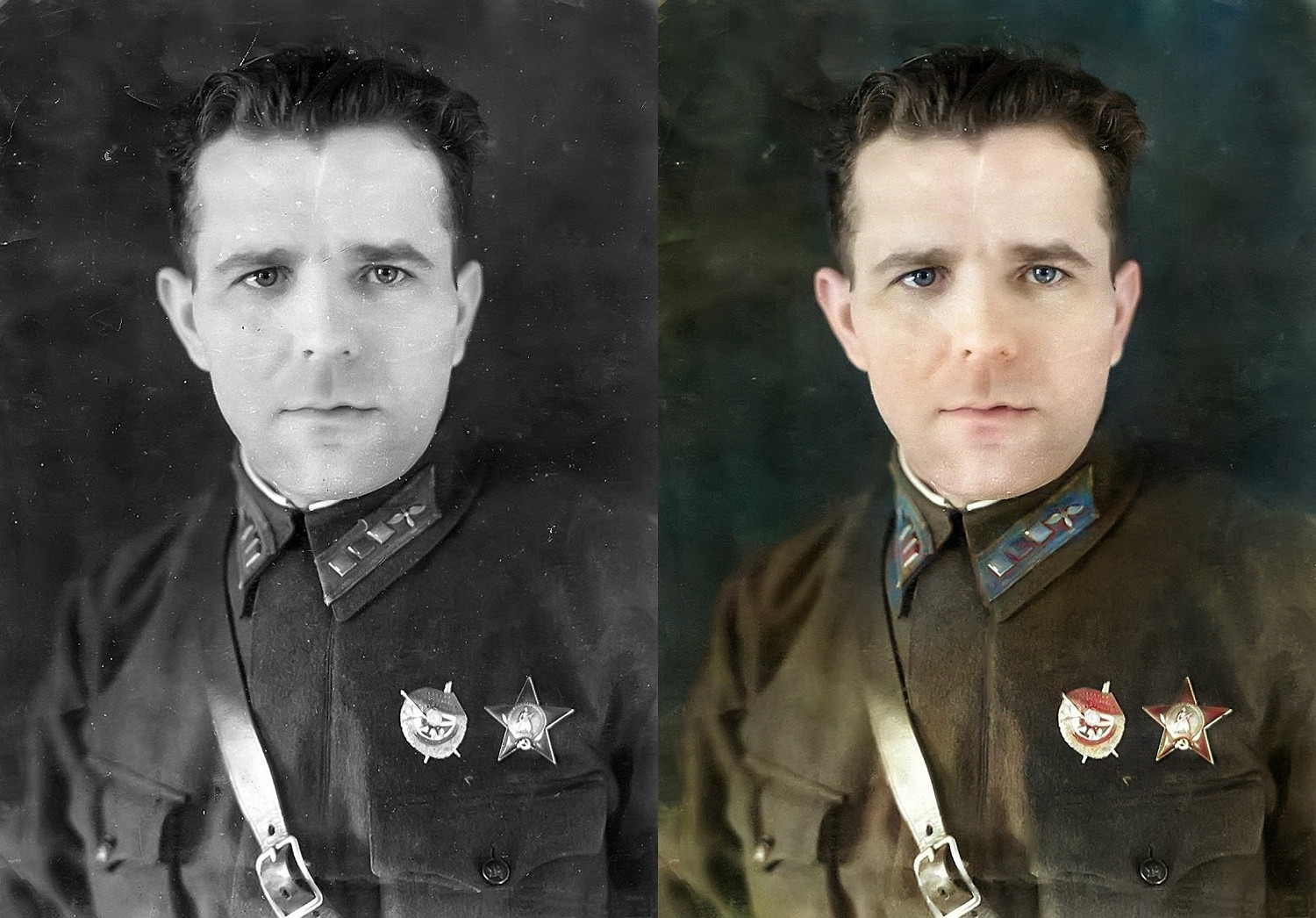
Hi everybody! I’m a research engineer at the Mail.ru Group computer vision team. In this article, I’m going to tell a story of how we’ve created AI-based photo restoration project for old military photos. What is «photo restoration»? It consists of three steps:

  • we find all the image defects: fractures, scuffs, holes;
  • we inpaint the discovered defects, based on the pixel values around them;
  • we colorize the image.

Further, I’ll describe every step of photo restoration and tell you how we got our data, what nets we trained, what we accomplished, and what mistakes we made.
Read more →

Security of mobile OAuth 2.0

Reading time12 min
Reach and readers16K
image

Popularity of mobile applications continues to grow. So does OAuth 2.0 protocol on mobile apps. It's not enough to implement standard as is to make OAuth 2.0 protocol secure there. One needs to consider the specifics of mobile applications and apply some additional security mechanisms.

In this article, I want to share the concepts of mobile OAuth 2.0 attacks and security mechanisms used to prevent such issues. Described concepts are not new but there is a lack of the structured information on this topic. The main aim of the article is to fill this gap.
Read more →

The one who resurrected Duke Nukem: interview with Randy Pitchford, magician from Gearbox

Reading time38 min
Reach and readers4.6K
RUVDS and Habr continue the series of interviews with interesting people in IT field. Last time we talked to Richard «Levelord» Gray, level designer of popular games Duke Nukem, American McGee’s Alice, Heavy Metal F.A.K.K.2, SiN, Serious Sam, author of well-known «You’re not supposed to be here» phrase.

Today we welcome Randall Steward «Randy» Pitchford II, president, CEO and co-founder of Gearbox Software video game development company.

Randy started in 3D Realms where contributed to Duke Nukem 3D Atomic Edition and Shadow Warrior. Then he founded Gearbox Software and made Half-Life: Opposing Force, which won D.I.C.E in 2000. Other Gearbox titles include Half-Life: Blue Shift, Half-Life: Decay, Counter-Strike: Condition Zero, James Bond 007: Nightfire, Tony Hawk's Pro Skater 3, Halo: Combat Evolved and of course Borderlands.

The interview team also includes editor of Habr Nikolay Zemlyanskiy, Richard «Levelord» Gray, Randy’s wife Kristy Pitchford and Randy’s son Randy Jr.


Support of Visual Studio 2019 in PVS-Studio

Reading time19 min
Reach and readers1.2K


Support of Visual Studio 2019 in PVS-Studio affected a number of components: the plugin itself, the command-line analyzer, the cores of the C++ and C# analyzers, and a few utilities. In this article, I will briefly explain what problems we encountered when implementing support of the IDE and how we addressed them.
Read more →

Fancy Euclid's “Elements” in TeX

Reading time7 min
Reach and readers29K


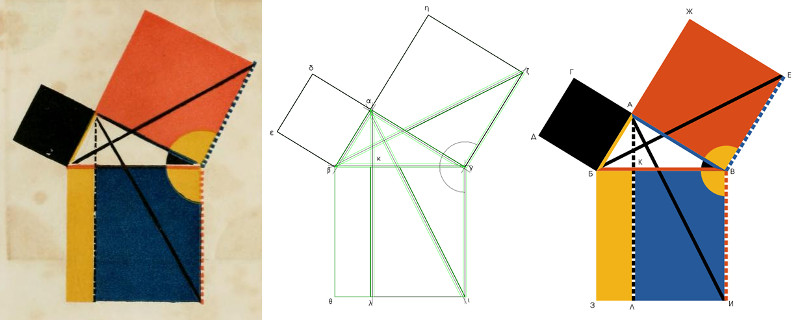
In 2016, I came across Oliver Byrne's “The first six books of the Elements of Euclid.” The main feature of this book is that instead of ordinary letter designations such as “triangle ABC,” it employs inclusions of miniature pictures directly in the text, that is, for example, an image of a triangle. As difficult as it probably was in the XIX century, as easy, with the right tools, it should be to make such a book nowadays. And so I decided to find out by myself whether that's the case.
Read more →

Who is stealing virtual CPU time?

Reading time10 min
Reach and readers12K


Hi! In this article, I want to explain, in layman’s terms, how steal appears in VMs and tell you about some of the less-than-obvious artifacts that we found during research on the topic that I was involved in as CTO of the Mail.ru Cloud Solutions platform. The platform runs KVM.
Read more →

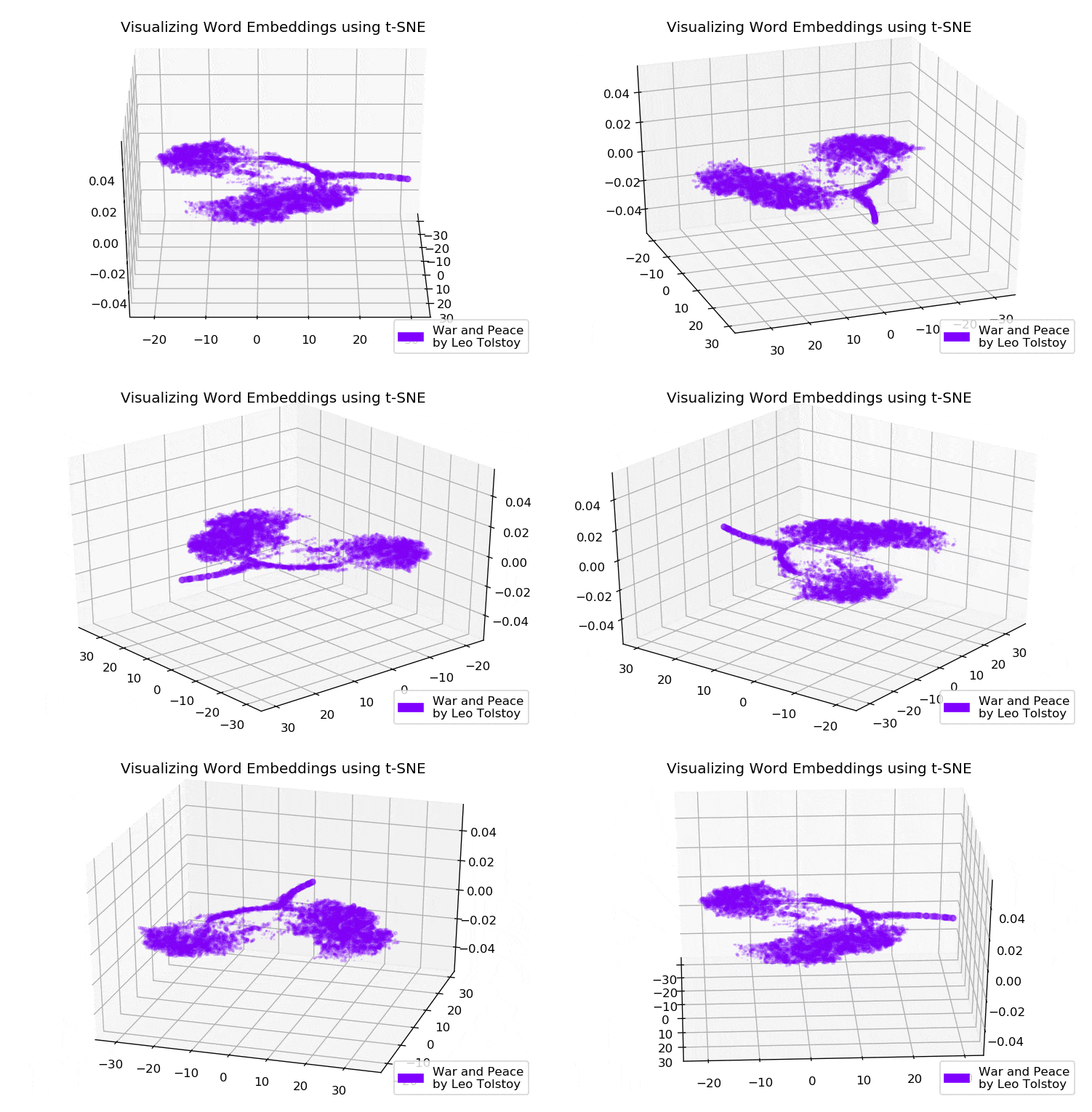
Google News and Leo Tolstoy: visualizing Word2Vec word embeddings using t-SNE

Reading time7 min
Reach and readers15K

Everyone uniquely perceives texts, regardless of whether this person reads news on the Internet or world-known classic novels. This also applies to a variety of algorithms and machine learning techniques, which understand texts in a more mathematical way, namely, using high-dimensional vector space.

This article is devoted to visualizing high-dimensional Word2Vec word embeddings using t-SNE. The visualization can be useful to understand how Word2Vec works and how to interpret relations between vectors captured from your texts before using them in neural networks or other machine learning algorithms. As training data, we will use articles from Google News and classical literary works by Leo Tolstoy, the Russian writer who is regarded as one of the greatest authors of all time.

We go through the brief overview of t-SNE algorithm, then move to word embeddings calculation using Word2Vec, and finally, proceed to word vectors visualization with t-SNE in 2D and 3D space. We will write our scripts in Python using Jupyter Notebook.

Read more →