OSINT: Tools

The reality of today is that most people write dossiers on themselves in their social networks. In this article, you will learn about some tools that will help you find out the maximum amount of information about a person.

The reality of today is that most people write dossiers on themselves in their social networks. In this article, you will learn about some tools that will help you find out the maximum amount of information about a person.

Many readers, especially those living in Russia, want to know the best way to use GPT chat. When I'm asked about this, I give a clear answer: if the volumes are not very large, it's better to use Telegram bots.
GPT chatbots on Telegram are analogous to applications that use GPT (Generative Pre-trained Transformer) technology to dialogue with users. Here are the secrets to their popularity:

In the fall of 2025, many people, myself included, opened their favorite hardware store to 'quickly grab another 32–64 GB of DDR5 for games, an IDE, and a couple of Docker containers'—only to close the tab in mild culture shock. The memory that cost a 'reasonable' amount in the summer suddenly cost almost as much as a mid-range graphics card.
In short, this isn't 'greedy stores' but the consequence of a rather complex restructuring of the entire DRAM market for AI servers and HBM memory. In this article, we'll explore what's happening at memory factories, why PC modules are suffering the most, what to expect in 2026, and how to make upgrade decisions if you're a gamer, developer, or just a hardware enthusiast.

In 2025, internet censorship in Russia, China, and Iran has reached an unprecedented level. Traditional VPN protocols like OpenVPN and even WireGuard are detected and blocked by Deep Packet Inspection (DPI) systems in seconds. Enter VLESS — a lightweight protocol that is becoming the last working solution for bypassing modern censorship.
This article explains how VLESS works on a technical level, why it is so effective at evading detection, and shares real-world experience of building a VPN service in Russia's hostile environment.

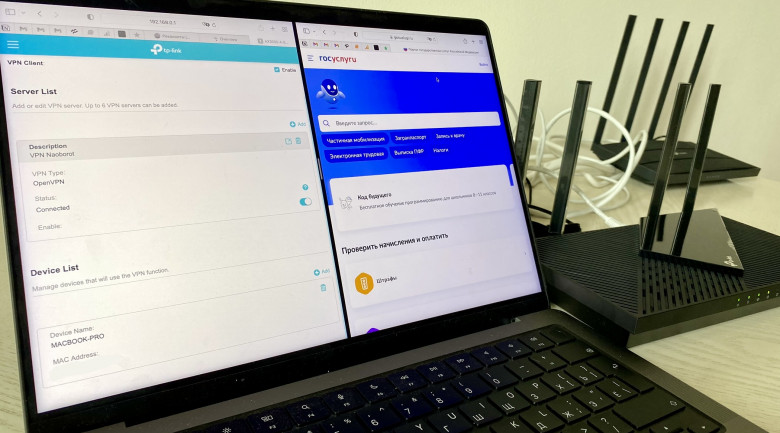
A VPN is a technology for a secure connection to a remote computer or network, and for most users, it's simply a safe way to use the internet in public Wi-Fi zones.
In this article, we will look at four ways to create your own VPN. Let's start with the simplest option, which is manageable even for novice PC users.


Now that Forbes Education is dispelling our fears that artificial intelligence will replace artists, and Gizmodo is exposing AI modelsfor simply copying training illustrations, we can relax and continue drawing cats riding dinosaurs. Which is what I'm going to do today!
I tested dozens of Telegram bots and chose the five best services for generating AI images. This will be useful for those who spend a lot of time in the messenger and want to create unique visual content right there.

Greetings, dear readers! Continuing the SHX article series, in this article, we decided to focus in more detail on OSINT bots in Telegram, as in many cases they are no less effective than common OSINT tools. The OSINT bots discussed in this article will mainly concern reconnaissance on Telegram users. This material has been edited and republished due to being blocked by Roskomnadzor in the Russian Federation.
Disclaimer: All data provided in this article is taken from open sources. It does not call for action and is provided for informational purposes only, and for studying the mechanisms of the technologies used.

For many, November 28, 2025, began with complaints about WhatsApp. Some users are unable to send or receive text messages and media files, and when attempting a voice or video call, the client hangs indefinitely on the 'Connecting' status before dropping the call.
Telecom operators (MegaFon, Beeline) are reporting normal network operations. And technically, they aren't lying: connectivity exists, and Meta's IP addresses are (mostly) accessible. The problem lies deeper—at the level of L7 filtering by TSPU.

In this article, we will look at 3 ways to set up a VPN connection with VLESS and Reality.
VLESS is a modern, privacy-oriented data transfer protocol, often called VLESS VPN, although strictly speaking, we will be discussing the installation of a proxy with the VLESS protocol based on an XRay server with Reality.
Let's start with the simplest and most universal option, which requires no technical knowledge.

Greetings, dear readers! In this article, we will take a detailed look at all aspects of searching for information about a person by photo, paying special attention to three main areas. We will discuss the capabilities of search engines, which many underestimate, although they can provide surprisingly accurate data when used correctly. We will analyze specialized online services based on neural networks and complex facial recognition algorithms. Special attention will be paid to Telegram bots, which combine the convenience of mobile use with powerful search technologies. These tools will help you obtain data about a person, including their name, phone number, and other useful information.
You will learn not only about the technical capabilities of each method but also about the practical nuances of their application. We will explain how to achieve maximum accuracy in data search and what photo parameters affect the result.

When OpenAI first showed Sora, the reaction was instantaneous: "that's it, the era of video production is over." But that was just a demonstration. The technology itself remained inaccessible to a wide audience — until the appearance of Sora 2, an updated version where any user can create up to 100 videos a day for free.
In short, Sora 2 is not just a "text-to-video generator." It's a full-fledged multi-agent system where several OpenAI models work under the hood: from text analysis and scene staging to motion and light synthesis. Unlike early versions of Runway or Pika, the quality here is almost cinematic: Sora understands context, follows the frame's composition, and maintains visual integrity between scenes.

Greetings, dear readers! We continue to test Telegram bots that can effectively help us with the task of finding target data in open sources, or simply put, in OSINT. In this article, we will look at more worthy candidates to become permanent search tools without leaving the well-known messenger.
Disclaimer: All data provided in this article is taken from open sources. It does not call for action and is provided for informational purposes only, and for studying the mechanisms of the technologies used.

In my previous Russian-language article on Machine Learning as Alchemy, I discussed the possibility of discovering novel solutions without relying on GPUs or expensive computing clusters. In this article, I will share my experiments with continual learning and the compositionality of thought using micro-neural networks, and explain what the philosopher Lev Vygotsky has to do with it all.

I've been practicing Zettelkasten for the past five years and still haven't found anything better than Niklas Luhmann's method. The problem is that Obsidian doesn't support it out of the box, so I had to write a plugin for organizing notes as close to Luhmann's original method as possible.
I spent a couple of weeks digging through Luhmann's original archive before I understood how it actually works. Structurally, the archive resembles a table of contents, but with the difference that a note can be inserted at any point, adding nested chapters.

You’ve probably had this happen too: a service runs smoothly, keeps users happy with its stability and performance, and your monitoring stays reassuringly green. Then, the next moment — boom, it’s gone. You panic, dive into the error logs, and find either a vague segfault or nothing at all. What to do is unclear, and production needs saving, so you bring it back up — and everything works just like before. You try to investigate what happened, but over time you switch to other tasks, and the incident fades into the background or gets forgotten entirely.
That’s all fine when you’re on your own. But once you have many customers, sooner or later you start feeling that something isn’t right, and that you need to dig into these spikes of entropy to find the root cause of such incidents.
This article describes our year-long investigation. You’ll learn why PostgreSQL (and any other application) can crash because of a bug in the Linux kernel, what XFS has to do with it, and why memory reclamation might not be as helpful as you thought.

If you are a new developer, you have probably hit the “subscription wall.” You have $20 a month to spend on an AI coding assistant, but you don’t know which one to pick.

The Mandelbrot set. And it's a program! I made it in g++, a freely distributable C++ compiler. Read it! Very interesting. Using OpenMP, you do parallel programming at the multithreading level. And I decided - this would be a completely different level of quality! I implemented honest supersampling (antialiasing) - with 8x8 antialiasing (64 passes per pixel!!!) That is, not 1920 by 1920 pixels, but 8x8 more! 15360 by 15360 pixels! And then these 64 passes reduce by one pixel, but smoothly - and no longer 8-bit, but 24-bit TrueColor!

A utility for supporting Xray on Keenetic routers — Xkeen.
All the code is written in pure shell and is open source on GitHub.
Builds Xray for your Keenetic on Entware.
GeoIP and GeoSite from AntiFilter, AntiZapret, and v2fly are available.
Automatically updates Xray, GeoIP, and GeoSite at a specified time.

What is a sequence diagram? What does it consist of? Where and how to use it?
Sequence diagrams in simple terms.
And there are also interesting features here that you might not have known about.