Pull to refresh

All streams

Show first
Rating limit
Level of difficulty

Sixth Chromium Check, Afterword

Reading time6 min
Reach and readers2.3K
severe unicorn

At the beginning of 2018 our blog was complemented with a series of articles on the sixth check of the source code of the Chromium project. The series includes 8 articles on errors and recommendations for their prevention. Two articles sparked heated discussion, and l still occasionally get comments by mail about topics covered in them. Perhaps, I should give additional explanations and as they say, set the record straight.
Read more →

Xcode 10.2, macOS Mojave 10.14.4, iOS 12.1 and other betas

Reading time8 min
Reach and readers6.8K


New betas are here and these are some of the most important things that I have learned about them.

Swift 5 for Xcode 10.2 beta


Swift


Firstly, the latest Xcode beta is bundled with the following Swift version:

Apple Swift version 5.0 (swiftlang-1001.0.45.7 clang-1001.0.37.7)
Target: x86_64-apple-darwin18.2.0
ABI version: 0.6

Let’s start with the most exciting news:
Swift apps no longer include dynamically linked libraries for the Swift standard library and Swift SDK overlays in build variants for devices running iOS 12.2, watchOS 5.2, and tvOS 12.2. As a result, Swift apps can be smaller when deployed for testing using TestFlight, or when thinning an app archive for local development distribution.
Application Binary Interface stability is coming! And this is excellent news. I think this is the one of the most significant issues at the moment with Swift. Not because of side-effects but because of Swift’s failure to deliver on previous promises. Anyway, I even know people who rewrite their Apple Watch extensions to Objective C to reduce the size of binary (something like 15MB vs ~1MB in Objective C). If you want to know more about the state of ABI, follow the links: Swift — ABI Dashboard and Swift ABI Stability Manifesto.
Read more →

A small notebook for a system administrator

Reading time21 min
Reach and readers165K
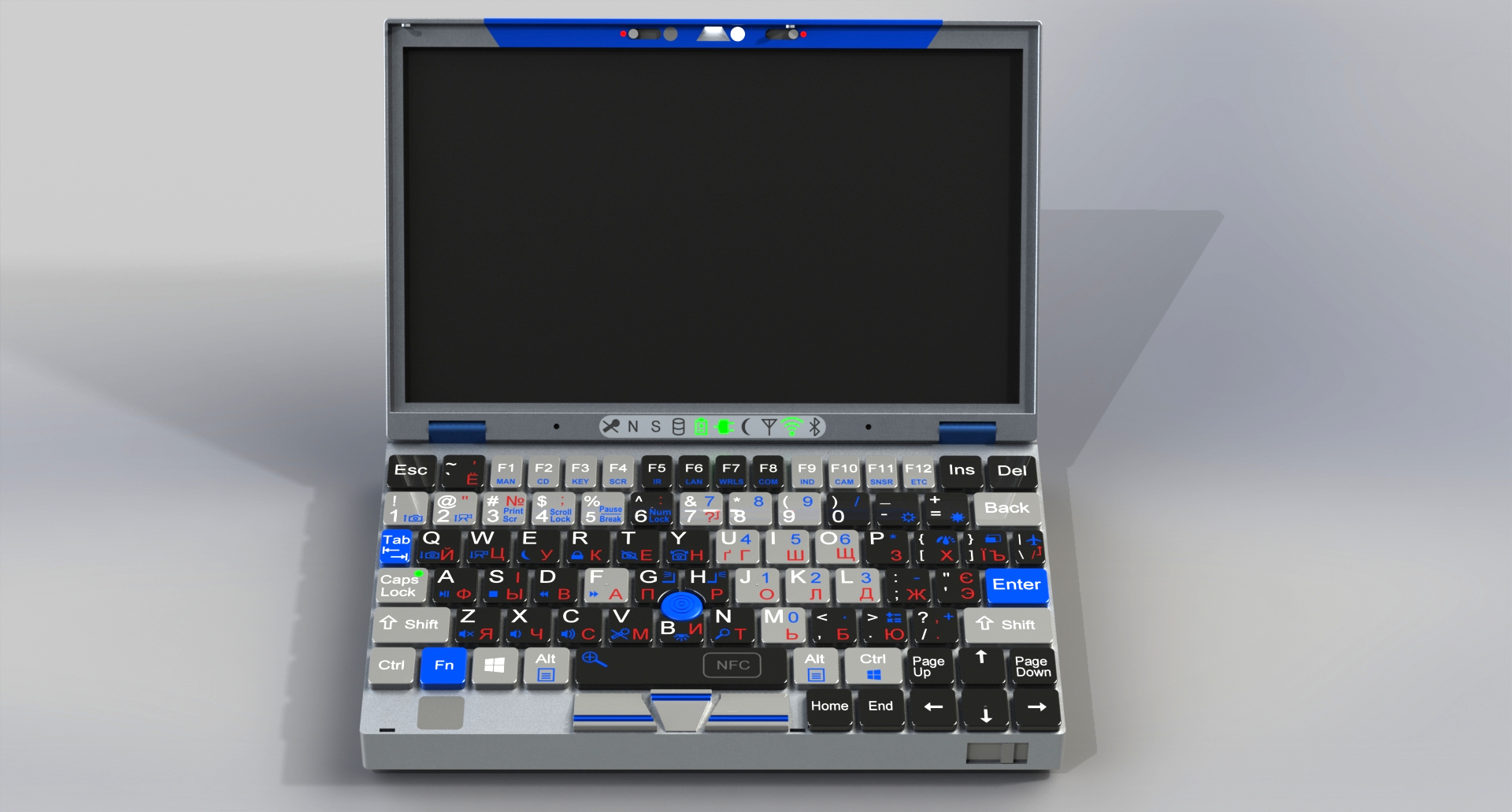
I am a system administrator, and I need a small, lightweight notebook for every day carrying. Of course, not just to carry it, but for use it to work.

I already have a ThinkPad x200, but it’s heavier than I would like. And among the lightweight notebooks, I did not find anything suitable. All of them imitate the MacBook Air: thin, shiny, glamorous, and they all critically lack ports. Such notebook is suitable for posting photos on Instagram, but not for work. At least not for mine.

After not finding anything suitable, I thought about how a notebook would turn out if it were developed not with design, but the needs of real users in mind. System administrators, for example. Or people serving telecommunications equipment in hard-to-reach places — on roofs, masts, in the woods, literally in the middle of nowhere.

The results of my thoughts are presented in this article.

Figure to attract attention
Read more →

PVS-Studio ROI

Reading time6 min
Reach and readers1.2K

PVS-Studio ROI

Occasionally, we're asked a question, what monetary value the company will receive from using PVS-Studio. We decided to draw up a response in the form of an article and provide tables, which will show how the analyzer can be useful. We cannot prove absolute accuracy of all calculations in the article, but we suppose the reader will agree with our thoughts, and it will help to make a decision in the matter of getting the license.
Read more →

Lua in Moscow 2019 conference

Reading time1 min
Reach and readers1.8K


On the first Sunday of March, Mail.ru Group’s Moscow office will be hosting the third international Lua conference, Lua in Moscow 2019. The program features talks by Roberto Ierusalimschy and the leading experts in Lua and LuaJIT from Russia and other countries.

Lua is a unique programming language used not only in computer games, but also as an embedded language in such web-programming products as Redis, nginx, Tarantool, OpenResty. Lua is also used for big data analysis and scientific calculations. You can find Lua in many routers, printers and other devices.

You are welcome to join, even if you haven’t been writing in Lua so far. We bet the conference will give you unexpected insights!
Read more →

Searching for errors in the Amazon Web Services SDK source code for .NET

Reading time17 min
Reach and readers1.7K

Picture 1


Welcome to all fans of trashing someone else's code. :) Today in our laboratory, we have a new material for a research — the source code of the AWS SDK for .NET project. At the time, we wrote an article about checking AWS SDK for C++. Then there was not anything particularly interesting. Let's see what .NET of the AWS SDK version is worth. Once again, it is a great opportunity to demonstrate the abilities of the PVS-Studio analyzer and make the world a bit better.
Read more →

Translating Dust templates to JSX

Reading time5 min
Reach and readers2K


Hello Habr! I'm Miloš from Badoo, and this is my first Habr post, originally published in our tech blog. Hope you like it, and please share and comment if you have any questions

So… React, amirite???

It appeared in the middle of the decade (plagued by the endless JavaScript framework wars), embraced the DOM, shocked everyone by mixing HTML with JavaScript and transformed the web development landscape beyond recognition.

All those accomplishments, without even being a framework.

Love it or hate it, React does one job really well, and that is HTML templating. Together with a great community and a healthy ecosystem, it’s not hard to see why it became one of the most popular and influential JavaScript libraries, if not the most popular one of all.

PVS-Studio for Java

Reading time12 min
Reach and readers2.7K
PVS-Studio for Java

In the seventh version of the PVS-Studio static analyzer, we added support of the Java language. It's time for a brief story of how we've started making support of the Java language, how far we've come, and what is in our further plans. Of course, this article will list first analyzer trials on open source projects.
Читать дальше →

System in Package, or What's Under Chip Package Cover?

Reading time7 min
Reach and readers6.4K
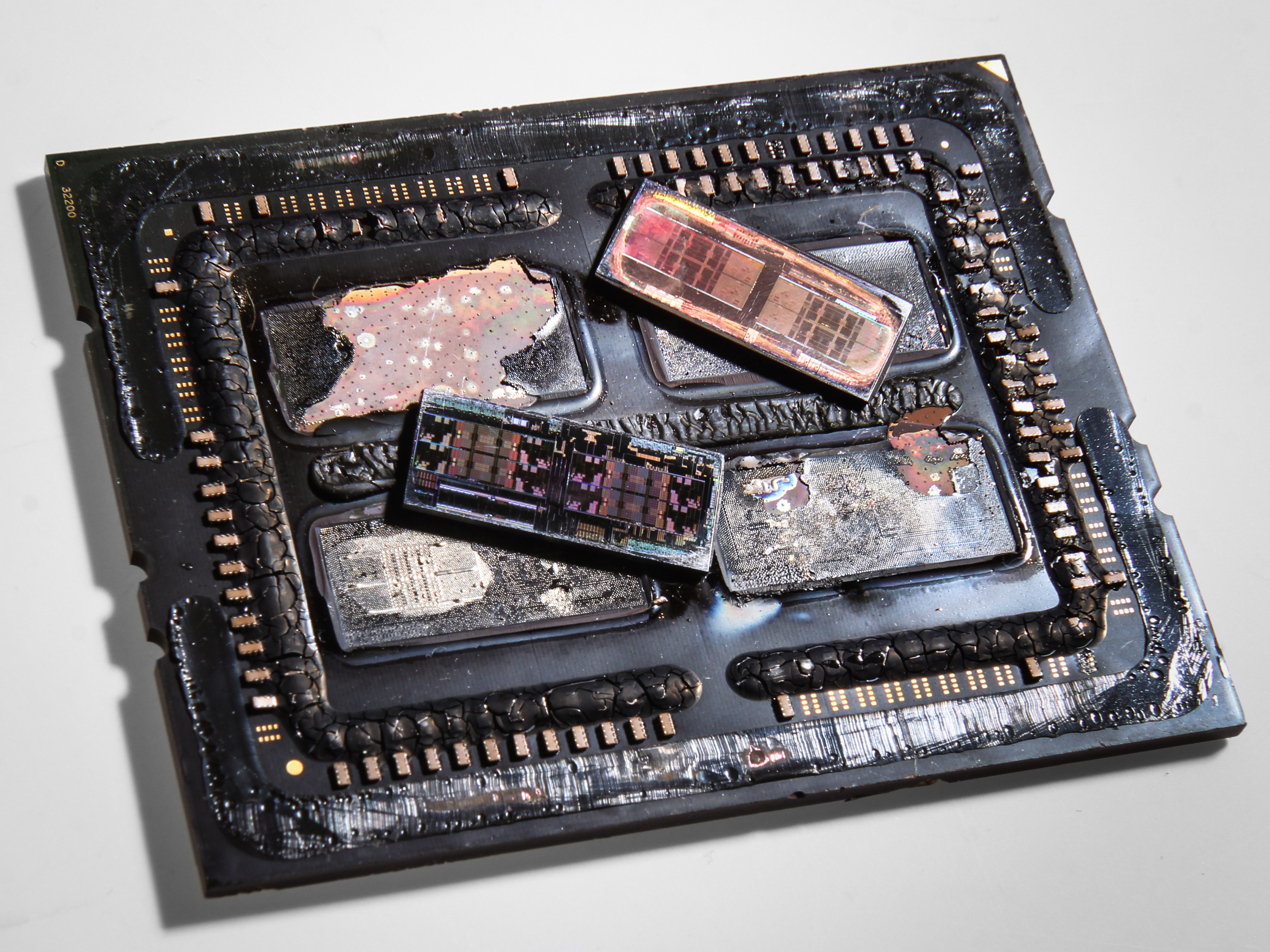
Transistor feature size is decreasing despite constant rumors about the death of Moore’s law and the fact that industry is really close to physical limits of miniaturisation (or even went through them with some clever technology tricks). Moore’s law, however, created user’s appetite for innovation, which is hard to handle for the industry. That’s why modern microelectronic products aren’t just feature size scaled, but also employ a number of other features, often even more complicated than chip scaling.


Disclaimer: This article is a slightly updated translation of my own piece published on this very site here. If you're Russian-speaking, you may want to check the original. If you're English-speaking, it's worth noting that English is not my native language, so I'll be very grateful for the feedback if you find something weird in the text.
Read more →

A bot for Starcraft in Rust, C or any other language

Reading time12 min
Reach and readers62K

StarCraft: Brood War. This game means so much to me! And to many of you, I guess. So much, that I wonder if I should even give a link to its page on Wikipedia or not.


Once Halt sent me PM and offered to learn Rust. Like any ordinary people, we decided to start with hello world writing a dynamic library for Windows that could be loaded into StarCraft's address space and manage units.


The following article will describe the process of finding solutions and using technologies and techniques that will allow you to learn new things about Rust and its ecosystem. You may also be inspired to implement a bot using your favorite language, whether it be C, C++, Ruby, Python, etc.

Ready to roll out!

PVS-Studio 7.00

Reading time6 min
Reach and readers4.4K
PVS-Studio C#\Java\C++Today is an important day — after 28 releases of the sixth version we present our PVS-Studio 7.00, in which the key innovation is the support of the Java language. However, during 2018 we have acquired many other important changes related to C++, C#, infrastructure and support of coding standards. Therefore, we bring to your attention a note that sums up the major changes that have happened in PVS-Studio for the last time.

Читать дальше →

Hello world! Or Habr in English, v1.0

Reading time4 min
Reach and readers32K
This is the first post in our blog in 2019. And this is important for all of us: we are finally launching the English version of Habr! Actually it was ready in the middle of December, but — you know — releasing a new feature right before Christmas is like deploying on Friday afternoon. So we decided to do it in the beginning of 2019.


Read more →

Stack-based calculator on the Cyclone IV FPGA board

Reading time12 min
Reach and readers11K

Introduction


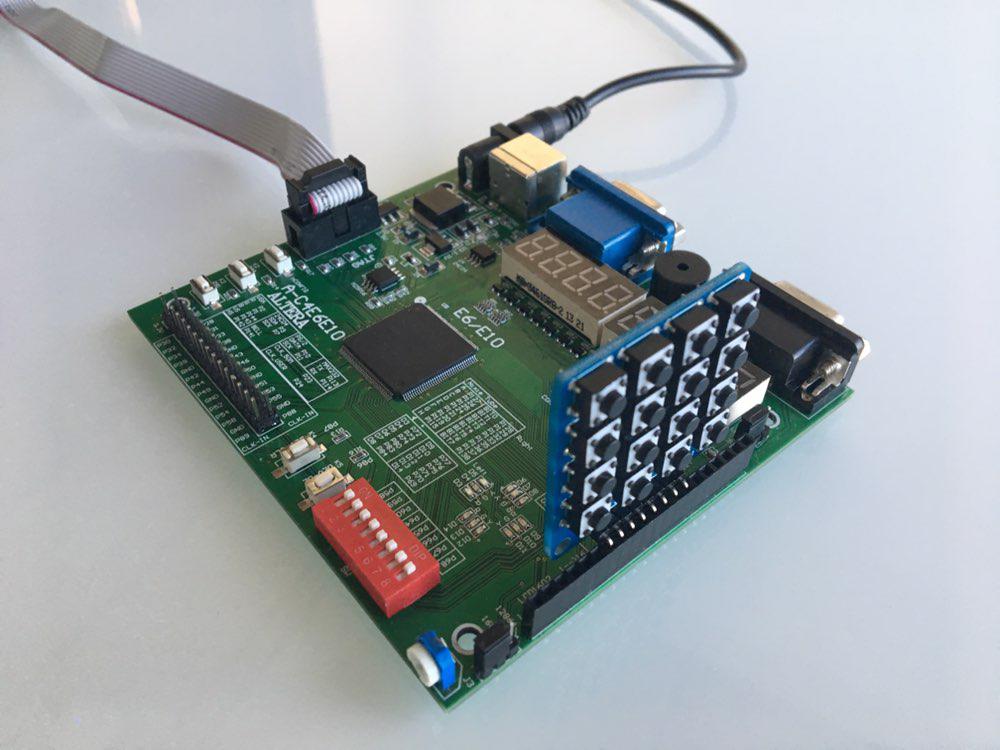
As first-year students of Innopolis University, we had an opportunity to make our own project in computer architecture. University suggested us several projects and we have chosen to make a stack-based calculator with reverse polish notation. One of the requirements for the project is to use FPGA board provided by the university.


As our board, we have chosen Cyclon IV. Therefore, we had to write code on hardware description language. In the course we have studied Verilog, so we have chosen it. Also, the university has additional modules for FPGA, such as numpad, thus we decided to use it in our project.

In this article, we want to share our knowledge about FPGA and Verilog, also provide you with a tutorial to repeat our project.
Read more →