Pull to refresh

All streams

Show first
Period
Level of difficulty

Трюки, которым я научился при создании маленьких GLSL-демо

Level of difficultyMedium
Reading time9 min
Reach and readers8.7K

За последние два месяца я написал несколько маленьких GLSL-демо. О первом из них, Red Alp, я написал статью. В ней я подробно расписал весь процесс, поэтому рекомендую прочитать её, если вам незнакома эта сфера.

Мы рассмотрим четыре демо: MoonlightEntrance 3Archipelago и Cutie. Но на этот раз я расскажу лишь о паре уроков, которые извлёк из каждого. Мы не будем углубляться во все аспекты, потому что это было бы излишне.

Read more

Autism spectrum disorders and a career in IT: personal experience

Reading time15 min
Reach and readers15K

I'm stunned by the illogicality of others, and they are stunned by the fact that I'm a robot." This phrase perfectly describes the peculiarities of my interaction with the world around me. I'm like this robot. Or an alien. I can only guess how the other people see me. But now I know for sure that others consider me at least strange. The feeling is mutual. Many actions of people around me seem completely irrational and illogical to me.

For a long time, this baffled me. I didn't understand what was going on, and considered myself a deep introvert, a withdrawn, gloomy dude who did not understand people and their feelings at all. I kept wondering what was wrong with me…

Read more

Postgres Pro TDE — security and performance

Level of difficultyMedium
Reading time14 min
Reach and readers20K

TDE comes in many flavors — from encryption at the TAM level to full-cluster encryption and tablespace markers. We take a close look at Percona, Cybertec/EDB, Pangolin/Fujitsu, and show where you lose performance and reliability, and where you gain flexibility.

On top of that, Vasily Bernstein, Deputy head of product development, and Vladimir Abramov, senior security engineer, will share how Postgres Pro Enterprise implements key rotation without rewriting entire tables — and why AES-GCM was the clear choice.

Read more

PGConf.Nepal 2026 invites you

Level of difficultyEasy
Reading time3 min
Reach and readers4.2K

From 18 to 21 November 2026, Nepal will host PGConf.Nepal 2026, the country’s fourth PostgreSQL conference. The previous events took place in 2018, 2023, and 2025. This year, the conference is expected to bring together a wider mix of participants, organisations, and countries.

Read more

Less routine, more control: PPEM gets smarter

Reading time3 min
Reach and readers9.2K

Bulk config rollouts, built-in OpenTelemetry, and two-click HA cluster control are all part of one goal: making PostgreSQL admin simpler and safer. PPEM 2.3 is a big step toward that — with user-defined presets, a reworked alerting system, and stronger RBAC — helping you bring order to messy configs and trust the system to warn you before things go sideways.

Read more

Small but mighty optimizations: how pgpro_planner rescues struggling queries

Level of difficultyMedium
Reading time11 min
Reach and readers3.7K

What do 1C queries, IN (VALUES ...) constructs, and the innocent expression x + 0 have in common? They can all turn a millisecond query into a multi-minute wait because PostgreSQL's standard planner "trips" over them. We break down how the pgpro_planner extension rewrites tricky parts of the query tree into a friendly form before the optimizer picks a bad plan — and why some of these fixes have already made it into vanilla PostgreSQL 18.

Read more

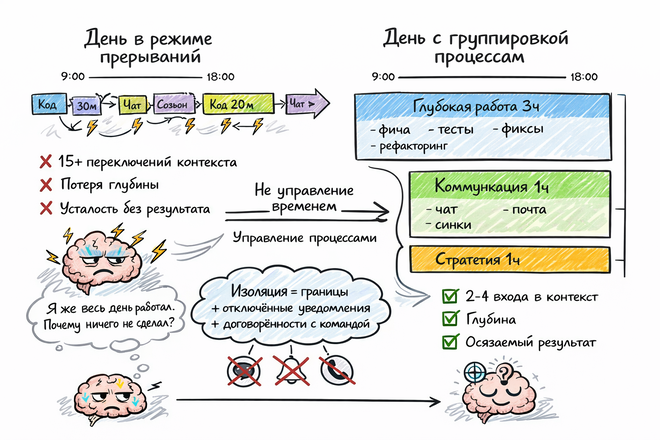
Проблема не в дедлайнах. Проблема в отсутствии границ и так ли это?

Level of difficultyEasy
Reading time7 min
Reach and readers6.7K

Временем управлять нельзя - это не ресурс и почему у меня внутри умирает один инженер? Предлагаю это проверить, получится ли прийти к чему-то общему.

Read more

PostgreSQL 18: Part 5 or CommitFest 2025-03

Level of difficultyMedium
Reading time34 min
Reach and readers20K

September 25th marks the release of PostgreSQL 18. This article covers the March CommitFest and concludes the series covering the new features of the upcoming update. This article turned out quite large, as the last March CommitFest is traditionally the biggest and richest in new features.

You can find previous reviews of PostgreSQL 18 CommitFests here: 2024-07, 2024-09, 2024-11, 2025-01.

More

The Russian trace in the history of the PostgreSQL logo

Level of difficultyEasy
Reading time7 min
Reach and readers24K

The story of the PostgreSQL logo was shared by Oleg Bartunov, CEO of Postgres Professional, who personally witnessed these events and preserved an archive of correspondence and visual design development for the database system.

Our iconic PostgreSQL logo — our beloved “Slonik” — has come a long way. Soon, it will turn thirty! Over the years, its story has gathered plenty of myths and speculation. As a veteran of the community, I decided it’s time to set the record straight, relying on the memories of those who were there. Who actually came up with it? Why an elephant? How did it end up in a diamond, and how did the Russian word “slonik” become a part of the global IT vocabulary?

Read more

A year-long hunt for a Linux kernel bug, or the unexpected zeros from XFS

Level of difficultyHard
Reading time10 min
Reach and readers2K

You’ve probably had this happen too: a service runs smoothly, keeps users happy with its stability and performance, and your monitoring stays reassuringly green. Then, the next moment — boom, it’s gone. You panic, dive into the error logs, and find either a vague segfault or nothing at all. What to do is unclear, and production needs saving, so you bring it back up — and everything works just like before. You try to investigate what happened, but over time you switch to other tasks, and the incident fades into the background or gets forgotten entirely.

That’s all fine when you’re on your own. But once you have many customers, sooner or later you start feeling that something isn’t right, and that you need to dig into these spikes of entropy to find the root cause of such incidents.

This article describes our year-long investigation. You’ll learn why PostgreSQL (and any other application) can crash because of a bug in the Linux kernel, what XFS has to do with it, and why memory reclamation might not be as helpful as you thought.

Read more

PostgreSQL for WMS: a DBMS selection strategy in the era of import substitution

Level of difficultyMedium
Reading time9 min
Reach and readers8.3K

Today we want to talk about choosing a DBMS for WMS not as a dry technical discussion, but as a strategic decision that determines the security, budget, and future flexibility of your business. This is not about "why PostgreSQL is technically better," but about why it has become the only safe, cost-effective, and future-proof solution for Russian warehouse systems in the new reality.

This is not just another database article. It is a roadmap for those who do not want to wake up one day with a paralyzed warehouse and multi-million fines due to a bad decision made yesterday. At INTEKEY we have gone this path deliberately, and today our WMS projects for the largest market players run on PostgreSQL. We know from experience where the pitfalls are and how to avoid them.

Read more

Breaking data for fun

Level of difficultyEasy
Reading time8 min
Reach and readers7.3K

Throughout their careers engineers build systems that protect data and guard it against corruption. But what if the right approach is the opposite: deliberately corrupting data, generating it out of thin air, and creating forgeries indistinguishable from the real thing?

Maksim Gramin, systems analyst at Postgres Professional, explains why creating fake data is a critical skill for testing, security, and development — and how to do it properly without turning your database into a junkyard of “John Smith” entries.

Read more

DragonDoll: the spyware hiding behind a Google Chrome update

Reading time30 min
Reach and readers1.9K

In spring 2026, researchers at the Positive Technologies Expert Security Center (PT ESC) identified an unusual campaign targeting users in Saudi Arabia. The campaign used a previously unknown APK named Chrome.apk. The sample immediately stood out. Behind a benign-looking Google Chrome update screen and an unexpected request to enable Accessibility Services, we found a heavily protected execution chain that ultimately deployed Android spyware.

Read more

The sparrow that chirped too loud: FamousSparrow attacks using updated SparrowDoor and the new SquawkDoor backdoor

Level of difficultyMedium
Reading time57 min
Reach and readers4.3K

In the first half of 2026, we discovered activity by the East Asian threat group FamousSparrow. Its attacks targeted several countries in South Asia and Europe. In these attacks, the threat actor used its own malware: a heavily reworked variant of the modular SparrowDoor backdoor and a new backdoor that we named SquawkDoor.

FamousSparrow, also known as Salt Typhoon and Earth Estries, is an East Asian threat group that has been active since 2019. The group is known for using its proprietary SparrowDoor backdoor and initially focused on attacks against hotels worldwide, as well as government and international organizations. Later, FamousSparrow began actively targeting telecommunications companies and internet service providers, apparently seeking long-term access to lawful communications intercept systems.

In these attacks, the threat actor used both malicious LNK files and a website compromise vector involving malicious JavaScript. The injected script displayed a fake error message when a user visited the page and prompted them to download a new certificate. In reality, the download was a malicious executable that led to backdoor infection. The attacks were tailored to specific countries: the JavaScript samples and payloads contained text customized for the target country.

Read more
1
23 ...