Every time when the essential question arises, whether to upgrade the cards in the server room or not, I look through similar articles and watch such videos.
Channel with the aforementioned video is very underestimated, but the author does not deal with ML. In general, when analyzing comparisons of accelerators for ML, several things usually catch your eye:
- The authors usually take into account only the "adequacy" for the market of new cards in the United States;
- The ratings are far from the people and are made on very standard networks (which is probably good overall) without details;
- The popular mantra to train more and more gigantic models makes its own adjustments to the comparison;
The answer to the question "which card is better?" is not rocket science: Cards of the 20* series didn't get much popularity, while the 1080 Ti from Avito (Russian craigslist) still are very attractive (and, oddly enough, don't get cheaper, probably for this reason).
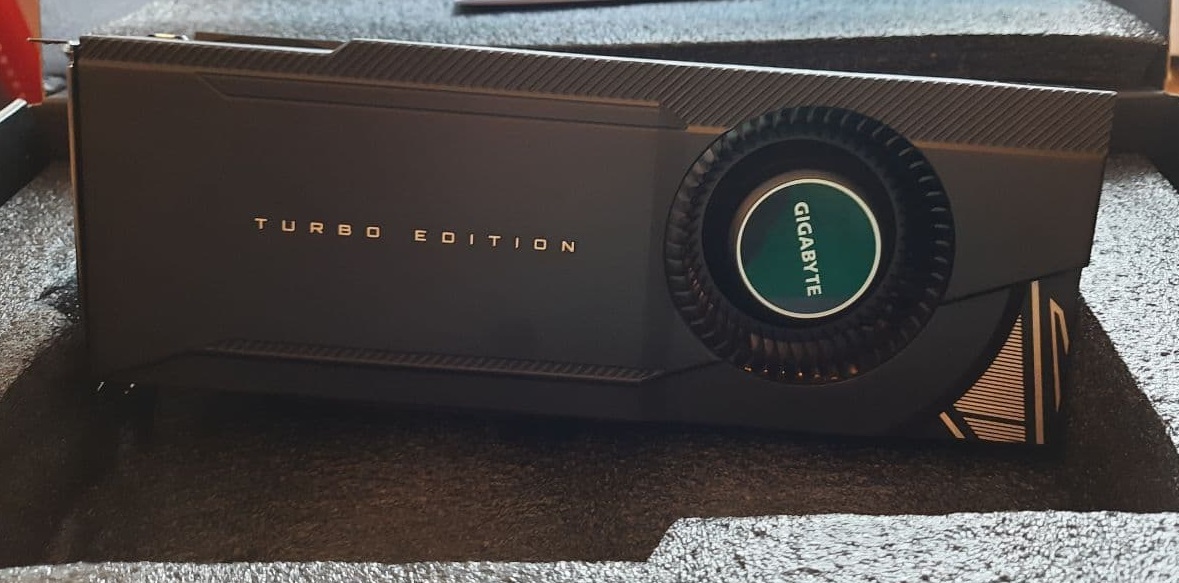
All this is fine and dandy and the standard benchmarks are unlikely to lie too much, but recently I learned about the existence of Multi-Instance-GPU technology for A100 video cards and native support for TF32 for Ampere devices and I got the idea to share my experience of the real testing cards on the Ampere architecture (3090 and A100). In this short note, I will try to answer the questions:
- Is the upgrade to Ampere worth it? (spoiler for the impatient — yes);
- Are the A100 worth the money (spoiler — in general — no);
- Are there any cases when the A100 is still interesting (spoiler — yes);
- Is MIG technology useful (spoiler — yes, but for inference and for very specific cases for training);


It would seem that the question of the color of the Moon and the Sun from space for modern science is so simple that in our century there should be no problem at all with the answer. We are talking about colors when observing precisely from space, since the atmosphere causes a color change due to Rayleigh light scattering. «Surely somewhere in the encyclopedia about this in detail, in numbers it has long been written,» you will say. Well, now try searching the Internet for information about it. Happened? Most likely no. The maximum that you will find is a couple of words about the fact that the Moon has a brownish tint, and the Sun is reddish. But you will not find information about whether these tints are visible to the human eye or not, especially the meanings of colors in RGB or at least color temperatures. But you will find a bunch of photos and videos where the Moon from space is absolutely gray, mostly in photos of the American Apollo program, and where the Sun from space is depicted white and even blue.