How I Almost Sold a Telegram Username for $9500

Friends, today I want to share a story that made me believe in miracles for half an hour. And at the same time, I'll break down a new scam scheme that showed me that criminals are evolving too.

Money 2.0

Friends, today I want to share a story that made me believe in miracles for half an hour. And at the same time, I'll break down a new scam scheme that showed me that criminals are evolving too.

The most interesting finance and tech news from Russia and the world for the week: RKN blocked FaceTime, Snapchat, and Roblox, visa-free travel with China and Saudi Arabia, Russia was added to the EU's money laundering blacklist, home surveillance cameras were hacked in South Korea, Musk's Twitter was fined in Europe, and rumors of a 'garlic' model from OpenAI.

It’s surprising that there’s almost no practical information about Telegram Cocoon beyond what’s on GitHub and the official website. Various media outlets have plenty of general coverage about the network launch, but almost nothing about real user experience.
I decided to spend a bit of time and figure out what’s actually going on in the network, how it works, and, most importantly, whether I, as a developer, can use it today. So in this article I’ll look at Cocoon from a developer’s perspective: how to install it and how to use it.
A lot of people around me spend time trading on the stock market. Some trade crypto, some trade stocks, others trade currencies. Some call themselves investors, others call themselves traders. I often see random passersby in various cities and countries checking their trading terminals on their phones or laptops. And at night I sometimes write analytical or backtesting software—well, I did up until recently. All these people share a common faith and a set of misconceptions about the market.

Hey! My name's Kirill Ziborov and I'm a member of the Distributed System Security team at Positive Technologies. In this article, I'll be continuing the discussion of methods and tools for the formal verification of smart contracts and their practical application to prevent vulnerabilities. The main focus will be on the deductive verification method, or more precisely, the ConCert framework for testing and verifying smart contracts.

Hello everyone!
A year ago, I became curious about whether it was possible to earn money in crypto by copying the trades of other traders. Instead of investing money right away, I decided to thoroughly explore this by writing a parser that monitored about 2,000 portfolios in real-time over the course of a year.
Initially, I parsed the Traderwagon site, which unfortunately shut down. I then switched to Binance's copy trading, which was just starting out at the time.
The number of portfolios available for investment on Binance is continually growing; currently, there are over 10,000. My script only parsed a portion of these to maintain about 2,000 consistent portfolios. This was necessary to track changes in traders' positions at least every 20 minutes with the server resources I had allocated for the project.
There are several peculiarities in how my parser operates. For example, when a trader hides their positions, my script also closes them since it can't monitor hidden trades. When a trader significantly adjusts their position, such as a complete turnaround, the script exits the trade. I chose to save time on developing a more complex follow-algorithm and planned to refine it later if the testing stage proved successful. I also limited the time a trader could stay in a deal to a few days and forcibly closed positions if this period was exceeded. I observed that staying in a trade longer slightly increased the average profit/loss, whereas reducing the time allowed for reinvesting the same funds into a greater number of traders and their deals.

As NFTs spread across the world, users spent millions of dollars to buy digital assets to prove their uniqueness. Many creators and artists showcase their beautiful products, such as artworks, music, etc., in the NFT marketplace. What if a creator can profit from their work even after selling it to another business? This is where royalty comes in; it is a recent addition to the NFT space. Owing NFT royalties can benefit artists and creators from succeeding sales to the business.
Once NFT royalties became a hot topic and gained popularity among artists and creators. Later, arguments were evolved to remove royalties that had swayed other NFT creators. DeGods, the popular Solana's NFT project, has moved its royalty model to 0%. However, creating a royalty-based NFT marketplace attracts many creators around the world. In this article, we will delve into the development process of NFT marketplace royalties and how it benefits enthusiastic artists from secondary sales.

Python, Java, C++, Delphi, PHP—these programming languages were used create a virtual crypto ATM machine to be tested by the participants of the $NATCH contest at Positive Hack Days 12. The entire code was written by ChatGPT and proved to be exceptionally good. This time, we had reviewed the contest concept and decided to use a report system. In addition to standard tasks (kiosk bypass, privilege escalation, and AppLocker bypass), this year's participants faced new unusual tasks. Read on below to find out which ones.

Let’s imagine you need access to the real-time data of some smart contracts on Ethereum (or Polygon, BSC, etc.) like Uniswap or even PEPE coin to analyze its data using the standard data scientist/analyst tools: Python, Pandas, Matplotlib, etc. In this tutorial, I’ll show you more sophisticated data access tools that are more like a surgical scalpel (The Graph subgraphs) than a well-known Swiss knife (RPC node access) or hammer (ready-to-use APIs). I hope my metaphors don’t scare you ?.

Against the backdrop of a sharp decline in venture investments in various traditional industries (this is clearly related to the global economic situation), but against the backdrop of certain upheavals in the crypto industry, the question arises of a driver that can become one of the «pillars» of the development of a decentralized industry.

Today, it becomes quite obvious that the situation with web3 technology is becoming similar to the situation with programmatic advertising 10-12 years ago. When programmatic-ads just started, the major market players were not very optimistic - it was much easier for them to follow the well-known paths with chains of publishers and agencies. However, once programmatic got rid of the «childhood diseases» and became simple in use, effective in attracting customers, it has taken a dominant position in the modern advertising market - providing precise targeting and cost reduction. The situation with web3 is similar - all publishers ideally want to have systems for lifetime tracking of customer achievements (that is, Soul Bound tokens in web3), theoretically stable decentralized data storage systems that cannot be broken through a simple server attack, real users’ ownership for his content, as well as simple cross-border payment systems that have built-in algorithms for calculating all duties and taxes. Sounds like a perfect world, but even Amazon doesn't do that yet. Why?
The problem is the web3 entry point, which is difficult for users. As soon as they start talking about opening a crypto wallet, about 12 phrases as a backup, most users interrupt the onboarding process and immediately leave the site. This is obvious - over the decades of the development of the digital market, users have become accustomed to facilitating and simplifying systems for interacting with the site. One-click registration, effective convenient UI, visibility and the «metro principle», where the client is led by the hand – this is modern digital progress. And here some 12 phrases are offered, incomprehensible tokens - and, most importantly, why? So, it turns out that a self-sufficient audience of geeks or really advanced users revolves around web3, which is growing weakly.

Last week, I introduced you to the world of onchain analysis and explored some of the ways it can be used to gain insights into the cryptocurrency market.
Today, we're taking things up a notch with a tutorial that will guide you through running your own onchain analysis. By the end of this tutorial, you'll have the skills and knowledge you need to start analyzing blockchain data and making informed decisions about your cryptocurrency investments. So let's dive right in and see what insights we can uncover!
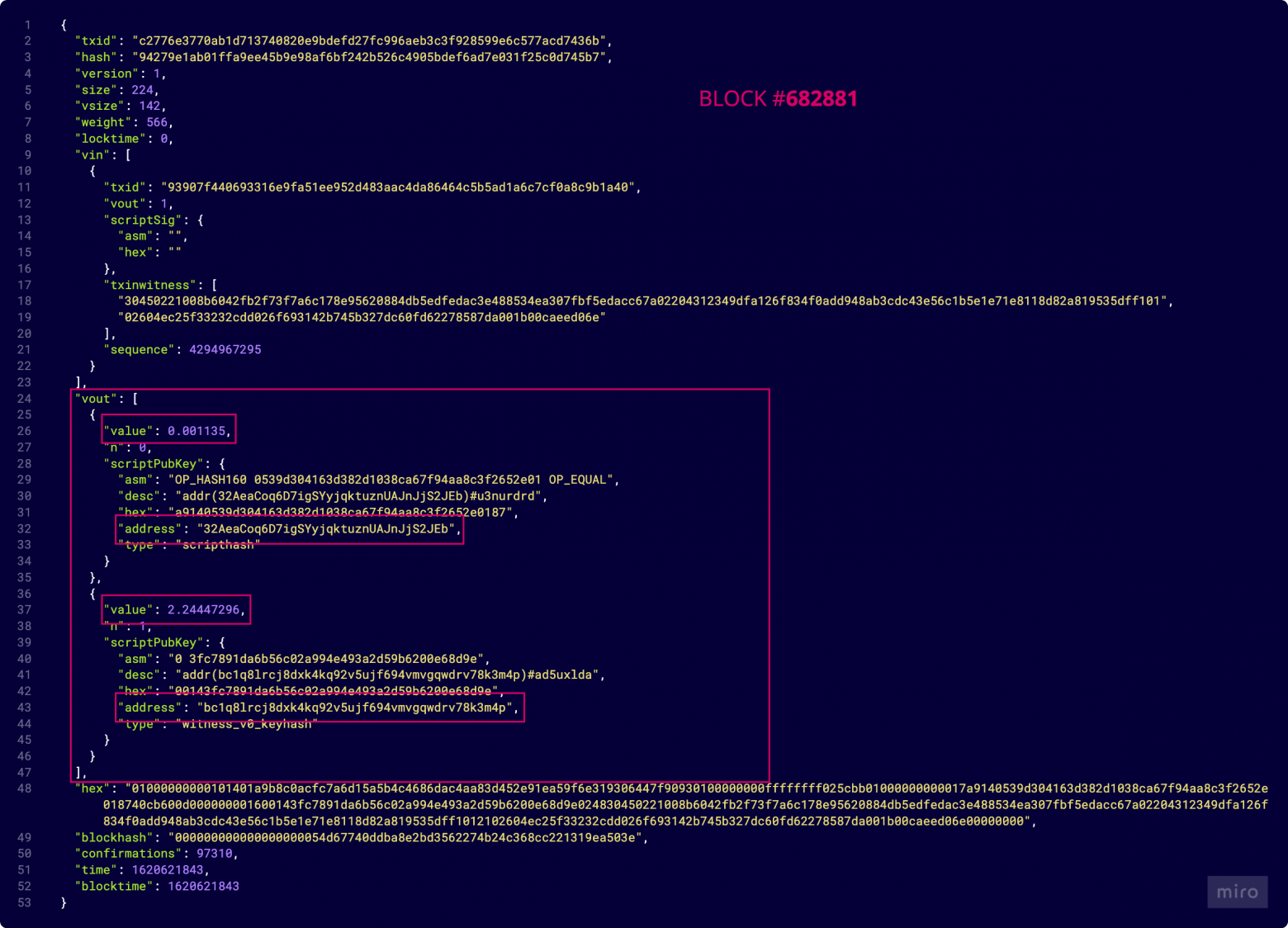
This tutorial is built around the Bitcoin blockchain, but many of the techniques are applicable to any other blockchains as long as they have wallets, balances, and transactions.

Hey there, my fellow crypto enthusiast! Are you looking to take your trading game to the next level and gain a deeper understanding of the market trends and behavior? If so, then onchain analytics is the perfect tool for you.

This is the complete crash course on the Elliptic Curves Cryptography used in Bitcoin and other blockchains. With code samples and a live demo from scratch.


The spread of cryptocurrencies contributed to the development of many solutions based on a distributed ledger technology (blockchain). Although the scope of these solutions varies, most of them have the same basic set of security services, i.e. confidentiality, authenticity, and integrity. These features are granted by the practical applications of public key cryptography, in particular, digital signature (DS). But unlike many other applications of public key cryptography, cryptocurrency networks do not use public key certificates. This is the aspect that we would like to talk about.

Do you plan to start a cryptocurrency exchange business? If so, now is the perfect time. The easiest and safest way to make money from cryptocurrencies is to create a crypto-exchange application. Regardless of whether traders and investors make or lose money, the cryptocurrency exchange will remain a winner in any case.
But, how to open a cryptocurrency exchange app? So, let’s look at the main stages of the process.

My name is Serhii Pimenov. I’m a web developer from Kyiv, Ukraine (maybe you know me by the nickname olton).
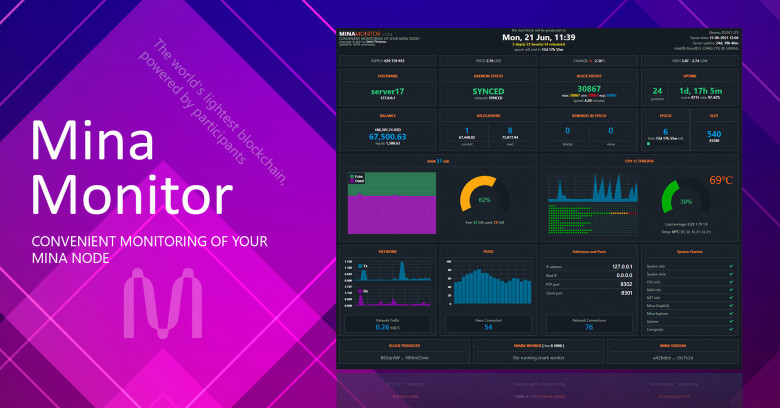
Today I'm going to speak about one of my tools for the Mina blockchain - “Mina Monitor”. It’s the first article in the series about Mina and Mina Tools. In this article, I will introduce you to my tool for monitoring the Mina nodes.

And so here we find ourselves in the year of our lord 2021. Global crypto market capitalization is approaching $2 trillion. PayPal is launching a crypto checkout service. Lindsay Lohan is shilling Tron. The Dogecoin Super Bowl commercial didn’t happen, but Elon’s taking it “literally” to the moon instead. Our ascendancy is complete. Crypto is mainstream. But, even today, getting your hands on certain crypto assets can be a bit of an epic journey.

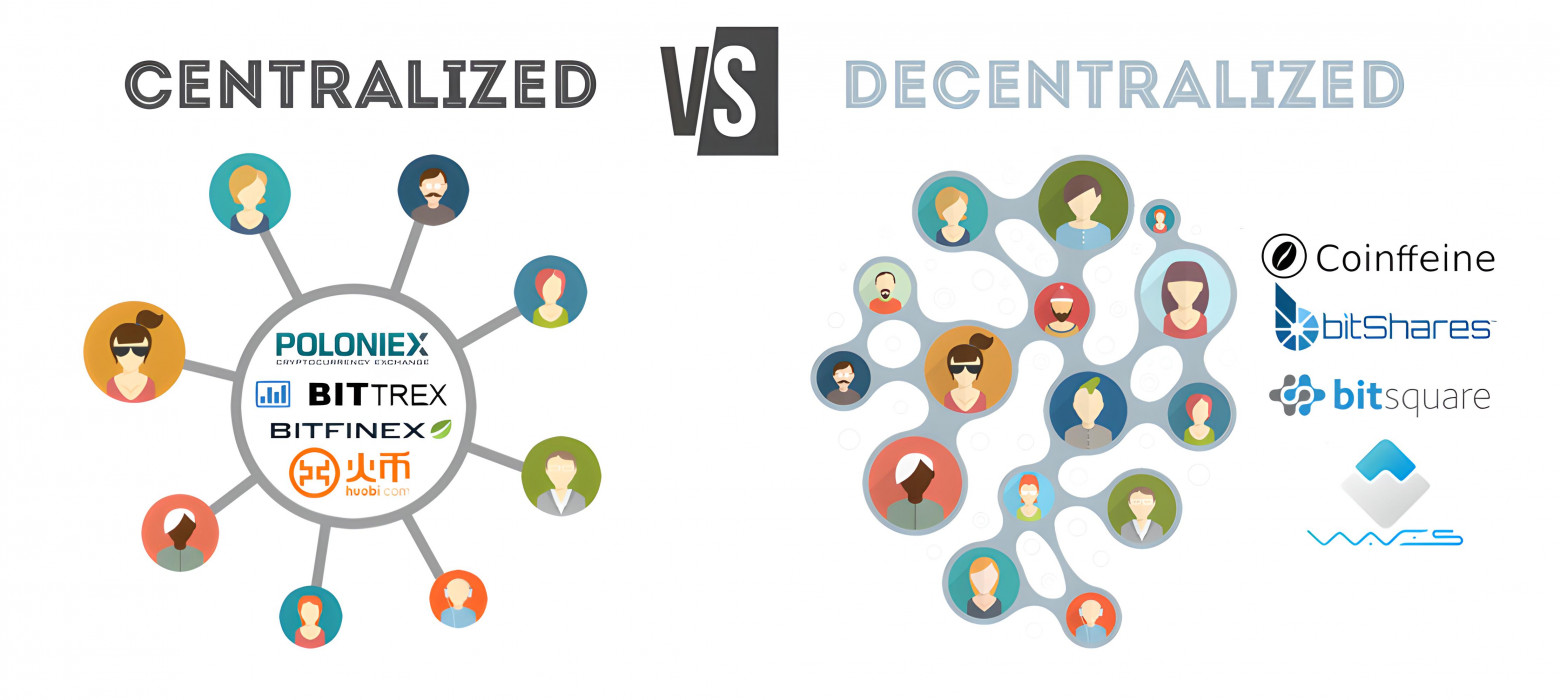
Blockchain is a decentralized technology that maintains a record of all transactions occurring over a peer-to-peer network. Due to Blockchain's several different high-level use cases, numerous industries described Blockchain as the 'magic beans.'
Blockchains store the record in a decentralized system that is interconnected. This technology lessens vulnerability and enhances transparency in all industrial sectors as information is stored digitally, and it does not have any centralized point to carry out the transactions.
Do You Know?