Pull to refresh
1024K+

Programming *

The art of creating computer programs

1 188,14
Rating
Show first
Rating limit
Level of difficulty

An update to C# versions and C# tooling

Reading time3 min
Reach and readers4K

Starting with Visual Studio 2019 Preview 4 and RC, we’ll be adjusting how C# versions are treated in .NET tooling. Read more below <cut>.


Summary of changes


Firstly, we’re adding two new Language Version (LangVersion) values: LatestMajor and Preview. Here’s how they stack up with the currently supported list of values:

Read more →

Details

Reading time6 min
Reach and readers1.5K
How often do you get to 404 pages? Usually, they are not styled and stay default. Recently I’ve found test.do.am which interactive character attracts attention and livens up the error page.

Probably, there was just a cat picture, then they thought up eyes movement and developer implemented the idea.imageNow user visits the page and checks out the effect. It’s cool and pleasant small feature, it catches, then user discusses it with colleagues or friends and even repeats the feature. It could be this easy, if not:

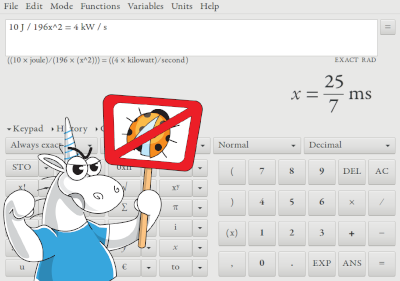
Following in the Footsteps of Calculators: Qalculate

Reading time7 min
Reach and readers2K

Previously we did code reviews of large mathematical packages, for example, Scilab and Octave, whereby calculators remained aloof as small utilities, in which it is difficult to make errors due to their small codebase. We were wrong that we haven't paid attention to them. The case with posting the source code of the Windows calculator showed that actually everyone was interested in discussing types of errors hiding in it. Moreover, the number of errors there was more than enough to write an article about that. My colleagues and I, we decided to explore the code of a number of popular calculators, and it turned out that the code of the Windows calculator was not that bad (spoiler).
Read more →

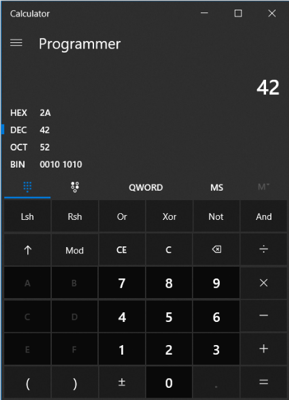
Announcing the Open Sourcing of Windows Calculator

Reading time2 min
Reach and readers1.5K

Today, we’re excited to announce that we are open sourcing Windows Calculator on GitHub under the MIT License. This includes the source code, build system, unit tests, and product roadmap. Our goal is to build an even better user experience in partnership with the community. We are encouraging your fresh perspectives and increased participation to help define the future of Calculator.


Image of Windows Calculator

Read more →

VShard — horizontal scaling in Tarantool

Reading time14 min
Reach and readers3.2K


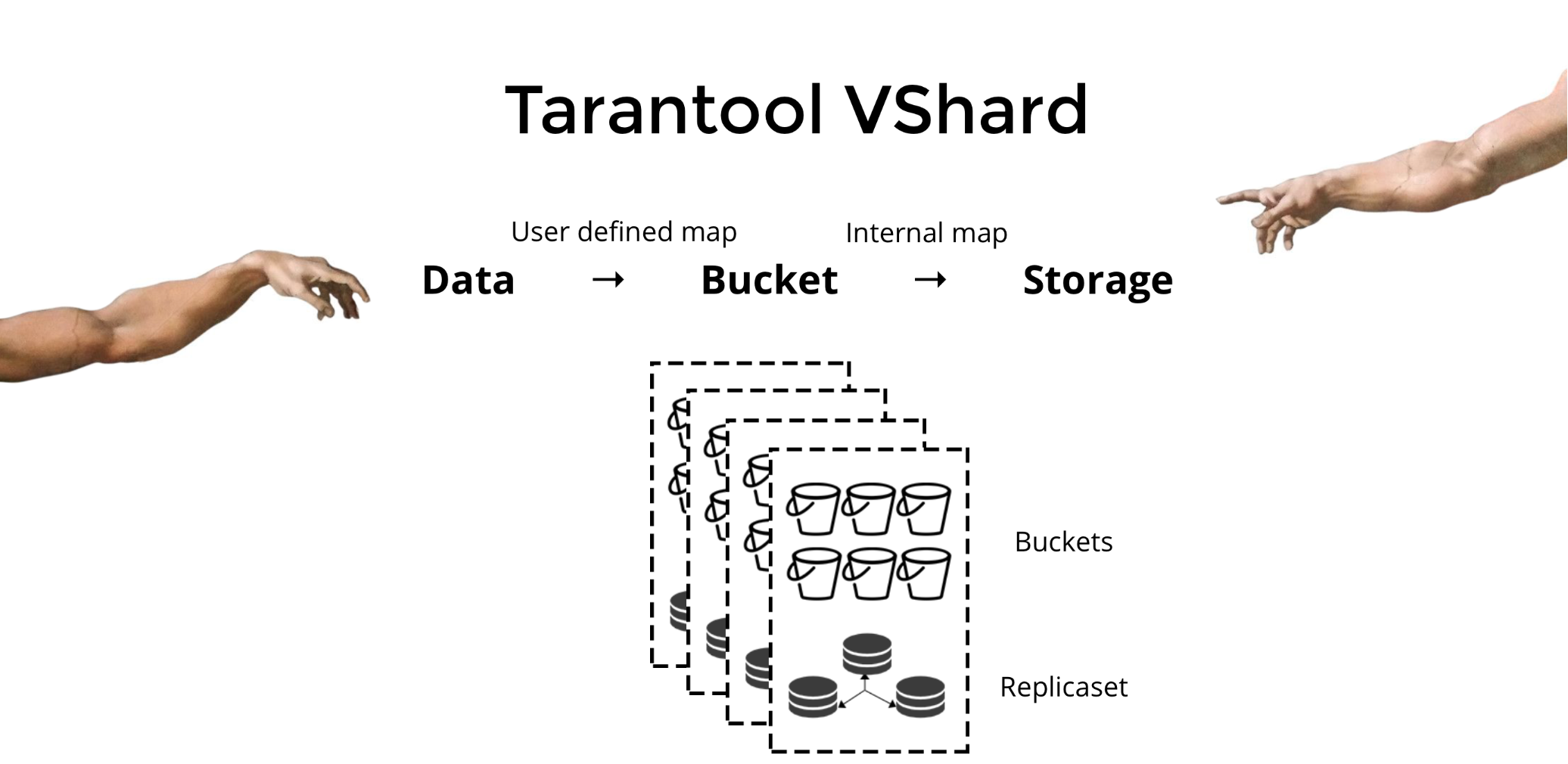
Hi, my name is Vladislav, and I am a member of the Tarantool development team. Tarantool is a DBMS and an application server all in one. Today I am going to tell the story of how we implemented horizontal scaling in Tarantool by means of the VShard module.

Some basic knowledge first.

There are two types of scaling: horizontal and vertical. And there are two types of horizontal scaling: replication and sharding. Replication ensures computational scaling whereas sharding is used for data scaling.

Sharding is also subdivided into two types: range-based sharding and hash-based sharding.

Range-based sharding implies that some shard key is computed for each cluster record. The shard keys are projected onto a straight line that is separated into ranges and allocated to different physical nodes.

Hash-based sharding is less complicated: a hash function is calculated for each record in a cluster; records with the same hash function are allocated to the same physical node.

I will focus on horizontal scaling using hash-based sharding.
Read more →

How to vendor a git into another git

Reading time4 min
Reach and readers5.4K

Discovering git vendor extension.


Cross-post from my medium blog: https://medium.com/opsops/git-vendor-295db4bcec3a


I would like to introduce the proper way to handle vendoring of git repositories.


What is is ‘vendoring’?


Vendoring is a way to integrate other’s work into your own. It’s the opposite of ‘linking’ against third-party library. Instead of having that library as a dependency, application uses this library as a part of own source code and keep that code ‘inside’ itself.


Normally, vendoring is done by language tooling: bundler, cargo, pip, etc. But sometimes you need to vendor something not covered by any existing toolset, or something multi-language, that it’s impossible to find the ‘core’ language tool for that.


The solution for this situation is vendoring on a git level. You have your own git repository (I call it ‘destination repo’), and you want to incorporate some other repository (I call it ‘source repo’) as a directory into your (destination repo).


The things you expect from a well-designed vendoring system (regardless of Git it is or not):


  • Visibility. You want to know that some code is vendored, means it wasn’t written by committer.
Read more →

Why does Dodo Pizza need 250 developers?

Reading time4 min
Reach and readers4.2K
In autumn, we announced we were going to expand our IT team from 49 to 250 developers. And immediately we were buried under an avalanche of questions — mostly, people were interested why a pizza chain needs so many software engineers. How did we come up with such a number? So now I want to answer that.


Read more →

Weak UI, weak programmer

Reading time2 min
Reach and readers3.7K

UI facepalm


Why do so many programmers hate UI work? Because it is tedious. Especially, for the Web, but other types of UI are only slightly easier. Layouts, margins, paddings — neverending stream of little tweaks to make it look OK on all sane environments, and somehow this freaking button sometimes overlaps that input field. Rrrr! And yes, it should not hang on button clicks, which means a lot of asynchronous programming, which is a nightmare.


And don’t even speak about aesthetics and usability! Choose right colours, element sizes and locations, find/draw images and put them where they fit, think about user workflows — isn’t it a designers’ or Ux specialists’ job?! Leave me alone, I’m a programmer. I work with backend layers, where everything is straightforward and linear, there are no buttloads of different environments to adjust to, and design is guided by mere logic without pesky fussing with ‘user friendliness’ and ’beauty’!

Read more →

PowerShell Basics: Detecting if a String Ends with a Certain Character

Reading time1 min
Reach and readers2.1K
Did you know you can detect if a string ends in a specific character or if it starts in one in PowerShell? Thomas Rayner previously shared on CANITPRO.NET how this can be easily done by using regular expressions or more simply know as Regex.

Read more →

.NET Reference Types vs Value Types. Part 1

Reading time16 min
Reach and readers8.3K

First, let’s talk about Reference Types and Value Types. I think people don’t really understand the differences and benefits of both. They usually say reference types store content on the heap and value types store content on the stack, which is wrong.


Let’s discuss the real differences:


  • A value type: its value is an entire structure. The value of a reference type is a reference to an object. – A structure in memory: value types contain only the data you indicated. Reference types also contain two system fields. The first one stores 'SyncBlockIndex', the second one stores the information about a type, including the information about a Virtual Methods Table (VMT).
  • Reference types can have methods that are overridden when inherited. Value types cannot be inherited.
  • You should allocate space on the heap for an instance of a reference type. A value type can be allocated on the stack, or it becomes the part of a reference type. This sufficiently increases the performance of some algorithms.

However, there are common features:


  • Both subclasses can inherit the object type and become its representatives.

Let’s look closer at each feature.


This chapter was translated from Russian jointly by author and by professional translators. You can help us with translation from Russian or English into any other language, primarily into Chinese or German.

Also, if you want thank us, the best way you can do that is to give us a star on github or to fork repository github/sidristij/dotnetbook.

Read more →

My Pascal compiler and Polish contemporary art

Reading time5 min
Reach and readers8.1K

Origins


Several years ago I wrote a Pascal compiler. The motivation was simple: as a teenager, I had learnt from my first programming textbooks that a compiler is a very sophisticated thing. This claim eventually became a challenge and required to be tested by experience.

image
ha.art.pl

First, a simplistic PL/0 compiler came into being, and later an almost fully-functional Pascal compiler for MS-DOS has grown from it. My source of inspiration was the Compiler Construction book by Niklaus Wirth, the inventor of the Pascal language. I don't care if Wirth's views are now considered obsolete and have no direct connections to the IT mainstream, or if the compiler design fashion has changed. It is enough to know that his techniques are still simple, elegant, and — last but not least — bring much fun, since it is more appealing to parse a program source with a handwritten recursive descent parser and generate the machine code, rather than to call yaccs, bisons and all their descendants.

My compiler's fate was not so trivial. It has lived two lives: the first one in my own hands, and the second in the hands of computer antiquarians from Poland.

C++ Binary Compatibility and Pain-Free Upgrades to Visual Studio 2019

Reading time4 min
Reach and readers4.5K

Visual Studio 2019 pushes the boundaries of individual and team productivity. We hope that you will find these new capabilities compelling and start your upgrade to Visual Studio 2019 soon.


As you are considering this upgrade, rest assured that Visual Studio 2019 makes it distinctively easy to move your codebase from previous versions of Visual Studio. This post captures the reasons why your upgrade to Visual Studio 2019 will be pain-free.


Read more →

Valentine's Day Application on Libgdx

Reading time7 min
Reach and readers4.1K

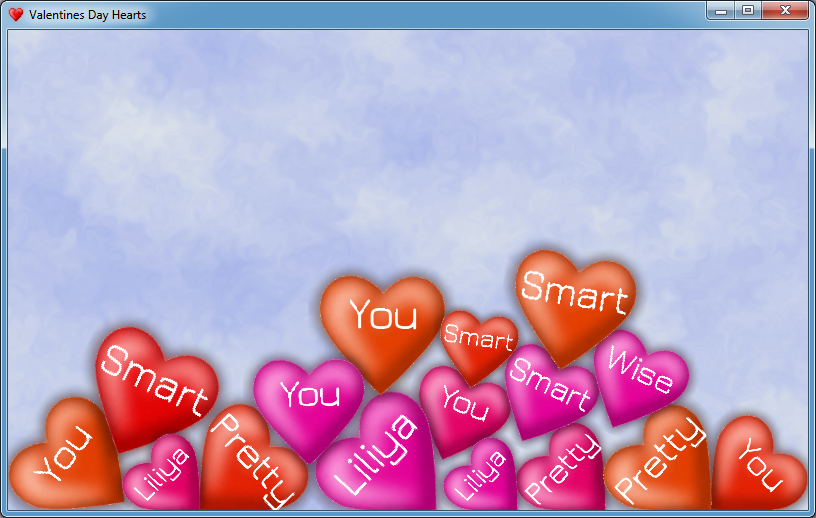
Every year there are a lot of articles dedicated to Valentine's Day. I also decided to get involved in this topic and create something original and unusual. The idea was to create a simple Android application with hearts that would have their physical models and interact with each other. Then I added text, sounds, particles and some other effects. The resulting app was working and quite original! In this article I will describe the creation process, as well as the capabilities and pitfalls of the libgdx library.


Valentines Day Hearts.

Read more →

Microsoft Q# Coding Contest – Winter 2019

Reading time3 min
Reach and readers2.2K

Microsoft’s Quantum team is excited to announce the Q# Coding Contest – Winter 2019! In this contest you can put your quantum programming skills to the test, solving quantum computing tasks in Q#. Winners will receive a Microsoft Quantum T-shirt!


Quantum computing is a radically different computing paradigm compared to classical computing. Indeed, it is so different that some tasks that are believed to be classically intractable (such as factoring integers or simulating physical systems) can be performed efficiently on a quantum computer. In 2017 Microsoft introduced the Quantum Development Kit which includes the Q# programming language. Q# can be used with Visual Studio, Visual Studio Code or the command line, on Windows, macOS, and Linux.


Read more →

SAPUI5 for dummies part 5: A complete step-by-step exercise

Reading time4 min
Reach and readers7.3K


Introduction & Recap


In the previous blog post, we learned how to create a second level of drill-down (detail of detail) and how to interact with OData and ODataModel (v2) in order to delete a database record.


What will be covered on this exercise


With Part 5 of this series of blog posts, we will learn how to create a SimpleForm within a Dialog that will allow us to update the information of a Sales Order Item.


Before updating the database order we have to check that everything typed by the user validates our constraints.


  • ODataModel: we have already used it to display server-side information about our Business Partner, Sales Order, and Sales Order Items. We’ve also used it to delete a database record. We’re now going to use it to update a record thanks to the submitChanges method or remove what we’ve done with the resetChanges method.
  • Expression Binding: an enhancement of the SAPUI5 binding syntax, which allows for providing expressions instead of custom formatter functions
  • SimpleForm: a layout that allows users to create a pixel-perfect form
Read more →

Submit to the Applied F# Challenge

Reading time2 min
Reach and readers1.1K

This post was written by Lena Hall, a Senior Cloud Developer Advocate at Microsoft.


F# Software Foundation has recently announced their new initiative — Applied F# Challenge! We encourage you to participate and send your submissions about F# on Azure through the participation form.


Applied F# Challenge is a new initiative to encourage in-depth educational submissions to reveal more of the interesting, unique, and advanced applications of F#.

Read more →

How does a barcode work?

Reading time6 min
Reach and readers15K
Hi all!

Every person is using barcodes nowadays, mostly without noticing this. When we are buying the groceries in the store, their identifiers are getting from barcodes. Its also the same with goods in the warehouses, postal parcels and so on. But not so many people actually know, how it works.

What is 'inside' the barcode, and what is encoded on this image?


Lets figure it out, and also lets write our own bar decoder.
Read more →