Introduction
It’s time to talk about exceptions or, rather, exceptional situations. Before we start, let’s look at the definition. What is an exceptional situation?
This is a situation that makes the execution of current or subsequent code incorrect. I mean different from how it was designed or intended. Such a situation compromises the integrity of an application or its part, e.g. an object. It brings the application into an extraordinary or exceptional state.
But why do we need to define this terminology? Because it will keep us in some boundaries. If we don’t follow the terminology, we can get too far from a designed concept which may result in many ambiguous situations. Let’s see some practical examples:
 struct Number
 {
     public static Number Parse(string source)
     {
         // ...
         if(!parsed)
         {
             throw new ParsingException();
         }
         // ...
     }

     public static bool TryParse(string source, out Number result)
     {
        // ..
        return parsed;
     }
 }
This example seems a little strange, and it is for a reason. I made this code slightly artificial to show the importance of problems appearing in it. First, let’s look at the Parse method. Why should it throw an exception?

















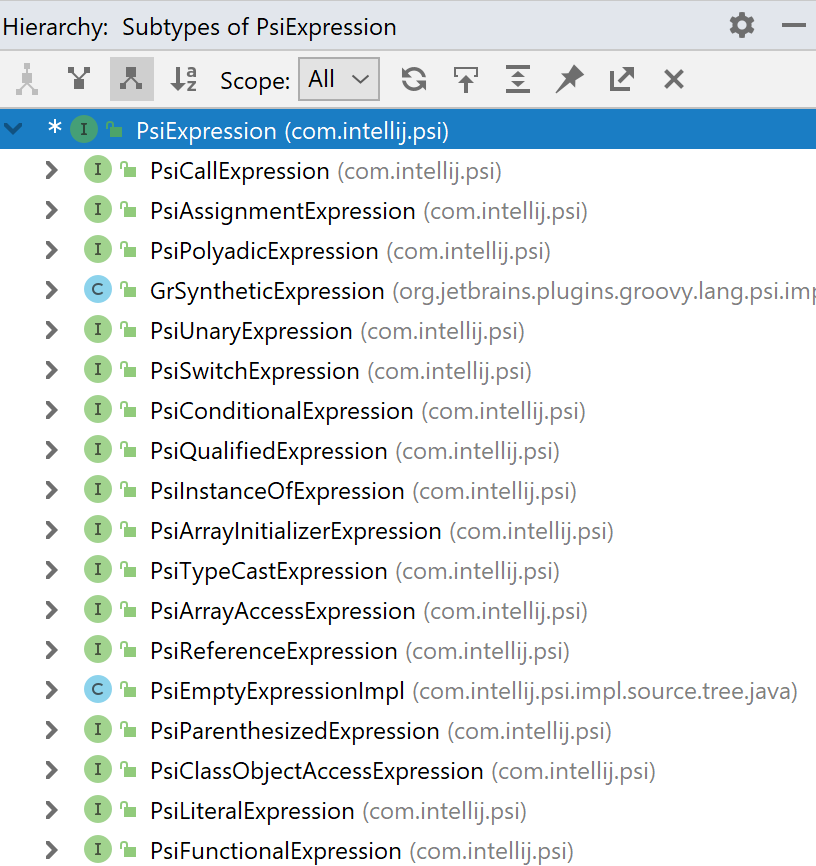 Code search and navigation are important features of any IDE. In Java, one of the commonly used search options is searching for all implementations of an interface. This feature is often called Type Hierarchy, and it looks just like the image on the right.