Pull to refresh

Development

Show first
Rating limit
Level of difficulty

OWASP, Vulnerabilities, and Taint Analysis in PVS-Studio for C#. Stir, but Don't Shake

Reading time12 min
Reach and readers1.2K

0831_TaintAnalysis_Cs/image1.png


We continue to develop PVS-Studio as a SAST solution. Thus, one of our major goals is expanding OWASP coverage. You might ask, what's the use when there's no taint analysis? That's exactly what we thought — and decided to implement taint analysis in the C# analyzer. Curious about what we accomplished? Read on!

Read more →

Getting To Know Angular Components

Reading time5 min
Reach and readers1.7K

Angular is one of the most popular front-end development frameworks out there. It is a leading choice for personal as well as industry-level development of web applications due to its robust capabilities. While Angular is popular for many different reasons, one of the main ones is its modular nature. Modularity makes it easy for the developer to keep track of all the different elements being used to program functionalities. It also helps in keeping consistency and even reusing a block of code or functionality multiple times.

This modularity lies at the heart of Angular in the form of elements called components. This article will quickly take you through all the important bits to know about Angular components, their usage, how they are useful, and some code examples. Components make Angular easy to learn and applications easy to structure. Through this article, you’ll get to see how Angular components make all of this possible.

What Are Angular Components Exactly?

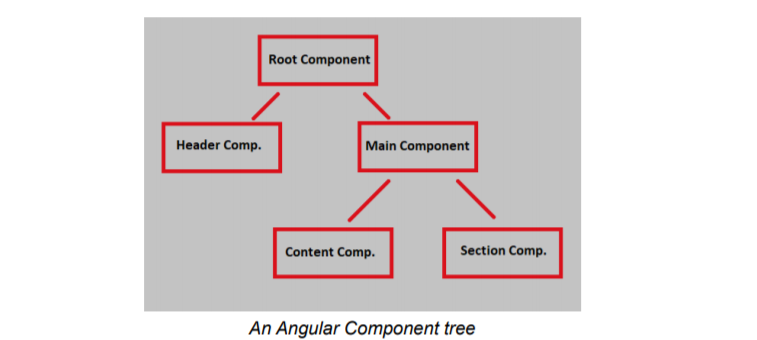
Components lie at the foundation of Angular applications. They interact similar to how HTML elements do in terms of passing data between elements and emitting events. Each of the components has some behavior attached to it that tells what data to render or load and a template that tells it how to render the data. An Angular application is based on a component tree structure where different components have child components and so on. Data is shared from parent to child components through an ‘input binding.’ Similarly, it can be shared the other way around through outputs.

Читать далее

PVS-Studio Team: Switching to Clang Improved PVS-Studio C++ Analyzer's Performance

Reading time4 min
Reach and readers1.4K

From the earliest days, we used MSVC to compile the PVS-Studio C++ analyzer for Windows - then, in 2006, known as Viva64, version 1.00. With new releases, the analyzer's C++ core learned to work on Linux and macOS, and we modified the project's structure to support CMake. However, we kept using the MSVC compiler to build the analyzer's version for Windows. Then, in 2019, on April 29th, Visual Studio developers announced they had included the LLVM utilities and Clang compiler in the IDE. And just recently we've gotten around to try it.

Read more

Binary Tree

Reading time6 min
Reach and readers8.1K

Data structures are classified into linear and non-linear data structures. A tree is a non-linear data structure. Data is stored hierarchically in a non-linear data structure. So the tree is a way of organizing data hierarchically. A tree grows from top to bottom. In a tree, there are different kinds of nodes that are linked with each other. A tree consists of the following elements:

Читать далее

Graph

Reading time6 min
Reach and readers3K

It is a collection of edges and vertices. It can be used to display any form of network.

The following graph contains a total of 4 vertices and 5 edges. In this graph, vertices are A, B, C and D while edges are AB, BD, DC, CA and AD. Vertices are also known as nodes. The line connecting these vertices is the edge. Vertices are like objects and edges indicate the relation between those vertices. Data is stored in nodes. This data can be of numerical data type or any other data structure.

Читать далее

Recursion

Reading time6 min
Reach and readers4.5K

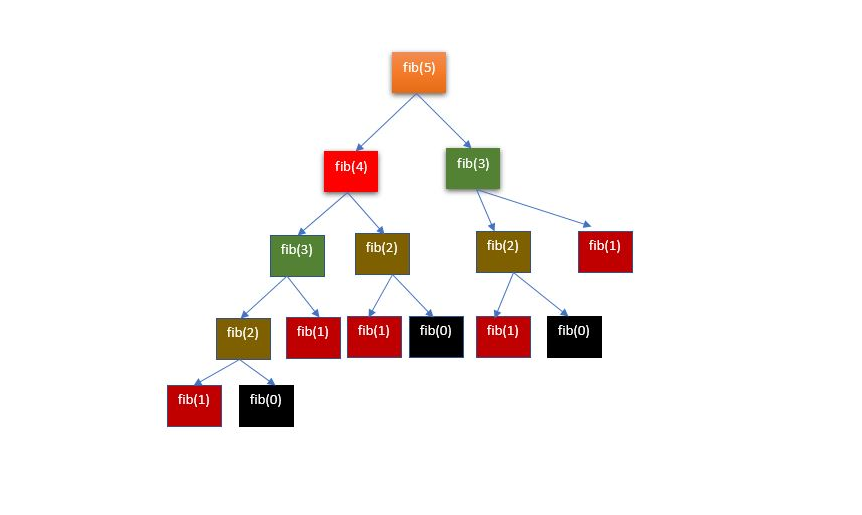
Recursion is a strategy that algorithms use to solve specific problems. A recursive algorithm is an algorithm that solves the main problem by using the solution of a simpler sub-problem of the same type. Recursion is a particular way of solving a problem by having a function calling itself repeatedly. It is always applied to a function only. By using recursion, we can reduce the size of the program or source code. In recursion, a function invokes itself. And the function that invokes itself is referred to as a recursive function.

Suppose we have a user-defined function named ‘recursion’, and it will be written in the main function. The compiler will execute the recursion function automatically, and it will search for a particular function definition. This function definition will be executed, and control will go back to the main function. If we call the same function inside the function definition, then the compiler will move on to function definition first. When the compiler executes the recursion function, we will be calling the same function.

Читать далее

The Implementation of a Custom Domain Name Server by Using С Sockets

Reading time5 min
Reach and readers5.9K

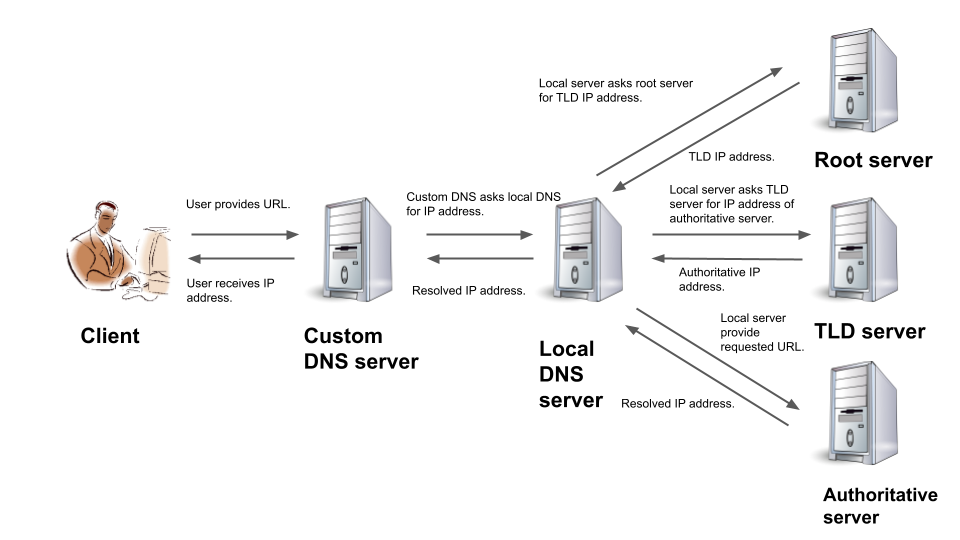
We describe the implementation of a custom Domain Name System (DNS) by using C socket programming for network communication, together with SQLite3 database for the storage of Internet Protocol (IP) for Uniform Resource Locator (URL). Then we provide a performance analysis of our implementation. Our code is available publicly [1].

Read more

Overview of Morris's counters

Reading time7 min
Reach and readers1.9K

On implementing streaming algorithms, counting of events often occurs, where an event means something like a packet arrival or a connection establishment. Since the number of events is large, the available memory can become a bottleneck: an ordinary n-bit counter allows to take into account no more than 2^n - 1events.
One way to handle a larger range of values using the same amount of memory would be approximate counting. This article provides an overview of the well-known Morris algorithm and some generalizations of it.

Another way to reduce the number of bits required for counting mass events is to use decay. We discuss such an approach here [3], and we are going to publish another blog post on this particular topic shortly.

In the beginning of this article, we analyse one straightforward probabilistic calculation algorithm and highlight its shortcomings (Section 2). Then (Section 3), we describe the algorithm proposed by Robert Morris in 1978 and indicate its most essential properties and advantages. For most non-trivial formulas and statements, the text contains our proofs, the demanding reader can find them in the inserts. In the following three sections, we outline valuable extensions of the classic algorithm: you can learn what Morris's counters and exponential decay have in common, how to improve the accuracy by sacrificing the maximum value, and how to handle weighted events efficiently.

Read more

Memoization

Reading time7 min
Reach and readers3.1K

Dynamic programming is applied to solve optimization problems. In optimization, we try to find out the maximum or minimum solution of something. It will find out the optimal solution to any problem if that solution exists. If the solution does not exist, dynamic programming is not able to get the optimal solution.

Optimization problems are the ones that require either lowest or highest possible results. We attempt to discover all the possible solutions in dynamic programming and then choose the best optimal solution. Dynamic programming problems are solved by utilizing the recursive formulas though we will not use a recursion of programming the procedures are recursive. Dynamic programming pursues the rule of optimality. 

A dynamic programming working involves around following significant steps:

Читать далее

Big O Notation

Reading time6 min
Reach and readers9.9K

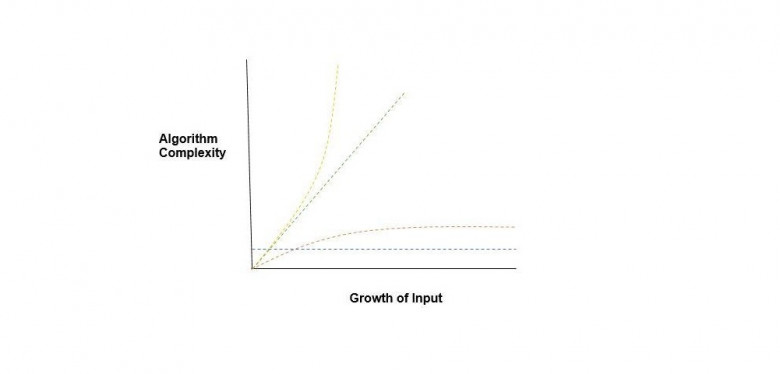
Asymptotic notations are used to represent the complexity or running time of an algorithm. It is a technique of defining the upper and lower limits of the run-time performance of an algorithm.  We can analyze the runtime performance of an algorithm with the help of asymptotic notations. Asymptotic notations are also used to describe the approximate running time of an algorithm.

Types of Asymptotic Notations

Following are the different types of asymptotic notations:

Читать далее

Multithreading in Photon

Reading time8 min
Reach and readers1.7K

What this article is about 

In this article, we will talk about multithreading in the backend. 

how it is implemented 

how is it used 

what can be done 

what we invented ourselves 

All these questions are relevant only if you develop something for the server side - modify the Server SDK code, write your own plugin, or even start some server application from scratch.

Read More

One of the ways to dynamically deserialize a part of a JSON document with an unknown structure

Reading time7 min
Reach and readers16K

In this topic, I will tell you how to dynamically parse and deserialize only part of the whole JSON document. We will create an implementation for .NET Core with C# as a language.

For example, we have the next JSON as a data source for the report. Notice that we will get this JSON in the runtime and at the compile step we don't know the structure of this document. And what if you need to select only several fields for processing?

Read this amazing post

Breadth/Depth First Search

Reading time6 min
Reach and readers6K

A graph is a kind of data structure that includes a set of vertices and edges. Graph traversing means a visit to each vertex of the graph precisely. The graph traversing is used to determine the order in which vertices are being visited throughout the search process. A graph traversing searches for the edges that will be used in the search operation without establishing loops. This means that using graph traversal, we will go to all the vertices of the graph without going into a looping path.

There are two kinds of graph traversal methods.

Читать далее

Stack And Queue

Reading time7 min
Reach and readers3.5K

Stack

Stack is a linear data structure. In stack, data access is limited. It follows the rule of insertion and deletion of data. Stack is a collection of only similar data types. Elements in the stack are arranged sequentially. It follows the LIFO principle which is the last-in and first-out rule.

Example

To understand this concept, let us take an example of arranging coins. If we start placing coins one after the other in such a way that the first coin will be placed first at the bottom and the next coin will come on above the first coin and so on. Now if we want to remove coins, then the topmost coin which is the third coin will be removed first. So in this way, the last coin will be removed first according to the LIFO principle.

Читать далее

12 Tech Trends Every Java Developer Must Learn To Win The Game In 2021

Reading time7 min
Reach and readers9.5K

The previous year has been very distressing for businesses and employees. Though, software development didn’t get so much affected and is still thriving. While tech expansion is continuing, Java development is also going under significant transformation.

The arrival of new concepts and technologies has imposed a question mark on the potential of Java developers. From wearable applications to AI solutions, Java usage is a matter of concern for peers.

Moreover, it is high time that developers enhance their skills as to the changing demands of the industry. If you are a Java developer, surely you too would be wondering what I am talking about what things you should learn.

Read more

IncrediBuild: How to Speed up Your Project's Build and Analysis

Reading time7 min
Reach and readers1.8K

"How much longer are you going to build it?" - a phrase that every developer has uttered at least once in the middle of the night. Yes, a build can be long and there is no escaping it. One does not simply redistribute the whole thing among 100+ cores, instead of some pathetic 8-12 ones. Or is it possible?

Читать далее

Blockchain is the perfect solution to online privacy problem

Reading time3 min
Reach and readers1.6K

We are increasingly aware of the importance of our personal data. Primarily due to numerous data leaks and the fact of numerous sales of personal information on the black market. Yes, huge corporations like Apple or Samsung prioritize the preservation of sensitive user data. However, they find it difficult to store and use them at the same time. That is why blockchain technology is the perfect tool for solving the online privacy problem.

There are constant news in the media about the problem of personal privacy, which is represented by constant data leaks and the general technological illiteracy of the world population. In the Pew study, nearly 80% of respondents said they are very concerned about how companies are using the data they collect. In MState's study, 24% of respondents stopped using certain apps due to privacy concerns.

Today, an increasing number of people are actively protecting their data by refusing the services of companies and applications that use personal data. This is why Apple, Lyft, Dropbox, and Adobe have started taking a consumer-centric approach to data privacy. Consumers' understanding that their personal data is a commodity is increasing.

Free TON is a prime example of a secure blockchain. This blockchain has some of the best features compared to Ethereum, Binance Smart Chain, and Stellar. Data security directly depends on the use of blockchain. Each of the above blockchains provides a different level of data protection. Ethereum is the most popular blockchain, but Free TON may soon overtake it. This blockchain is just over a year old, and its capabilities exceed those of all other blockchains.


Читать далее

Yggdrasil Network: Light in the Dark Depths of Mesh, or the Internet of the Future

Reading time10 min
Reach and readers8K

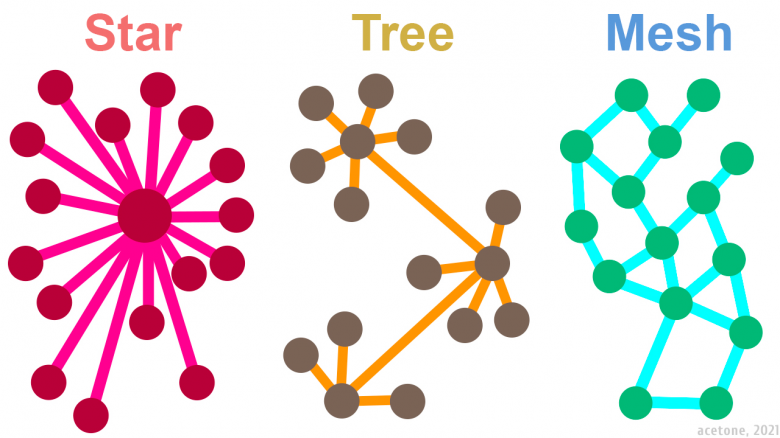
Smoothly the era of mesh-networks is upon us. At the very least, the term is appearing more and more often in the information sphere. What attracts the attention of networkers? Let's try to understand the question, taking Yggdrasil network as an example as one of the most promising prototypes. The article is intended for a wide range of readers.

Read more about Yggdrsail