Mentorpiece Vacy Index August 2026: AI app testing job postings up 3 months straight
Easy
2 min
Analytics

Daily tracking of job openings across 1,500+ tech companies reveals an emerging upward trend in AI testing roles.
Daily tracking of job openings across 1,500+ tech companies reveals an emerging upward trend in AI testing roles.


A normal code review comment usually sounds harmless.
Rename this variable. Move this method. Add a test. Remove the duplicate condition. But sometimes an experienced developer leaves a much shorter comment: No.
Not maybe. Not could we simplify this. Just a clear rejection of the entire approach.
For a junior developer, this can feel strange. The code compiles, tests pass, the implementation is readable, and the ticket requirements seem complete. Why throw it away?
I started saving such cases after one of my pull requests was rejected for the third time in a week. The goal was not to prove that the reviewer was wrong. I simply wanted to understand what experienced engineers noticed before everyone else.
Over several months, I collected review discussions from backend services, internal tools, queue consumers, APIs, and data-processing jobs. I removed comments about formatting and naming. Only full design-level rejections remained.
The result was a small catalogue of professional paranoia.
And honestly, most of it was useful.

Despite the annual summer lull, July unexpectedly saw a rise in the percentage of companies with open job listings—even for roles like Manual QA.

Unfortunately, the Tech Hiring Activity Index for June doesn’t bring any particularly good news.
However, there is a compelling trend: just two months ago, roughly three times as many US tech companies were hiring for classic manual QA as for dedicated AI testing roles. That gap has now narrowed to two to one.
But don’t let the growth rates fool you. While dedicated AI roles – those where AI is the deliverable, whether that means building, testing, and evaluating models or developing applications on top of ready-made ones, rather than merely using AI tools to support other work – are emerging, they are doing so from a very low baseline and still represent a tiny fraction of the overall tech job market.


Why I built Requester, a real-time HTTP load testing app for macOS, and what Swift structured concurrency taught me about telling the truth under load.
I wanted to hammer an HTTP endpoint and see what happened. Not read a summary report three minutes later — watch it, live, the way you watch a profiler.
The existing options are great but they all live in the terminal: wrk, hey, k6. I love them, but I kept wishing for a native window with a chart that moved. So I built one for macOS, in Swift and SwiftUI, and called it Requester.
This post is less “here are the features” and more “here are the three things I made building it.” The most interesting one: making the tool honest about backpressure turned out to be a design decision, not an accident.


Every prompt is a gamble. Your AI writes code that compiles, looks right, and silently breaks things you already built. Tests catch it before your users do. The best part? Your AI can write the tests for you.
~206 символов. Добавил "compiles, looks right" из A для конкретики, убрал "And here's the thing" на более кликбейтное "The best part?".
Добавить в начало статьи?


My name is Anatoly Bobunov, and I work as a Software Development Engineer in Test - or SDET for short - at EXANTE. When I joined one of our projects, I discovered that several of our test suites took more than an hour to run - painfully slow, to the point where running them for every merge request was simply unrealistic. We wanted fast feedback on each commit, but at that speed, it just wasn’t going to happen.
Eventually, through a series of small but precise improvements, I managed to speed things up to 8.5× faster, without rewriting the tests from scratch. In this article, I’ll walk through the bottlenecks we found and how we fixed them.


In today's fast-paced world of software development, integrating third-party APIs and services is a common practice. These integrations can enhance functionality, improve user experience, and provide additional features that would be time-consuming and costly to develop in-house. However, ensuring these integrations work seamlessly with your software is crucial, and this is where the importance of a test environment, or sandbox, comes into play.
A sandbox environment allows developers to test the integration between their software and third-party services without risking the stability and security of the production environment. This controlled setting enables thorough testing, helping to uncover issues before they affect end-users. By covering as many test cases as possible, developers can ensure robust and reliable integrations.
But what if your third-party provider, such as a bank or government e-system, does not offer a sandbox environment? This scenario can pose significant challenges, but there are several strategies you can employ to mitigate these issues.

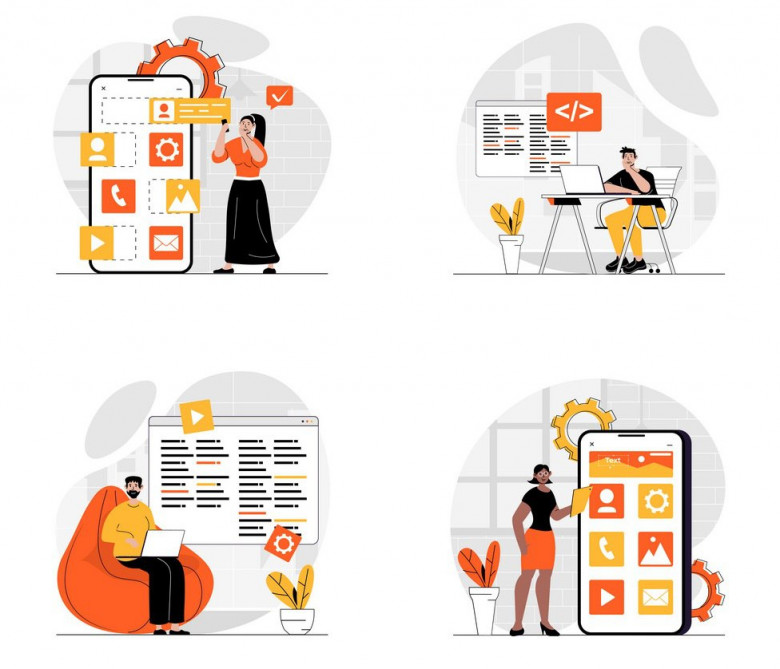
UX testing is one of the most important parts of the UX design creation process for any software product. It helps to understand whether users are satisfied with the design and highlights its problematic areas that need to be fixed or improved. UX testing is an important part of the whole testing process - it helps to get beta-testers feedback to determine whether the product is comfortable for users and gives opportunity to improve problems and issues before moving on to the next stage of the development process. It also contributes to reducing the cost of development, as it is much cheaper to fix issues during the development process rather than after the release. Listed down below are 5 simple tips that can help perform UX testing in a proper and effective way.


Hello everyone! We've already talked in our blog about how the Positive Hack Days 11 forum had a special Payment Village zone, where anyone could look for vulnerabilities in an online bank, ATMs, and POS terminals. Our competition to find vulnerabilities in an online bank is not new, but in recent years it has been somewhat supplanted by ethical hacking activities for other financial systems. In 2022, we decided to correct this injustice and created a new banking platform, making use of all our years of experience. We asked the participants to find typical banking vulnerabilities and report them to us. In the competition, the participants could play for either the "white hats" (participate in the bug bounty program of an online bank) or for the "black hats" (try to steal as much money from the bank as possible).


Hello everyone, my name is Denis, I am Software Developer Engineer in Test (SDET) at Bimeister. I am in charge of test software development - frameworks, automated tests, CI Pipelines configuration, and much more.
In this article, I will tell you how we defeated the Stale Element Reference Exception while developing our framework using Selenium WebDriver and C#.


The common combination of JUnit5, Selenide and Allure has proven to be stable and reliable for autotesting. The remaining issue, however, lies in test length increase up until the rise of overall test numbers. The resulting video files turn out to be over an hour. Alexander Kochergin, Lead engineer at Innotech, has found a way to simplify the process.


Testing is one of the key processes in development. However, without analysis it is tough to say how effective testers really are. Innotech’s lead tester-engineer Pavel Petrov shared a number of metrics that are being used in project work.


Some time ago we discussed how to easy and fast setup 2FA using Google Authenticator API. In this article we describe how to make this working using Microsoft Authenticator app!


A website with bugs could be a real pain in the neck for business. Just one 404 or 500 error could end up costing an obscene amount of money for the company and hurt a good reputation. But there is a way to avoid this issue: the website testing. That's sort of what this article is about. After reading this article, you will learn how to test code in Django, create your "own website tester" and much more. Welcome to the article.

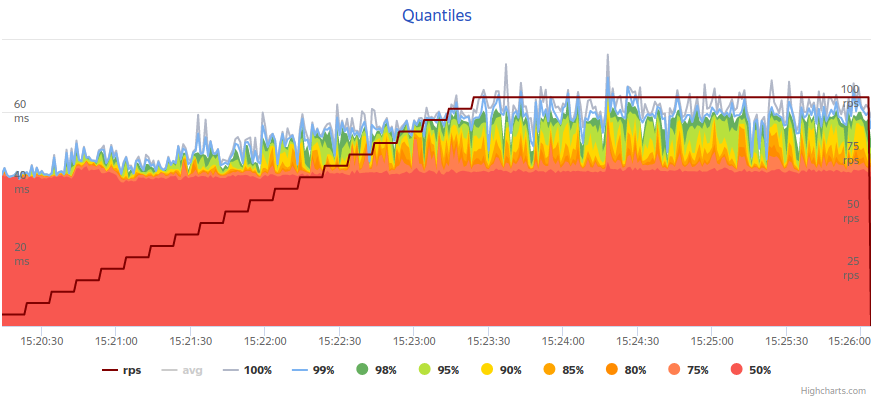
Comparing PHP-FPM, NGINX Unit, and Laravel Octane - what to choose for developing microservices.

Test automation, with product built in microservice architecture could be very situational in context of testing goals and ways to achieve them. You got an easy life if you testing a service, that is an isolated entity, which is receiving some data and providing a result of it's work in a response, by callback or through additional endpoint. In this case all you need to do is cover all the endpoints of the service, and probably learn to catch it's callbacks. However, it's not the only case. Sometimes you need to test service which isn't totally isolated, but a part of a chain of interactions. This service could send some data to other services within your infrastructure or even to third parties. This time you got plenty of additional things to bother of:

I have already written about AIOps and machine learning methods in working with IT incidents, about hybrid umbrella monitoring and various approaches to service management. Now I would like to share a very specific algorithm, how one can quickly get information about functioning conditions of business applications using synthetic monitoring and how to build, on this basis, the health metric of business services at no special cost. The story is based on a real case of implementing the algorithm into the IT system of one of the airlines.
Currently there are many APM systems, such as Appdynamics, Dynatrace, and others, having a UX control module inside that uses synthetic checks. And if the task is to learn about failures quicker than customers, I will tell you why all these APM systems are not needed. Also, nowadays health metrics are a fashionable feature of APM and I will show how you can build them without APM.

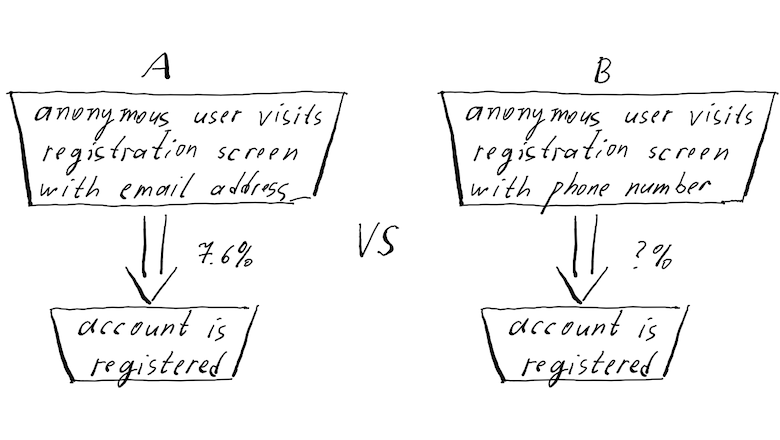
Nowadays a lot of product managers have to confirm most of their decisions with AB-tests. Yet, it is far not always clear how to choose the parameters for the test. A particularly difficult parameter to tune is often the level of statistical significance. If we choose too high level - tests will fail even though improvements do exist. If we choose too low level - we'll be getting lots of "confirmations" of false improvements.
When we make decisions based on AB-tests, once in a while we'll be making mistakes. We can limit the losses caused by such mistakes by choosing the appropriate level of statistical significance.