Pull to refresh
266.56

Algorithms *

Everything about algorithms

Show first
Rating limit
Level of difficulty

Affordable as a Bus, Comfortable as a Taxi: A Promising Type of Public Transport for Large and Medium-Sized Cities.Part3

Level of difficultyMedium
Reading time32 min
Reach and readers2K


Translation provided by ChatGPT, link to the original article in Russian

Link to Part 1: «Preliminary Analysis» (ру / eng )
Link to Part 2: «Experiments on a Torus» (ру / eng )
Link to Part 3: «Practically Significant Solutions» (ру / eng )
Link to «Summary» (ру / eng )

1 Playing Diplomacy


1.1 What this work is about


You're reading the third and final article in a series dedicated to minibus route schemes that would allow you to travel reasonably quickly, inexpensively, and most importantly, without any transfers, from any intersection to any other within a large city. You'll see many graphs, formulas, and figures below, but before we get to the technical part, I'd like to discuss the challenge of implementing this idea and invite you to participate in solving it.

1.2 A puzzle for the talented and brave (Eccentrics are welcome: ?)


I propose an adventure,
I propose a game,
I propose that you become part of a positive change in the lifestyle of almost a billion people around the planet,
I can't do this alone.
To start, I need your help with the following:
Read more →

Affordable as a Bus, Comfortable as a Taxi: A Promising Type of Public Transport for Large and Medium-Sized Cities.Part2

Level of difficultyMedium
Reading time56 min
Reach and readers1.7K

(Jean-Claude Mézières)

Translation provided by ChatGPT, link to the original article in Russian

Link to Part 1: «Preliminary Analysis» (ру / eng )
Link to Part 2: «Experiments on a Torus» (ру / eng )
Link to Part 3: «Practically Significant Solutions» (ру / eng )
Link to «Summary» (ру / eng )

Experiments on the Torus


This is the second part of a study dedicated to exploring new public transportation movement schemes. In the first part, we examined the simplest non-stop scheme and a single-transfer scheme based on it, which can be implemented in a grid city on a plane. In this part, our city model will be a grid city on a «flat» torus. Unlike a rectangle, a torus has no edge, and the positions of all points on it are absolutely equivalent. Due to the absence of an edge and (transitive) symmetry, calculations for a toroidal city are simpler, and numerical results are nearly identical to those for a rectangular city on a plane. These two conditions make a toroidal grid city an ideal testing ground for new passenger transportation movement schemes. In this article, we will explore two such schemes on the torus, and in the next one, we will return to the plane and adapt the results obtained here for use under the realistic conditions of a rectangular city.

The content of this study is not standalone and presupposes familiarity with the first part of the article. To understand Chapter 2, you will need a level of mathematics that corresponds roughly to the first two years of university; for everything else, high school level should suffice. It can be helpful to have a pencil and a piece of paper at hand while reading. If your browser displays formulas incorrectly, try refreshing the page a few times.
Read more →

Affordable as a Bus, Comfortable as a Taxi: A Promising Type of Public Transport for Large and Medium-Sized Cities.Part1

Level of difficultyMedium
Reading time40 min
Reach and readers2.5K

(Jean-Claude Mézières)

Translation provided by ChatGPT, link to the original article in Russian

Link to Part 1: «Preliminary Analysis» (ру / eng )
Link to Part 2: «Experiments on a Torus» (ру / eng )
Link to Part 3: «Practically Significant Solutions» (ру / eng )
Link to «Summary» (ру / eng )

1. About this series of articles


1.1 Central result


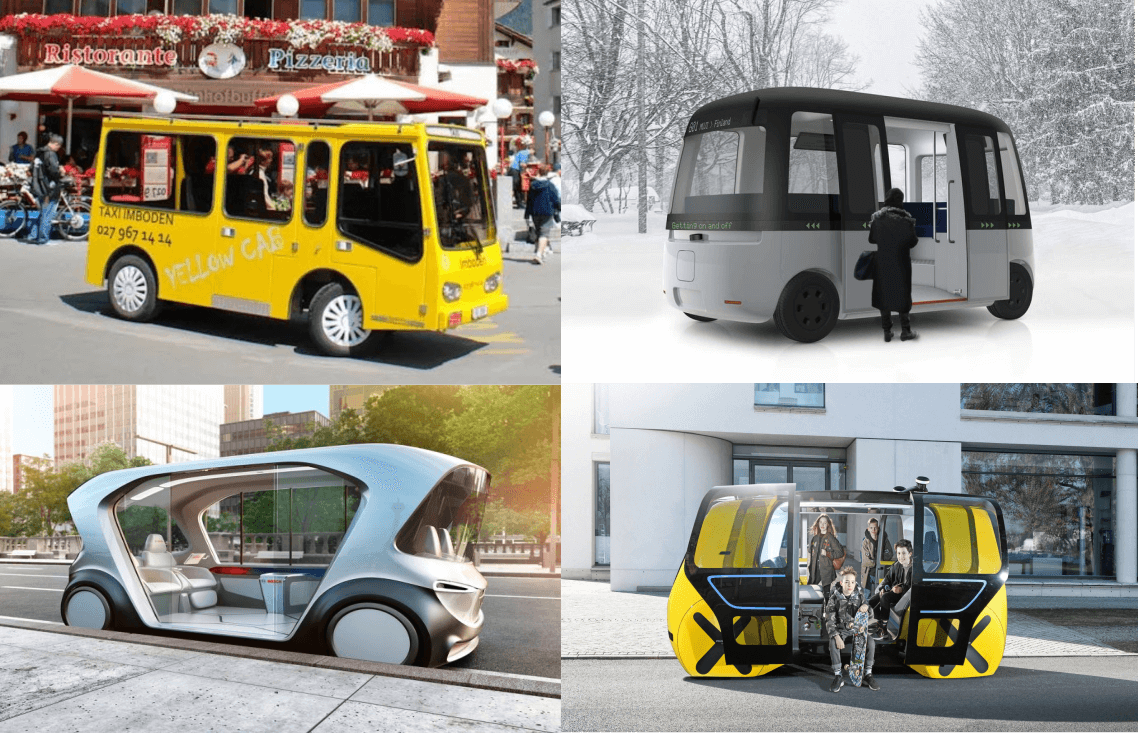
If I haven't made a critical mistake, I have discovered an astonishing passenger transportation scheme with unique characteristics. Imagine this scenario: you are in a big city and need to get from point A to point B. All you need to do is walk to the nearest intersection and indicate the destination on your smartphone or a special terminal installed there. In a few minutes, a small but spacious bus will arrive for you. The bus is designed for easy entry without bending, and you can bring a stroller, bicycle, or even a cello inside. It provides comfortable seating where you can stretch your legs. This bus will take you to the nearest intersection to point B, and you will reach your destination without any transfers. The entire journey, including waiting at the stop, will take only 25-50% more time than if you were traveling by private car. Based on my estimation, in modern metropolises, this type of transportation will be widely adopted, and the cost of a trip on such buses will be similar to the fare of a regular city bus.

Surprisingly, the reasoning behind these findings is based on relatively simple mathematics, and perhaps even a talented high school student, under fortunate circumstances, could have guessed them on their own. The practical significance of the topic and the modest level of mathematical requirements prompted me to make an effort to write the article in such a way that the reader could follow the path of discoveries, learn some research techniques, and gain a successful example to explain to their children the purpose of mathematics and how it can be applied in everyday life.
Read more →

«Promising Public Transportation for Large and Medium-Sized Cities» — the main idea in a brief summary

Level of difficultyEasy
Reading time9 min
Reach and readers2.1K

(source)

Translation provided by ChatGPT, link to the original article.

I recently published a series of articles titled 'As Cheap as a Bus, as Convenient as a Taxi...':

Link to Part 1: «Preliminary Analysis» (ру / eng )
Link to Part 2: «Experiments on a Torus» (ру / eng )
Link to Part 3: «Practically Significant Solutions» (ру / eng )

dedicated to making public transportation in large cities completely seamless, without the need for transfers. In the last article of the series, I extensively described a microbus movement scheme that allows them to operate almost like taxis while accommodating 5-10 passengers at once. Such a transportation system would enable city residents to travel from any intersection to another without any transfers, comparable in time to a personal car journey, and at a cost similar to a regular city bus ticket. However, the feedback from readers indicated that I chose an extremely ineffective way to convey the information, resulting in a failure to effectively communicate the essence of the matter.

I must admit that the previous three articles were written in a way that allowed readers to apply the acquired knowledge in practice or continue the research I started on their own. Unfortunately, my desire to 'teach' resulted in nearly 100 pages of complex mathematical text, which is clearly excessive for readers who simply wanted to familiarize themselves with the idea. Here, I will attempt to rectify this mistake and briefly, yet simply, explain the bus taxi technology.
Read more →

Langton's ant: a mystery cellular automaton

Reading time4 min
Reach and readers4K

The life of Langton's Ant seems sad and lonely, but, as we'll soon discover, he is not ready to put up with such an outrageous situation and is trying his best to escape. American scientist Christopher Langton invented his ant back in 1986. Since then, no one has been able to explain the strange behavior of this mysterious model...

Read more

Will transport planners lose their jobs as AI becomes smarter?

Level of difficultyMedium
Reading time13 min
Reach and readers1.5K

As a Product Manager who has worked on the development of delivery route optimisation software for 10+ years, I see that modern technologies can significantly improve the optimisation process and deliver better solutions. AI, machine learning, and other modern technologies have the potential to revolutionise the way delivery routes are optimised in the future.

With the increasing availability of data and the advancement of AI and machine learning algorithms, it is becoming possible to develop more sophisticated prediction models that can be integrated into optimisation algorithms to make more accurate and informed decisions about route planning and scheduling. Machine learning algorithms can be trained to predict customer demand based on historical sales data and other market trends, allowing businesses to optimise their delivery schedules and routes accordingly. AI can also be used to optimise delivery schedules based on customer preferences and other relevant factors.

Blockchain technology could be used to create a secure, decentralised database of information about deliveries, including information about the products being shipped, the route they are taking, and the status of the delivery. This could help increase transparency and accountability in the delivery process as well as reduce the risk of fraud and theft.

Internet of Things (IoT) devices, such as sensors and GPS trackers, may collect real-time data about delivery vehicles and their surroundings. This data could be analysed and used to optimise delivery routes in real time, as well as to track the location of deliveries and monitor the condition of the products being shipped.

Read more

Collective meaning recognition

Reading time37 min
Reach and readers2.1K

The published material is in the Appendix of my book [1]

Modern civilization finds itself at a crossroads in which to choose the meaning of life. Because of the development of technology, the majority of the world's population may be "superfluous" - not in demand in the production of values. There is another option, where each person is a supreme value, an absolute individual and can be indispensably useful in the technology of the collective mind.

In the eighties of the last century, the task of creating a scientific field of "collective intelligence" was set. Collective intelligence is defined as the ability of the collective to find solutions to problems more effectively than each participant individually. The right collective mind must be...

Read more

Riddles of the fast Fourier transform

Reading time10 min
Reach and readers2.1K

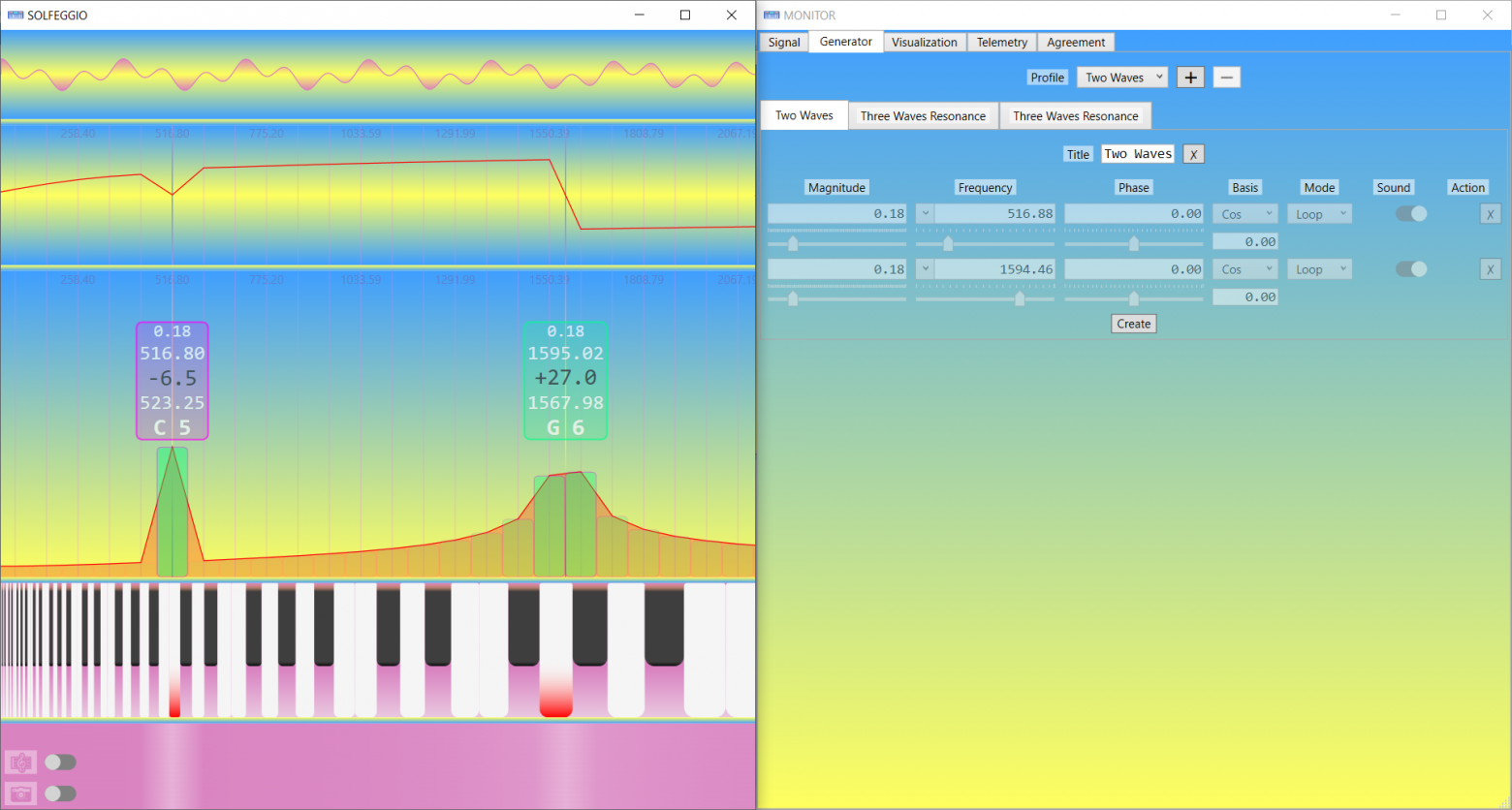
• The method of phase-magnitude interpolation (PMI)

• Accurate measure of frequency, magnitude and phase of signal harmonics

• Detection of resonances

The Fast Fourier Transform (FFT) algorithm is an important tool for analyzing and processing signals of various nature.

It allows to reconstruct magnitude and phase spectrum of a signal into the frequency domain by magnitude sample into the time domain, while the method is computationally optimized with modest memory consumption.

Although there is not losing of any information about the signal during the conversion process (calculations are reversible up to rounding), the algorithm has some peculiarities, which hinder high-precision analysis and fine processing of results further.

The article presents an effective way to overcome such "inconvenient" features of the algorithm.

Read in Russian

Read in English

Concordance of sense

Reading time17 min
Reach and readers1.3K

In [1,2,3] texts (sign sequences with repetitions) were transformed (coordinated) into algebraic systems using matrix units as word images. Coordinatization is a necessary condition of algebraization of any subject area. Function (arrow) (7) in [1]) is a matrix coordinatization of text. One can perform algebraic operations with words and fragments of matrix texts as with integers, but taking into account the noncommutativity of multiplication of words as matrices. Structurization of texts is reduced to the calculation of ideals and categories of texts in matrix form.

Read more

High-level pipelining in TL-Verilog, RISC-V from Imagination, formal tools and open-source EDA on ChipEXPO in Moscow

Reading time3 min
Reach and readers2.8K

This year ChipEXPO conference in Moscow invited several Western speakers to present in English the emerging technologies in high-level HDLs, formal verification, open-source EDA and using industrual RISC-V cores for education. You can join these presentations on September 14-16 for free using this link (you may need to use google translate from Russian to go through the registration) https://eventswallet.com/en/events/282/

The whole program is here

The English-speaking presentations and tutorials include:

Read more

Doubling effective digitization frequency by multiple pass approach, is it possible?

Reading time4 min
Reach and readers1.2K

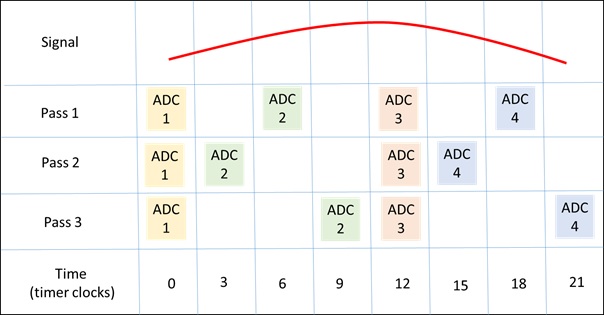
As already described in the previous article, in the process of reworking the DSO138 oscilloscope toy, the idea arose in the DSO303 firmware at some point to try to double the maximum sampling frequency to achieve scanning times of 500 and 200 nanoseconds per cell. In fact, for the STM32F303, the theoretically maximum achievable sampling rate from the point of view of the ADC input, and this is determined by the minimum opening time of the ADC sampling unit, which in our case is 1.5 clock cycles x (1/72 MHz) = 20.8 nanoseconds, is 48 MSPS (millions of counts per second). However, with the parallel operation of 4 ADCs at 6 MHz, it is possible to achieve only 24 MSPS due to the limited speed of the ADC.

Let's imagine that we are considering correctly-periodic signal, which is also constant, i.e. it does not experience fluctuations in frequency and amplitude over time. Is it possible to somehow digitize it not in one, but in several passes, thereby increasing the effective sampling frequency? 

Read more

Measuring Traffic Rate by Means of U-models

Reading time21 min
Reach and readers2.1K
stream rate art
Measuring of stream rate in an artist's impression.

In one of our previous publications, we talked about a way to measure event stream rate using a counter based on exponential decay. It turns out that the idea of such a counter has an interesting generalization. This paper by Artem Shvorin and Dmitry Kamaldinov, Qrator Labs, reveals it.
Read more →

Data Phoenix Digest — 01.07.2021

Reading time5 min
Reach and readers302

We at Data Science Digest have always strived to ignite the fire of knowledge in the AI community. We’re proud to have helped thousands of people to learn something new and give you the tools to push ahead. And we’ve not been standing still, either.

Please meet Data Phoenix, a Data Science Digest rebranded and risen anew from our own flame. Our mission is to help everyone interested in Data Science and AI/ML to expand the frontiers of knowledge. More news, more updates, and webinars(!) are coming. Stay tuned!

The new issue of the new Data Phoenix Digest is here! AI that helps write code, EU’s ban on biometric surveillance, genetic algorithms for NLP, multivariate probabilistic regression with NGBoosting, alias-free GAN, MLOps toys, and more…

If you’re more used to getting updates every day, subscribe to our Telegram channel or follow us on social media: TwitterFacebook.

Read more

DataScience Digest — 24.06.21

Reading time5 min
Reach and readers2.4K

The new issue of DataScienceDigest is here!

The impact of NLP and the growing budgets to drive AI transformations. How Airbnb standardized metric computation at scale. Cross-Validation, MASA-SR, AgileGAN, EfficientNetV2, and more.

If you’re more used to getting updates every day, subscribe to our Telegram channel or follow us on social media: Twitter, LinkedIn, Facebook.

Read more

Hashing

Reading time8 min
Reach and readers4.3K

It is an efficient searching technique. Searching is a widespread operation on any data structure. Hashing is used to search specific records from a large domain of records. If we can efficiently search a record out of  many records, we easily perform different operations on that data. Hashing is storing and retrieving data from the database in the order of O(1) time. We can also call it the mapping technique because we try to map smaller values into larger values by using hashing.

Following are the significant terminologies related to hashing

Search Key

In the database, we usually perform searching with the help of some keys. These keys are called search keys. If we take the student data, then we search by some registration number. This registration number is a search key. We have to put the search keys in hash tables.

Hash Table

It is a data structure that provides us the methodology to store data properly. A hash table is shown below. It is similar to an array. And we have indexes in it also like an array.

Читать далее

Binary Search

Reading time7 min
Reach and readers13K

Searching is the method to search for a specific element in a group of an element. It needs a unique identity that is associated with the desired element. As a unique identity of that desired element has been found, the index to that desired element is returned.  The index indicates the location or address where that specific element has been found in the list elements of the array. If the desired data is found, particular data has been returned. Otherwise, it returned a null value.

There are several categories of search algorithms such as.

Читать далее