Pull to refresh
256K+

Programming microcontrollers *

Learning how to program microcontrollers

211,53
Rating
Show first
Rating limit
Level of difficulty

Alternate of Packed-Binary Time Format

Reading time2 min
Reach and readers3.3K

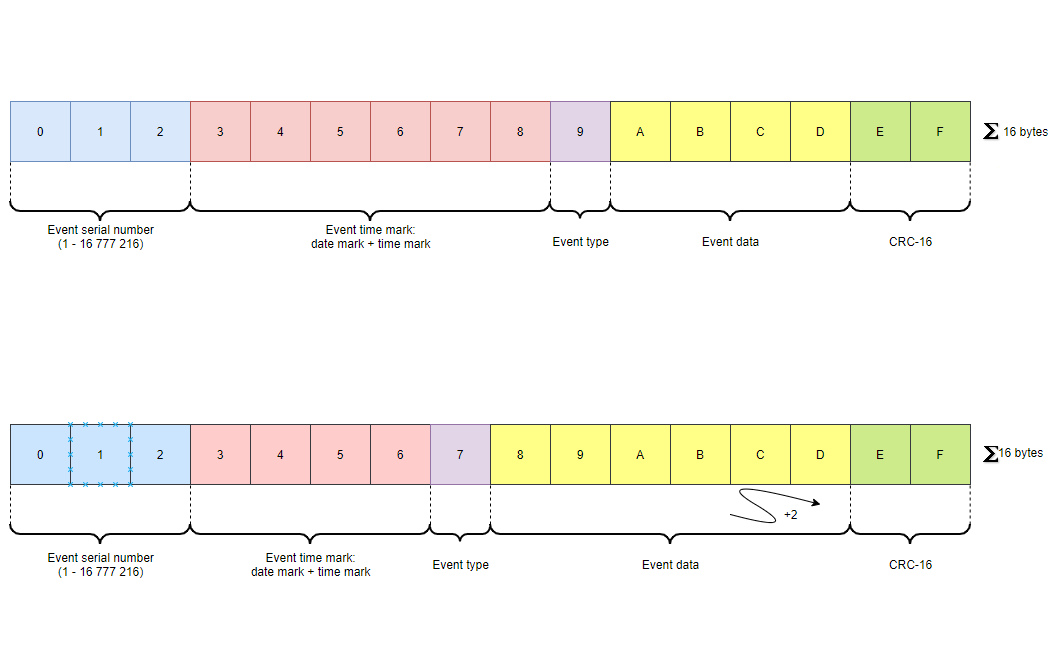
The Real-Time Clock (RTC) Calendar Registers in STM32 microcontrollers implemented in Binary Code Decimal format (BCD) i. e., every two digits are represented by one byte (low digit in 0-3 bits and high digit 4-7 bits). At least there are 5 bytes required to store date and time data in a such format. There are cases when memory allocation for time stamp might become critical, e. g., the events log keeping in an extern non-volatile memory IC. Here the memory value for a single event (event serial number, timestamp, event parameters, and its CRC) is fixed and can compose up to 16 bytes. The maximum quantity of the events increasing, and time spent on a single operation reducing (for reserved power sources as supercapacitors and electrolytic capacitors is critical) can be achieved with less memory amount required for the event field.

Read more

“FPGA InsideOut” – animation about CRC and parallel CRC calculation

Reading time2 min
Reach and readers2K

Ссылка на русскую версию / link to Russian version

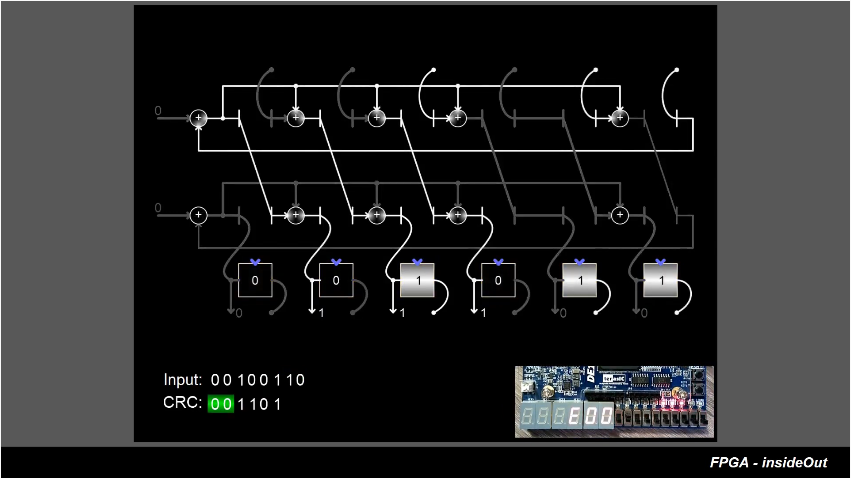
FPGA InsideOut is an attempt to make a set of educational FPGA videos presented in the “human-in-the-loop” style. In these videos we will not only show how we are interfacing with an actual FPGA board but will also provide synchronous real-time visualisation of FPGA's internal logic.

For our first video we have picked a CRC circuit (cycle redundancy check) which is based on a linear feedback shift register. This circuit goes through several transformations during the course of the video. Intrigued? - let’s watch the video.

Watch the video and continue reading

PVS-Studio checks the code of Flipper Zero dolphin

Reading time12 min
Reach and readers2.6K

Flipper Zero + PVS-Studio


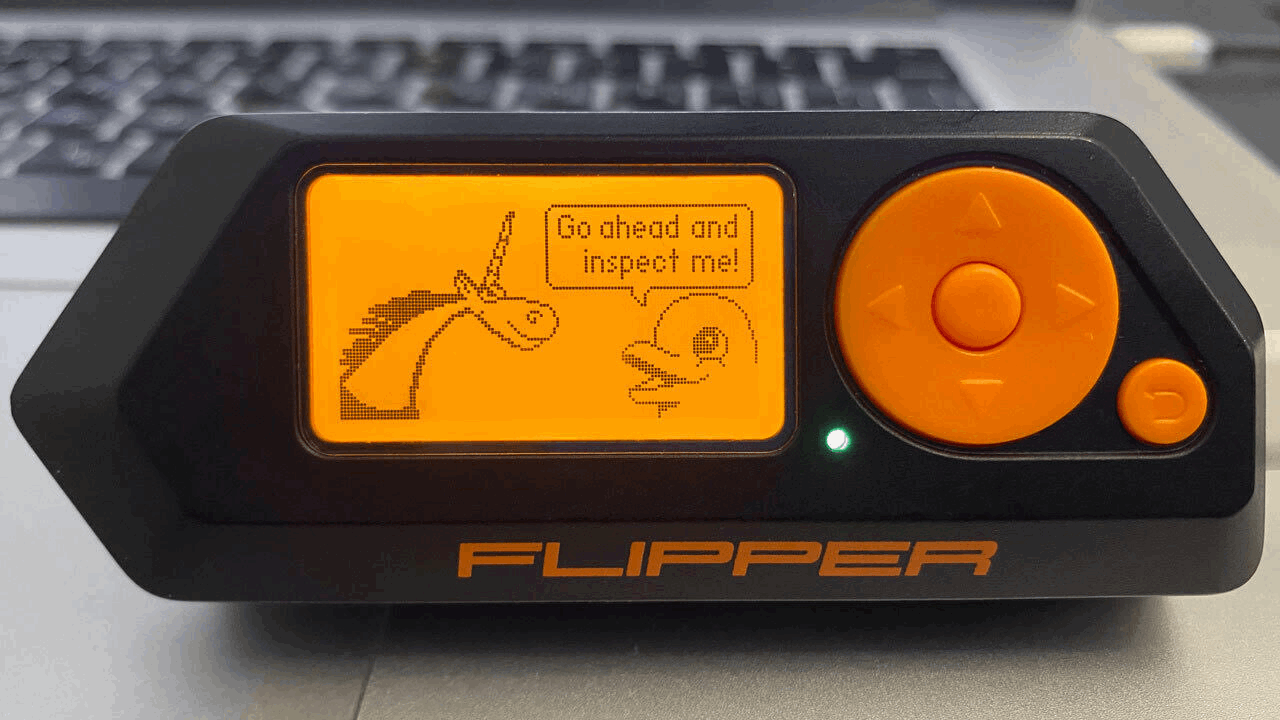
Flipper Zero is an open-source multi-tool for geeks and penetration testers. It so happened that the Flipper Zero project and the PVS-Studio analyzer crossed paths. A philosophical question: should we check the project, if the project developers have already started fixing errors? Let's try to do this.

Read more →

On the recent vulnerability in Diebold Nixdorf ATMs

Reading time8 min
Reach and readers5.2K

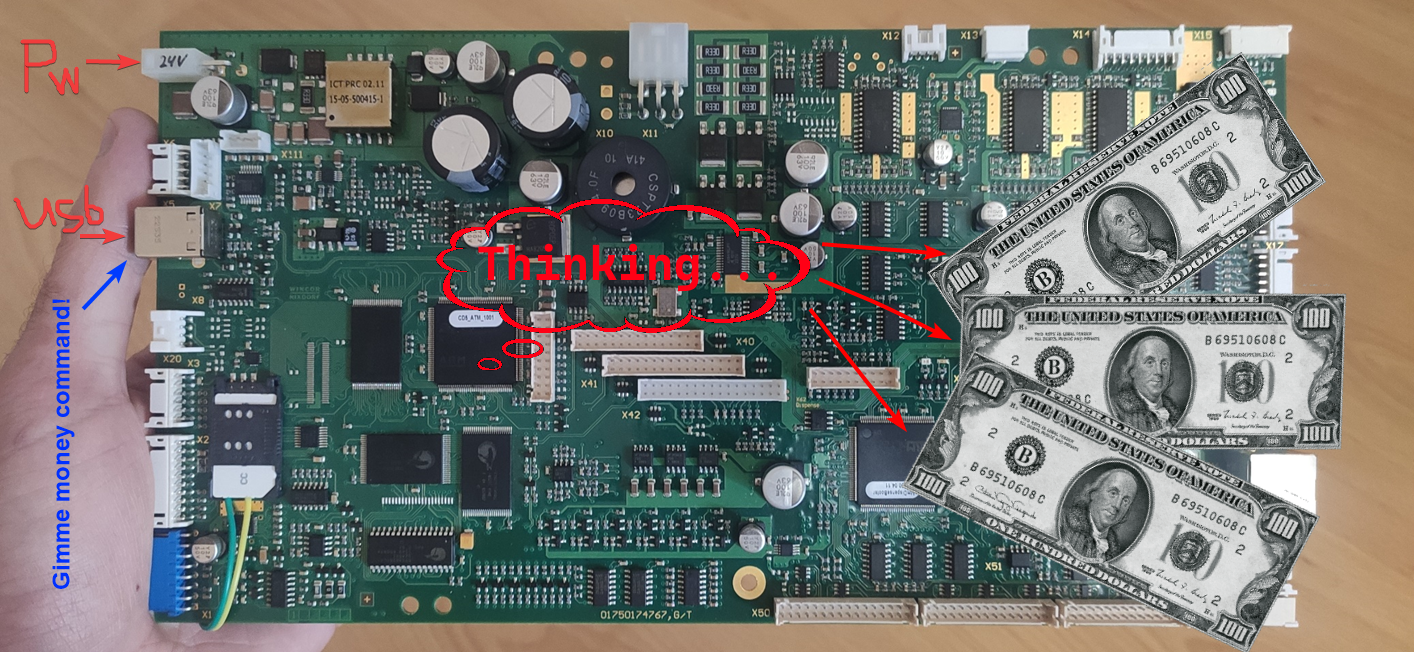
Hi there! A while ago, Positive Technologies published the news that ATMs manufactured by Diebold Nixdorf (previously known as Wincor), or more specifically, the RM3 and CMDv5 cash dispensers, contained a vulnerability which allowed attackers to withdraw cash and upload modified (vulnerable) firmware. And since my former colleague Alexei Stennikov and I were directly involved in finding this vulnerability, I would like to share some details.

Read more

MISRA C: struggle for code quality and security

Reading time11 min
Reach and readers1.9K

A couple of years ago the PVS-Studio analyzer got its first diagnostic rules to check program code compliance with the MISRA C and MISRA C++ standards. We collected feedback and saw that our clients were interested in using the analyzer to check their projects for MISRA compliance. So, we decided to further develop the analyzer in this direction. The article covers the MISRA C/C++ standard and the MISRA Compliance report. It also shows what we already managed to do and what we plan to achieve by the end of the year.


0866_MISRA_C/image1.png

Read more →

High-level pipelining in TL-Verilog, RISC-V from Imagination, formal tools and open-source EDA on ChipEXPO in Moscow

Reading time3 min
Reach and readers3K

This year ChipEXPO conference in Moscow invited several Western speakers to present in English the emerging technologies in high-level HDLs, formal verification, open-source EDA and using industrual RISC-V cores for education. You can join these presentations on September 14-16 for free using this link (you may need to use google translate from Russian to go through the registration) https://eventswallet.com/en/events/282/

The whole program is here

The English-speaking presentations and tutorials include:

Read more

UAVCAN HITL UAV Simulator for PX4

Reading time2 min
Reach and readers3.2K

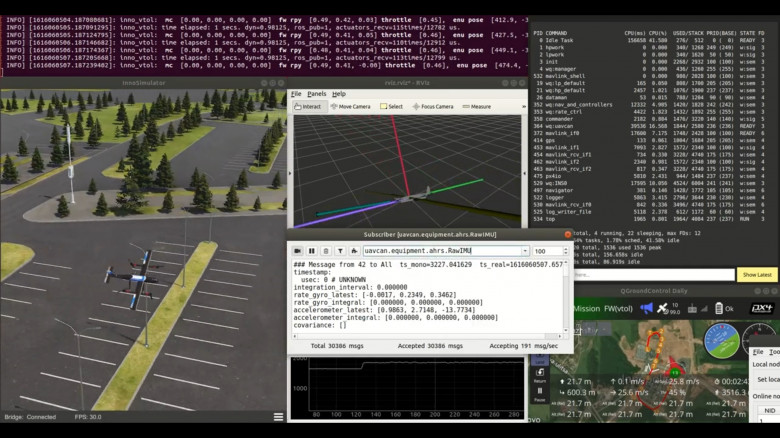
Hi from RaccoonLab, a team of enthusiasts in field robotics! We want to share our true-HITL UAVCAN-based simulator for PX4.

We believe a unified UAVCAN bus for drone onboard electronics will become a mainstream approach shortly. Our simulator is already based on UAVCAN (in opposition to UART-MAVLINK) and emulates exactly the same messages as real UAVCAN-sensors.

Read more

Why do you need the MISRA Compliance report and how to generate one in PVS-Studio?

Reading time5 min
Reach and readers1.4K

If you are strongly interested in MISRA and would like to understand whether your project meets one of the MISRA association's standards, there is a solution. It's name is MISRA Compliance. PVS-Studio has recently learned how to generate the MISRA Compliance report. This article describes how you can use this feature. This can make somebody's life better.

Read more

System-on-Chip bus: AXI4 simplified and explained

Reading time20 min
Reach and readers50K

Protocol AXI4 was developed for High-bandwidth and low latency applications. It is designed to allow communication between master and slave devices. Master is typically a DMA or CPU and slaves are DRAM controllers, or other specific protocol controllers: UART, SPI, and others. Sometimes one component can implement multiple instances of this protocol. Usually, a prefix is used to differentiate between multiple AXI4 interfaces.

For example, Ethernet MAC can integrate DMA and slave interface used to command MAC. MAC can accept commands on the slave interface that contain data about the location of the next ethernet packet and MAC can start fetching this packet using the separate master interface instance.

This article was motivated by common design mistakes AXI4 designers make when they are designing their Digital IP. (Looking at you Xilinx)

Read more

Doubling effective digitization frequency by multiple pass approach, is it possible?

Reading time4 min
Reach and readers1.2K

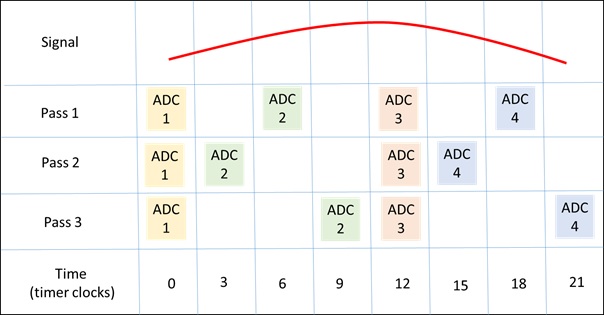
As already described in the previous article, in the process of reworking the DSO138 oscilloscope toy, the idea arose in the DSO303 firmware at some point to try to double the maximum sampling frequency to achieve scanning times of 500 and 200 nanoseconds per cell. In fact, for the STM32F303, the theoretically maximum achievable sampling rate from the point of view of the ADC input, and this is determined by the minimum opening time of the ADC sampling unit, which in our case is 1.5 clock cycles x (1/72 MHz) = 20.8 nanoseconds, is 48 MSPS (millions of counts per second). However, with the parallel operation of 4 ADCs at 6 MHz, it is possible to achieve only 24 MSPS due to the limited speed of the ADC.

Let's imagine that we are considering correctly-periodic signal, which is also constant, i.e. it does not experience fluctuations in frequency and amplitude over time. Is it possible to somehow digitize it not in one, but in several passes, thereby increasing the effective sampling frequency? 

Read more

DSO138 upgrade

Reading time11 min
Reach and readers6.6K

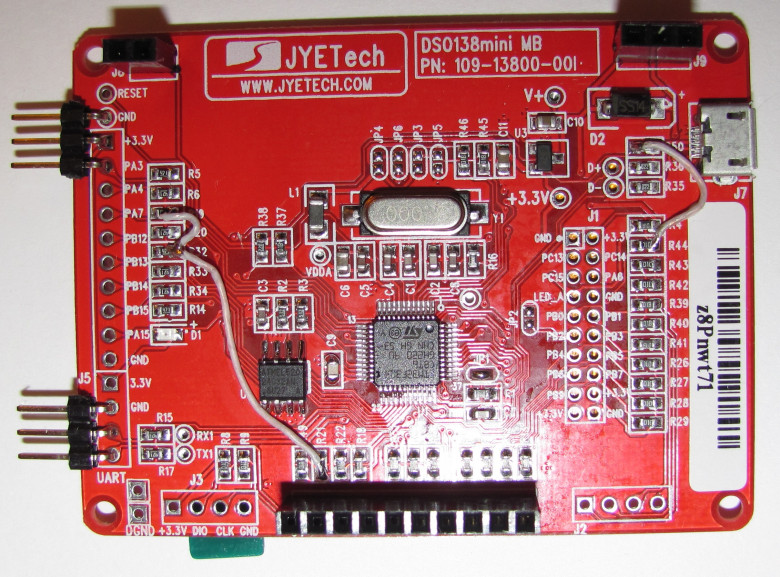
On Ali, an interesting toy – an oscilloscope called DSO138 is sold for a very inexpensive price. It has already gained quite a lot of popularity among electronics lovers, but the parameters of this device, alas, allow it to be more or less fully used only for debugging very low-frequency circuits. Actually, it is not positioned as a tool, but rather as a DIY-kit for novice electronics engineers.

This "toy" oscilloscope is assembled on the STM32F103 microcontroller, and with a fairly competent circuit design of the digital part, the presence of a fairly decent 320X240-dot color display, and not the most rotten analog path, everything, alas, is ruined by very weak ADCs on board the 32F103. The claimed band of 200 kHz can be recognized as such only with a very large stretch. Yes, it will show the presence or absence of a signal with such a frequency, but it will not be possible to really look at something beyond this.

At the same time, the 103-series has a slightly more powerful brother - the STM32F303, it is almost completely compatible with the legs, but it is significantly better in terms of the parameters we are interested in, there are 4 ADCs on board with a conversion frequency of 5 MHz (6 MHz with a 10-bit resolution). In this scenario, if you use all 4 ADCs in parallel with a 10-bit resolution, you can get a effective resolution of up to an honest 24 MSPS (millions of samples per second). The microcontroller is also inexpensive; you can easily find it on the same Ali for very reasonable money again. It is clear that the idea to change the microcontroller arose almost immediately after I tried this DSO138.

At the same time, if upgraded the toy can turn out to be a completely full-fledged tool that even professionals, not just novice amateurs, could already use. With these thoughts in mind, I decided to try to do something with a Chinese toy in my free time.

Read more

Building an Arduino based RFID Emulator

Reading time7 min
Reach and readers20K

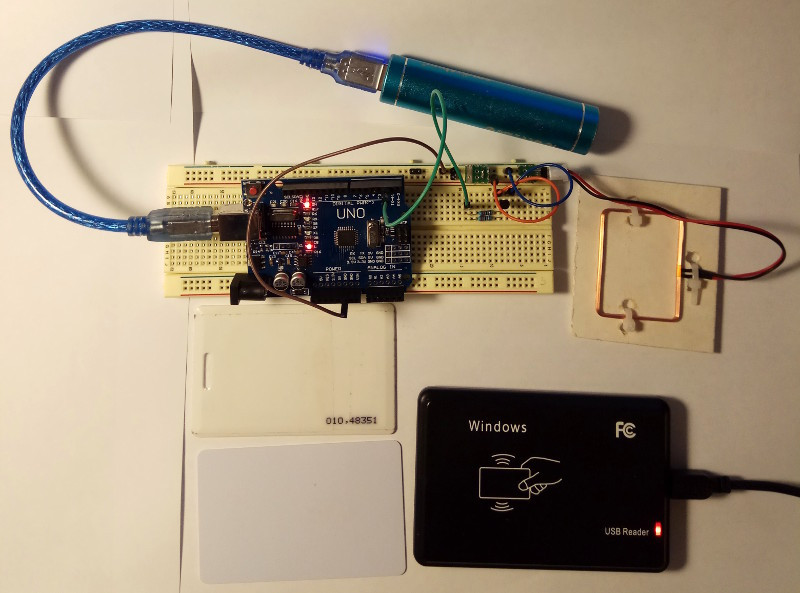
This project is aimed at creating an experimental device for emulating RFID labels of three widely available components. I simplified the explanation of the process so that it could be easily replicated. I also developed some helpful ideas along the way, including writing a special program for converting a serial number into the transmitted data, which will definitely prove useful.

Passcode Data Protection by Using FPGA and Verilog

Reading time4 min
Reach and readers3.5K

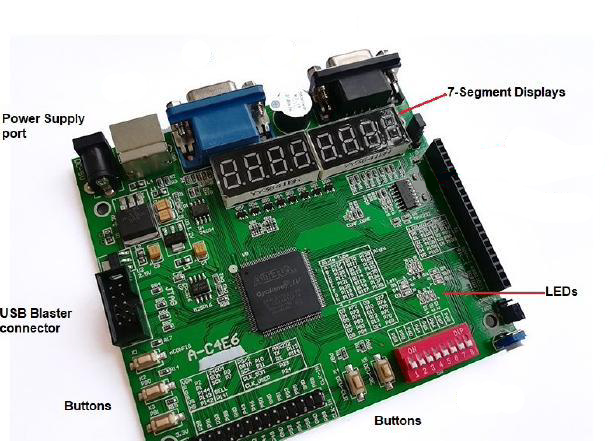
There are many situations when you need to protect your data, and different tools can be used to do that. For example, a safe. We develop a passcode data protection mechanism by using an FPGA board and Quartus Prime software. It allows demonstrating the basic concepts of a combination lock such as entering data, setting and checking a passcode, and displaying data.

Read more

Configuring FT4232H using the ftdi_eeprom

Reading time2 min
Reach and readers11K


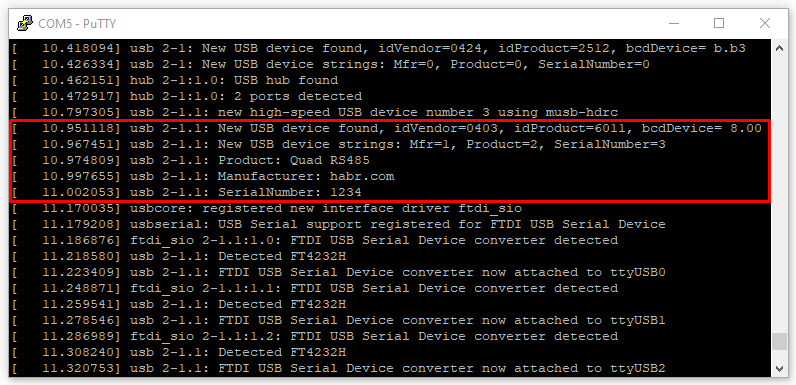
The FT4232H is USB 2.0 High speed to UART IC converter. The FT4232H has four UART ports and one USB port.


By connecting EEPROM memory to this chip, you can set specific operating modes or change the manufacturer's data.


Let's look at the example and configure FT4232H directly on a system running GNU/Linux. We will do this using the ftdi_eeprom.

Read more →

How to make your home ‘smart’ without going crazy

Reading time10 min
Reach and readers2.3K
image

Smart furniture, which keeps your house in order, is a must for almost any futuristic set. In fact, an auto-regulating climate, automatic lights and voice control over household devices — all this can be done and configured now. But it will take a little experience, basic knowledge of technology and sometimes programming, as well as a whole sea of ​​fantasy. In my case, I did in the way that just fantasy will be enough, but first things first…
Read more →

About embedded again: searching for bugs in the Embox project

Reading time11 min
Reach and readers690

Рисунок 2

Embox is a cross-platform, multi-tasking real-time operating system for embedded systems. It is designed to work with limited computing resources and allows you to run Linux-based applications on microcontrollers without using Linux itself. Certainly, the same as other applications, Embox couldn't escape from bugs. This article is devoted to the analysis of errors found in the code of the Embox project.

Checking the Code of Zephyr Operating System

Reading time13 min
Reach and readers2.2K

PVS-Studio and Zephyr

Some time ago we announced PVS-Studio's new feature that enabled it to integrate into PlatformIO. Naturally, our team kept in touch with the PlatformIO team while working on that feature, and they suggested that we check the real-time operating system Zephyr to see if we could find any interesting bugs in its code. We thought it was a good idea, and so here's this article about the check results.
Read more →

What Is MISRA and how to Cook It

Reading time11 min
Reach and readers1.2K

Рисунок 2

Perhaps every microcontroller software developer has heard about special coding standards to help improve the code security and portability. One of such standards is MISRA. In this article, we'll take a closer look at what this standard is, its concept and how to use it in your projects.
Read more →