Pull to refresh
512K+

Open source *

Open source software

718,24
Rating
Show first
Rating limit
Level of difficulty

Rebuilding an icon: a call for the sharing of open data to help restore Notre-Dame

Reading time2 min
Reach and readers717

Since its completion more than 675 years ago, the medieval cathedral of Notre-Dame has captivated millions of people with its incomparable beauty. From its legendary stained glass rose window to its towering spire, it’s widely regarded as one of the most stunning examples of medieval architecture in history.


Read more →

Long journey to Tox-rs. Part 1

Reading time7 min
Reach and readers4.3K
Tox logo

Hi everyone!


I like Tox and respect the participants of this project and their work. In an effort to help Tox developers and users, I looked into the code and noticed potential problems that could lead to a false sense of security. Since I originally published this article in 2016 (in Russian), many improvements have been made to Tox, and I lead a team that re-wrote secure Tox software from scratch using the Rust programming language (check out Tox-rs). I DO recommend using tox in 2019. Let's take a look what actually made us rewrite Tox in Rust.


Original article of 2016


There is an unhealthy tendency to overestimate the security of E2E systems only on the basis that they are E2E. I will present objective facts supplemented with my own comments for you to draw your own conclusions.


Spoiler: The Tox developers agree with my points and my source code pull request was accepted.

Here go facts:

How to make possible micro-payments in your app

Reading time8 min
Reach and readers5.7K

This week I spent coding my very first public pet-app based on Telegram chat bot which acts as a Bitcoin wallet and allows to send and receive tips between Telegram users and other so-called “Lightning Apps”. I assume that you are familiar with Bitcoin & Telegram in general, i’ll try to post short and without deep jump into details. More resources about Bitcoin can be found here and Telegram is simply an instant messenger that allows you to create your custom apps (chat-bots) using their platform.


What are the key points of such app?


  • Allows to rate other users ideas and answers with real value instead of
    ‘virtual likes’. This brings online conversation to completely new level
  • Real example of working micro-payment app which can act with other entities
    over internet using open protocol
  • All the modules are open-source projects and can be easy re-used and adjusted
    for your own project. App does not relay on third-party commercial services.
    Even it falls under e-commerce field, which is currently almost closed, the app
    is based on open solutions.

What are the use-cases?


something like this…

image
Read more →

Finding Bugs in LLVM 8 with PVS-Studio

Reading time24 min
Reach and readers3.5K
PVS-Studio and LLVM 8.0.0

It's been two years since we last checked the code of the LLVM project with PVS-Studio, so let's see if PVS-Studio is still the leader among tools for detecting bugs and security weaknesses. We'll do that by scanning the LLVM 8.0.0 release for new bugs.
Read more →

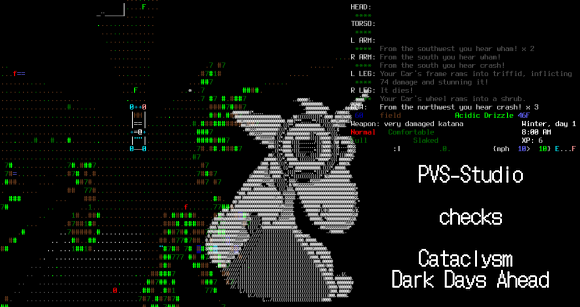
Cataclysm Dark Days Ahead: Static Analysis and Roguelike Games

Reading time10 min
Reach and readers4.9K
Picture 5

You must have already guessed from the title that today's article will be focusing on bugs in software source code. But not only that. If you are not only interested in C++ and in reading about bugs in other developers' code but also dig unusual video games and wonder what «roguelikes» are and how you play them, then welcome to read on!
Read more →

Free Wireguard VPN service on AWS

Reading time9 min
Reach and readers73K

Free Wireguard VPN service on AWS


The reasoning


The increase of Internet censorship by authoritarian regimes expands the blockage of useful internet resources making impossible the use of the WEB and in essence violates the fundamental right to freedom of opinion and expression enshrined in the Universal Declaration of Human Rights.


Article 19
Everyone has the right to freedom of opinion and expression; this right includes freedom to hold opinions without interference and to seek, receive and impart information and ideas through any media and regardless of frontiers.

The following is the detailed 6 steps instruction for non-IT people to deploy free* VPN service upon Wireguard technology in Amazon Web Services (AWS) cloud infrastructure, using a 12 months free account, on an Instance (virtual machine) run by Ubuntu Server 18.04 LTS.


I tried to make this walkthrough as friendly as possible to people far from IT. The only thing required is assiduity in repeating the steps described below.

Read more →

Analyzing the Code of CUBA Platform with PVS-Studio

Reading time14 min
Reach and readers1.1K

Java developers have access to a number of useful tools that help to write high-quality code such as the powerful IDE IntelliJ IDEA, free analyzers SpotBugs, PMD, and the like. The developers working on CUBA Platform have already been using all of these, and this review will show how the project can benefit even more from the use of the static code analyzer PVS-Studio.
Read more →

Building VirtualBox for Windows

Reading time39 min
Reach and readers13K

 Intro


It is a well-known fact to many users of the Windows version of VirtualBox (from now on, VB; not to be confused with Visual Basic) that starting with 4.3.14 the developers added the so-called «hardening» designed to prevent malicious injections into VB. Although the intentions were good, the implementation happened to cause numerous conflicts with totally legitimate products such as antiviruses, cryptographic modules and even some updates of the Windows itself, and when such a conflict occurs VB simply stops working. Users have to wait for at least a month till the new VB version is released with the proper exclusions added. Worst case is, the conflicting application or update has to be uninstalled, or VB itself has to be downgraded to the version 4.3.12 which was the latest one without hardening. Numerous requests to add a user-controlled exclusion list, or an option to disable hardening, are all left unanswered. The only reply from developers sounds like «if you don't want it build it from source code yourself». Well, looks like we'll have to.

Although the build instructions are described on the official project Wiki, they are incomplete and somewhat outdated, while the build procedure often fails with vague error messages. So when, in the end, I got it working I thought it was worth documenting in full details in a separate article. This instruction is being updated from time to time, and at the moment it is adapted to building VB version 6.1.18. However, if you need information on building earlier versions of VB or auxiliary libraries you can always get it from the history of changes.

OK, I'm in

Wireshark 3.x: code analysis under macOS and errors review

Reading time9 min
Reach and readers2K

Picture 1

Wireshark Foundation released the final stable-version of the popular network traffic analyzer — Wireshark 3.0.0. The new release fixes several bugs, it is now possible to analyze the new protocols, apart from that the driver on Npcap WinPcap is replaced. Here is where quoting of the announcement ends and our note about bugs in the project starts off. The projects authors definitely haven't done their best in fixing bugs before the release.

Let's collect hotfixes right now to give a motive in doing a new release :).

Introduction


Wireshark is a well-known tool to capture and analyze network traffic. The program works with the vast majority of known protocols, has intuitive and logical graphical interface, an all-powerful system of filters. Wireshark is cross-platform, works in such OSs, as: Windows, Linux, macOS, Solaris, FreeBSD, NetBSD and many others.

To do the source code analysis, we used PVS-Studio static code analyzer. To analyze the source code, first we needed to compile the project in an OS. The choice was wide not only due to the cross platform nature of the project, but also because of that of the analyzer. I chose macOS for the analysis. You can also run the analyzer under Windows and Linux.
Read more →

PVS-Studio for Java hits the road. Next stop is Elasticsearch

Reading time11 min
Reach and readers2.2K

Picture 1

The PVS-Studio team has been keeping the blog about the checks of open-source projects by the same-name static code analyzer for many years. To date, more than 300 projects have been checked, the base of errors contains more than 12000 cases. Initially the analyzer was implemented for checking C and C++ code, support of C# was added later. Therefore, from all checked projects the majority (> 80%) accounts for C and C++. Quite recently Java was added to the list of supported languages, which means that there is now a whole new open world for PVS-Studio, so it's time to complement the base with errors from Java projects.

The Java world is vast and varied, so one doesn't even know where to look first when choosing a project to test the new analyzer. Ultimately, the choice fell on the full-text search and analytical engine Elasticsearch. It is quite a successful project, and it's even especially pleasant to find errors in significant projects. So, what defects did PVS-Studio for Java manage to detect? Further talk will be right about the results of the check.
Read more →

Using Linux Kernel Sequence Files

Reading time6 min
Reach and readers5.6K
A characteristic feature of modern programming is the use of the global network as a source of reference information, in particular, a source of patterns for solving unknown or little-known problems for a specific programmer. Such an approach saves a lot of time and often gives quite qualitative results. However, the solutions laid out in the network although usually correct, do not always take into account all the subtleties of solving a problem, which leads to the appearance in the source code of sections that usually work correctly, but under not quite standard circumstances become sources of unpleasant surprises.

Consider the topic of using sequence files in the Linux kernel, such files are considered to be the most convenient mechanism for printing from kernel mode. But in practice, using them correctly is much more difficult than you would think.

A lot of materials on this topic are available online. The best is the source code of the kernel itself which has quite detailed comments. The problem with this source of information is its volume. If you do not know exactly what to look for, it is better if you only have limited time, not to try at all. For me, when I became interested in the topic, Google provided several seemingly excellent sources of information relating to my search: the famous book The Linux Kernel Module Programming Guide and a series of articles by Rob Day. These sources are not new, but very solid.
Read more →

Top 10 bugs of C++ projects found in 2018

Reading time13 min
Reach and readers8K
It has been three months since 2018 had ended. For many, it has just flew by, but for us, PVS-Studio developers, it was quite an eventful year. We were working up a sweat, fearlessly competing for spreading the word about static analysis and were searching for errors in open source projects, written in C, C++, C#, and Java languages. In this article, we gathered the top 10 most interesting of them right for you!

What's new in CUBA 7

Reading time11 min
Reach and readers1.9K

What's new in CUBA 7


Three years ago we announced the second publicly available major version of the framework. CUBA 6 was the game-changing version — the licensing was turned from proprietary to Apache 2.0. Those days we couldn't even guess where it was going to bring the framework in long term. CUBA community started to grow exponentially, so we have learned a lot of possible (and sometimes impossible) ways of how developers use the framework. Now we are happy to announce CUBA 7, which, we hope, will make development more coherent and joyful for all community members from those just starting their journey in CUBA and Java to skilled enterprise developers and Java experts.


cuba

Read more →

How Kiwi test 1'000 Python projects

Reading time5 min
Reach and readers2.2K
For Russian speaking posted translated version here.

This is how Alex Viscreanu’s talk on Moscow Python Conf++ named. Now it's two weeks till before the conference, but of course, I've already heard what Alex will speak about. Find below some spoilers and talk preparing backstage: what kind of an open source Zoo developed in Kiwi, how it tests Python code and what’s the difference between The Zoo and for example mypy.

— Tell us a bit about Kiwi, yourself and what is your work within a company?

Kiwi.com is an online travel agency based in Czech Republic. We aim to make travelling as simple and accessible as possible. The company was founded in 2012 as Skypicker, and since then it has become one of the five biggest online sellers of airline tickets in Europe. It was renamed to Kiwi.com in 2016.

The special feature that we, at Kiwi.com, offer is the virtual interlining, which allows us to connect flights from companies that don’t usually cooperate together, and we are covering the possible connection issues caused by delayed flights.

Some of the numbers that we manage at Kiwi.com include 90 000 000+ daily searches, 25 000 seats sold daily, and a total of 15 000 000 000+ flight combinations available.
Read more →

Following in the Footsteps of Calculators: SpeedCrunch

Reading time6 min
Reach and readers1.8K

Picture 4

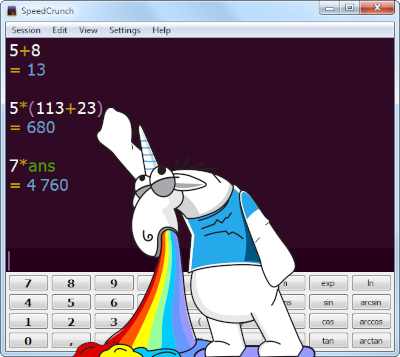
Here we are, continuing to explore the code of calculators! Today we are going to take a look at the project called SpeedCrunch, the second most popular free calculator.

Introduction


SpeedCrunch is a high-precision scientific calculator featuring a fast, keyboard-driven user interface. It is free and open-source software, licensed under the GPL and running on Windows, Linux, and macOS.

The source code is available on BitBucket. I was somewhat disappointed by the build documentation, which could be more detailed. It says that you need «Qt 5.2 or later» to build the project, but it actually required a few specific packages, which wasn't easy to figure out from the CMake log. By the way, it is considered a good practice nowadays to include a Dockerfile into the project to make it easier for the user to set up the development environment.
Read more →

Checking FreeRDP with PVS-Studio

Reading time10 min
Reach and readers2.1K

Picture 2

FreeRDP is an open-source implementation of the Remote Desktop Protocol (RDP), a proprietary protocol by Microsoft. The project supports multiple platforms, including Windows, Linux, macOS, and even iOS and Android. We chose it to be the first project analyzed with the static code analyzer PVS-Studio for a series of articles about the checks of RDP-clients.
Read more →

Zotero hacks: unlimited synced storage and its smooth use with rmarkdown

Reading time7 min
Reach and readers32K
Here is a bit refreshed translation of my 2015 blog post. The post shows how to organize a personal academic library of unlimited size for free. This is a funny case of a self written manual which I came back to multiple times myself and many many more times referred my friends to it, even non-Russian speakers who had to use Google Translator and infer the rest from screenshots. Finally, I decided to translate it adding some basic information on how to use Zotero with rmarkdown.


A brief (and hopefully unnecessary for you) intro of bibliographic managers


Bibliographic manager is a life saver in everyday academic life. I suffer almost physical pain just thinking about colleagues who for some reason never started using one — all those excel spreadsheets with favorite citations, messy folders with PDFs, constant hours lost for the joy-killing task of manual reference list formatting. Once you start using a reference manager this all becomes a happily forgotten nightmare.

Read more →

Following in the Footsteps of Calculators: Qalculate

Reading time7 min
Reach and readers1.9K

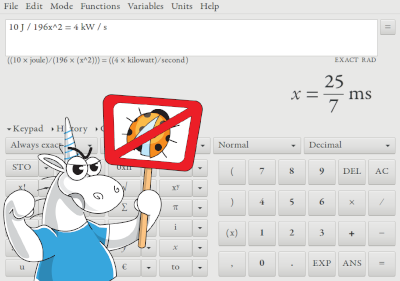
Previously we did code reviews of large mathematical packages, for example, Scilab and Octave, whereby calculators remained aloof as small utilities, in which it is difficult to make errors due to their small codebase. We were wrong that we haven't paid attention to them. The case with posting the source code of the Windows calculator showed that actually everyone was interested in discussing types of errors hiding in it. Moreover, the number of errors there was more than enough to write an article about that. My colleagues and I, we decided to explore the code of a number of popular calculators, and it turned out that the code of the Windows calculator was not that bad (spoiler).
Read more →

Another way to write cross-platform apps: Neutralinojs internals and comparison with Electron and NW.js

Reading time5 min
Reach and readers9.5K


I am Shalitha Suranga from Sri Lanka. I started Neutralinojs project with other two members as our research project at university.


Cross-platform application development is extremely useful among software development organizations because a large end-user audience can be targeted. Earlier there were several approaches, such as writing multiple codebases per each platform, writing a single codebase using conditionals for platform selection, or using a programming language which has a cross-platform virtual machine at run-time. There were drawbacks of each like complexity of design, limited low-level accessibility and slow learning rate. Cross-platform application development with web technologies came [1] after. Electron and NW.js are most popular frameworks which allow developers to make cross-platform applications using Javascript. Basically, these popular frameworks combine embedded chromium browser and node run-time [2], [3].


These frameworks are being used to create numerous cross-platform applications. Whereas the community pointed out several unseen drawbacks of these frameworks. Large bundled application size, high memory consumption and long development workflow are the key things which were criticized through internet forums and websites [4], [5], [6], [7], [8]. Table 1.1 shows the advantages and disadvantages of Electron/NW.js.


Table 1.1: Advantages and Disadvantages of Electron/NW,js


Advantages of Electron and NW.js Disadvantages of Electron and NW.js
Development is very easy since Javascript is used Application bundle is considered as bloatware (High disk space usage)
Access native functions via node runtimeSingle codebase for all supported platforms Linux, Windows and macOS High memory consumption and slowness
Many Node modules need to be installed
Read more →