

MessageBox for AvaloniaUI
2 min
MessageBox — useful window for different GUI frameworks, but you can't find it in AvaloniaUI.
Let's try to do it.
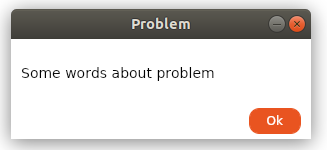
Let's try to do it.

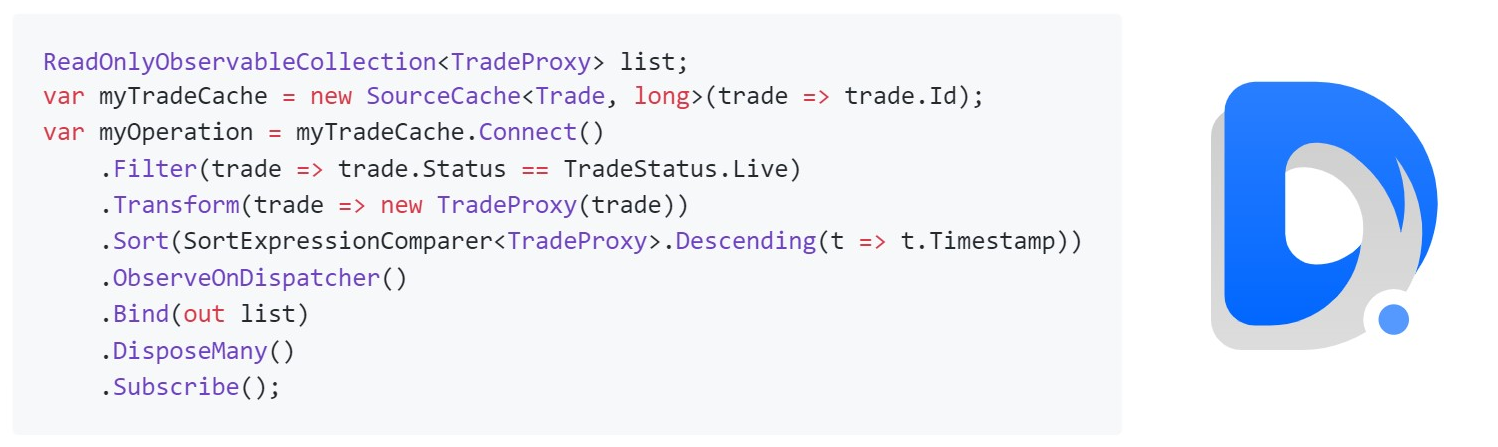
February 2019 marked the release of ReactiveUI 9 — the cross-platform framework for building GUI applications on the Microsoft .NET platform. ReactiveUI is a tool for tight integration of reactive extensions with the MVVM design pattern. You could familiarize yourself with the framework via a series of videos or the welcome page of the documentation. The ReactiveUI 9 update includes numerous fixes and improvements, but probably the most crucial and interesting one is integration with the DynamicData framework, allowing you to work with dynamic collections in Reactive fashion. Let’s find out what we can use DynamicData for and how this powerful reactive framework works under the hood!

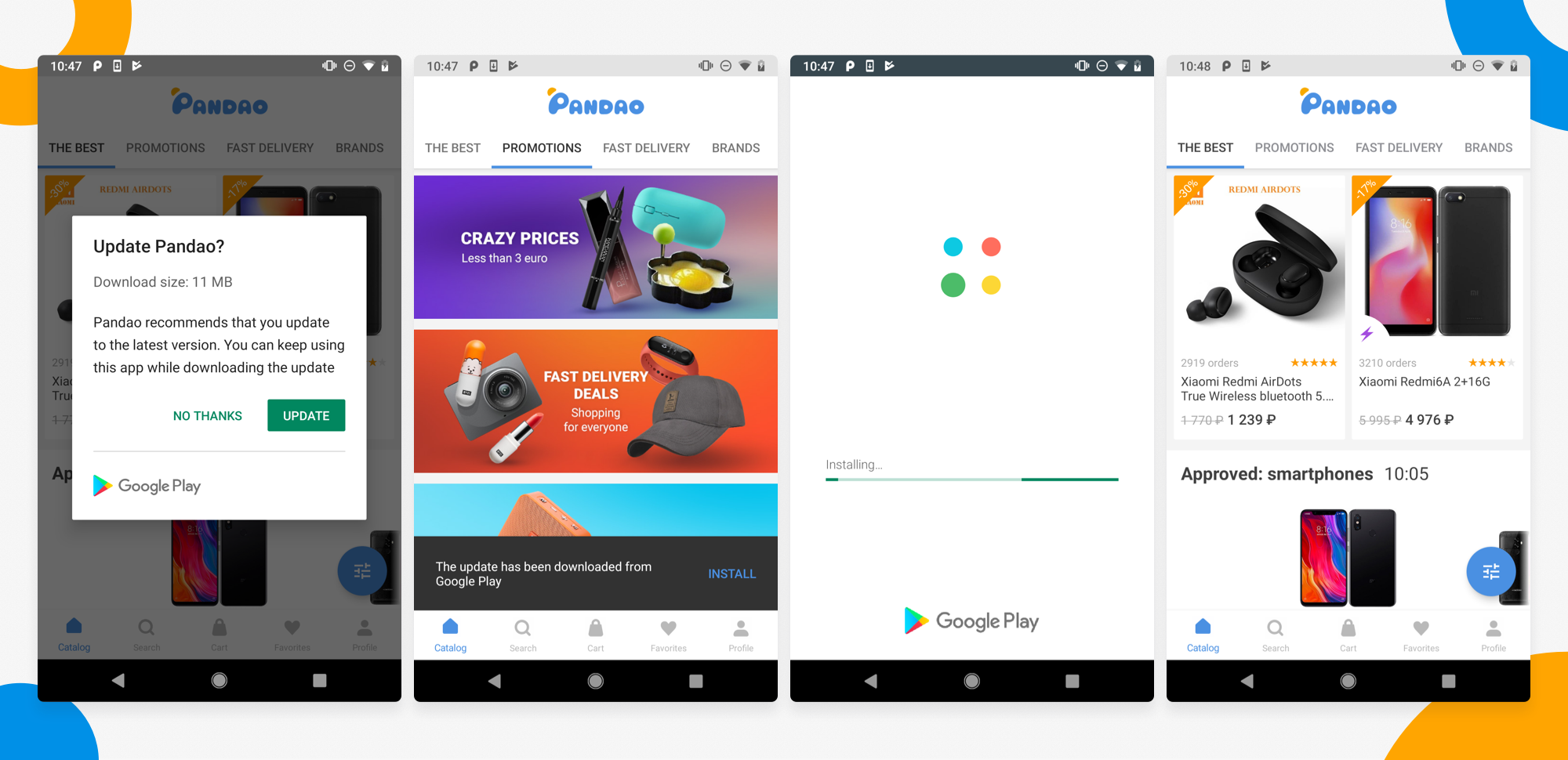
This week I spent coding my very first public pet-app based on Telegram chat bot which acts as a Bitcoin wallet and allows to send and receive tips between Telegram users and other so-called “Lightning Apps”. I assume that you are familiar with Bitcoin & Telegram in general, i’ll try to post short and without deep jump into details. More resources about Bitcoin can be found here and Telegram is simply an instant messenger that allows you to create your custom apps (chat-bots) using their platform.
something like this…



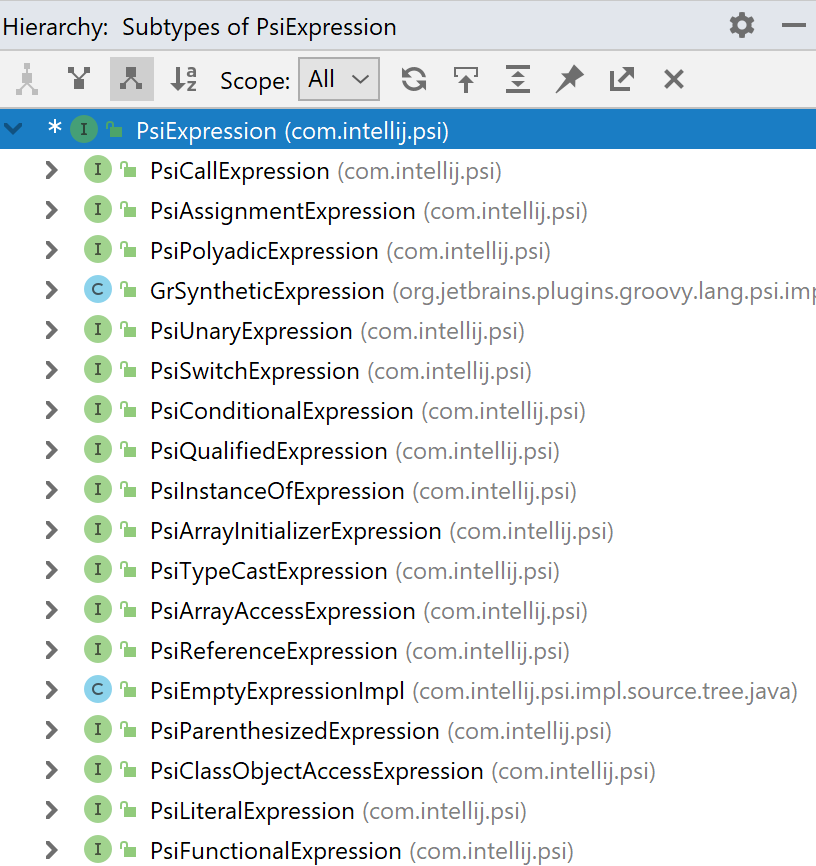 Code search and navigation are important features of any IDE. In Java, one of the commonly used search options is searching for all implementations of an interface. This feature is often called Type Hierarchy, and it looks just like the image on the right.
It's inefficient to iterate over all project classes when this feature is invoked. One option is to save the complete class hierarchy in the index during compilation since the compiler builds it anyway. We do this when the compilation is run by the IDE and not delegated, for example, to Gradle. But this works only if nothing has been changed in the module after the compilation. In general, the source code is the most up-to-date information provider, and indexes are based on the source code.
Finding immediate children is a simple task if we are not dealing with a functional interface. When searching for implementations of the Foo interface, we need to find all the classes that have implements Foo and interfaces that have extends Foo, as well as new Foo(...) {...} anonymous classes. To do this, it is enough to build a syntax tree of each project file in advance, find the corresponding constructs, and add them to an index.


From idea to implementation: modifying the existing elliptic curve signature scheme to be deterministic and providing functions on it to obtain verifiable within the blockchain pseudorandom numbers.

Earlier this week, we released Visual Studio 2019 version 16.1 Preview 1 (see release notes). It’s the first preview of the first update to Visual Studio 2019. If you’re not already set up to get preview releases, then please do that now. The preview channel installs side-by-side with the release channel and they don’t interfere with each other. I highly recommend all extension authors install the preview.

Got the 16.1 preview installed now then? That’s great. Here are some features in it you might find interesting.



ML.NET is an open-source and cross-platform machine learning framework (Windows, Linux, macOS) for .NET developers. Using ML.NET, developers can leverage their existing tools and skillsets to develop and infuse custom AI into their applications by creating custom machine learning models for common scenarios like Sentiment Analysis, Recommendation, Image Classification and more!.
Today we’re announcing the ML.NET 1.0 RC (Release Candidate) (version 1.0.0-preview) which is the last preview release before releasing the final ML.NET 1.0 RTM in 2019 Q2 calendar year.
Soon we will be ending the first main milestone of a great journey in the open that started on May 2018 when releasing ML.NET 0.1 as open source. Since then we’ve been releasing monthly, 12 preview releases so far, as shown in the roadmap below:

In this release (ML.NET 1.0 RC) we have initially concluded our main API changes. For the next sprint we are focusing on improving documentation and samples and addressing major critical issues if needed.
The goal is to avoid any new breaking changes moving forward.

In this post we'd like to share an interesting way of dealing with configuration of a distributed system.
The configuration is represented directly in Scala language in a type safe manner. An example implementation is described in details. Various aspects of the proposal are discussed, including influence on the overall development process.


Now let’s talk about thin ice. In the previous sections about IDisposable we touched one very important concept that underlies not only the design principles of Disposable types but any type in general. This is the object’s integrity concept. It means that at any given moment of time an object is in a strictly determined state and any action with this object turns its state into one of the variants that were pre-determined while designing a type of this object. In other words, no action with the object should turn it into an undefined state. This results in a problem with the types designed in the above examples. They are not thread-safe. There is a chance the public methods of these types will be called when the destruction of an object is in progress. Let’s solve this problem and decide whether we should solve it at all.
This chapter was translated from Russian jointly by author and by professional translators. You can help us with translation from Russian or English into any other language, primarily into Chinese or German.
Also, if you want thank us, the best way you can do that is to give us a star on github or to fork repositorygithub/sidristij/dotnetbook.
Your friendly neighborhood .NET productivity team (aka. Roslyn) focuses a lot on improving the .NET coding experience. Sometimes it’s the little refactorings and code fixes that really improve your workflow. You may have seen many improvements in the previews, but for all of you who were eagerly awaiting the GA release here’s a few features you may enjoy!

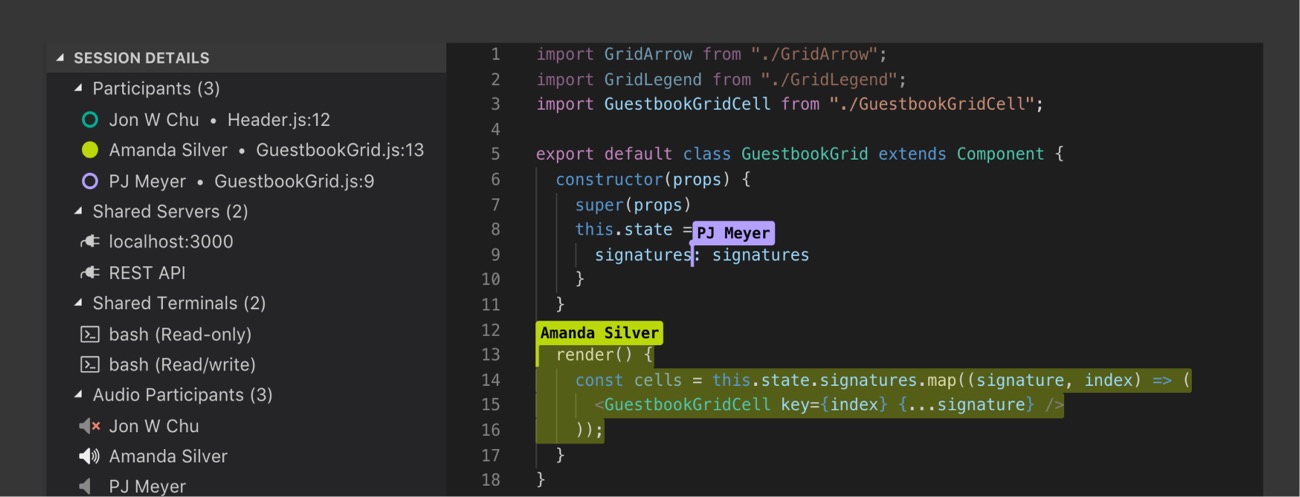
0_0 is a totally valid Python expression.We’re excited to announce the general availability of Visual Studio Live Share, and that it is now included with Visual Studio 2019! In the year since Live Share began its public preview, we’ve been working to enhance the many ways you collaborate with your team. This release is the culmination of that work, and all the things we’ve learned from you along the way.
If you haven’t heard of Live Share, it’s a tool that enables real-time collaborative development with your teammates from the comfort of your own tools. You’re able to share your code, and collaboratively edit and debug, without needing to clone repos or set up environments. It’s easy to get started with Live Share.

There are two visual differences between Memory<T> and Span<T>. The first one is that Memory<T> type doesn’t contain ref modifier in the header of the type. In other words, the Memory<T> type can be allocated both on the stack while being either a local variable, or a method parameter, or its returned value and on the heap, referencing some data in memory from there. However, this small difference creates a huge distinction in the behavior and capabilities of Memory<T> compared to Span<T>. Unlike Span<T> that is an instrument for some methods to use some data buffer, the Memory<T> type is designed to store information about the buffer, but not to handle it. Thus, there is the difference in API.
Memory<T> doesn’t have methods to access the data that it is responsible for. Instead, it has the Span property and the Slice method that return an instance of the Span type.Memory<T> contains the Pin() method used for scenarios when a stored buffer data should be passed to unsafe code. If this method is called when memory is allocated in .NET, the buffer will be pinned and will not move when GC is active. This method will return an instance of the MemoryHandle structure, which encapsulates GCHandle to indicate a segment of a lifetime and to pin array buffer in memory.
Also, if you want thank us, the best way you can do that is to give us a star on github or to fork repository


A human by nature cannot fully understand the purpose of a certain instrument until he or she gets some experience. So, let’s turn to some examples.
One of the most interesting examples in respect to algorithms is the ValueStringBuilder type. However, it is buried deep inside mscorlib and marked with the internal modifier as many other very interesting data types. This means we would not find this remarkable instrument for optimization if we haven’t researched the mscorlib source code.
What is the main disadvantage of the StringBuilder system type? Its main drawback is the type and its basis — it is a reference type and is based on char[], i.e. a character array. At least, this means two things: we use the heap (though not much) anyway and increase the chances to miss the CPU cash.
Another issue with StringBuilder that I faced is the construction of small strings, that is when the resulting string must be short e.g. less than 100 characters. Short formatting raises issues on performance.
Also, if you want thank us, the best way you can do that is to give us a star on github or to fork repository
I feel I’m going to open the Pandora’s box for you. Let’s talk about special types: SafeHandle, CriticalHandle and their derived types.
This is the last thing about the pattern of a type that gives access to an unmanaged resource. But first, let’s list everything we usually get from unmanaged world:
The first and obvious thing is handles. This may be an meaningless word for a .NET developer, but it is a very important component of the operating system world. A handle is a 32- or 64-bit number by nature. It designates an opened session of interaction with an operating system. For example, when you open a file you get a handle from the WinApi function. Then you can work with it and do Seek, Read or Write operations. Or, you may open a socket for network access. Again an operating system will pass you a handle. In .NET handles are stored as IntPtr type;
Also, if you want thank us, the best way you can do that is to give us a star on github or to fork repository