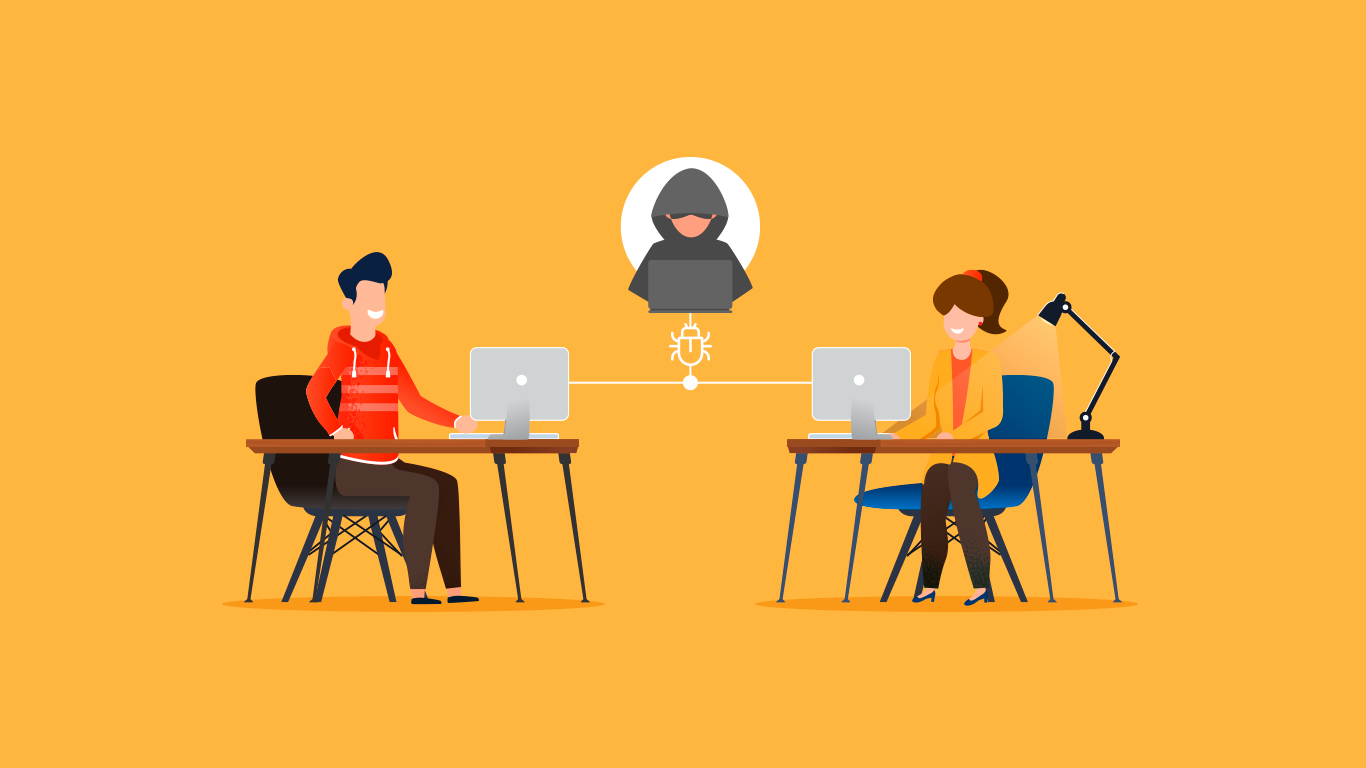
Streaming multiple RTSP IP cameras on YouTube and/or Facebook

As you know, YouTube doesn't have a feature for capturing an RTSP stream, but we would like to change this and help YouTube to make their viewers happy.

The art of creating computer programs

As you know, YouTube doesn't have a feature for capturing an RTSP stream, but we would like to change this and help YouTube to make their viewers happy.

Many of us spend time in specialized telegram groups. The power over communication here belongs to random people with their own shortcomings. Conflict and abuse occurs regularly. Is there another way to keep order so that scam spam doesn't flourish and no one has total control over group members?
In my case, these thoughts led to the development and testing of a system that can be connected to your Telegram today.
In this series, I would like to discuss some reaches of Go programming language. There is no shortage of Go-Language-Of-Cloud style articles in which you can explore the great benefits that Go indeed provides. However, there are lees to every wine, and Go does not go without blemish. In this highly opinionated series, we cover some controversies and, dare I say, pitfalls of the original Go design.
We start tough and begin with the essence of Go — it's inbuild data types. In this article, we put slice to the test. Let's move a step further from the Go Tour and use slice more extensively. For example, there is no separate data type as stack in Go, because slice type is intended to cover all its usage scenarios.
Let's briefly recap the usage of the stack. We can create a stack in two seconds using a couple of paper stickers. You write "buy milk" on the first sticker and put at the desk, and then "make the dishes" on the second and pile it on the first sticker. Now, you have a stack: the dishes sticker came last but will be served first, as it is on the top of the stack. Thus, there is an alternative name for stack — LIFO, Last-In-First-Out. To compare, there is the "opposite" data structure queue or FILO — first in, first out. In programming, stacks are everywhere, either in the explicit form or in the implicit as stack trace of the execution of a recursive function.
Ok, let's put slice into use and implement stack.
This article is a part of Algorithms in Go series where we discuss common algorithmic problems and their solution patterns.
In this edition, we take a closer look at bit manipulations. Bit operations can be extremely powerful and useful in an entire class of algorithmic problems, including problems that at first glance does not have to do anything with bits.
Let's consider the following problem: six friends meet in the bar and decide who pays for the next round. They would like to select a random person among them for that. How can they do a random selection using only a single coin?

The solution to this problem is not particularly obvious (for me:), so let's simplify a problem for a moment to develop our understanding. How would we do the selection if there were only three friends? In other words, how would we "mimic" a three-sided coin with a two-sided coin?

As software developers, we always want our software to work properly. We'll do everything to improve the software quality. To find the best solution, we are ready to use parallelizing or applying any various optimization techniques. One of these optimization techniques is the so-called string interning. It allows users to reduce memory usage. It also makes string comparison faster. However, everything is good in moderation. Interning at every turn is not worth it. Further, I'll show you how not to slip up with creating a hidden bottleneck in the form of the String.Intern method for your application.
In this series, we will be discussing interesting aspects and corner cases of Golang. Some questions will be obvious, and some will require a closer look even from an experienced Go developer. These question will help to deeper the understanding of the programming language, and its underlying philosophy. Without much ado, let's start with the first part.
What value y will have at the end of the execution?
func main() {
var y int
for y, z := 1, 1; y < 10; y++ {
_ = y
_ = z
}
fmt.Println(y)
}
According to the specification,

Looking out for the best in app chat solution providers to enhance your business.
Getting confused with so many options to choose among Sendbird and Twilio competitors.
Then, let’s have some clarity with a detailed discussion over the feature comparison to go for the best Twilio and Sendbird alternative.

Most influential programmers say that code must be self-documenting. They find comments useful only when working with something uncommon. Our team shares this opinion. Recently we came across a code snippet that perfectly proves it.

Here I am going to cover my own approach to compilation of mathematical functions into Linq.Expression. What we are going to have implemented at the end:
1. Arithmetical operations, trigonometry, and other numerical functions
2. Boolean algebra (logic), less/greater and other operators
3. Arbitrary types as the function's input, output, and those intermediate
Hope it's going to be interesting!
Most solutions to algorithmic problems can be grouped into a rather small number of patterns. When we start to solve some problem, we need to think about how we would classify them. For example, can we apply fast and slow аlgorithmic pattern or do we need to use cyclic sortpattern? Some of the problems have several solutions based on different patterns. In this series, we discuss the most popular algorithmic patterns that cover more than 90% of the usual problems.
It is different from High-School Algorithms 101 Course, as it is not intended to cover things like Karatsuba algorithm (fast multiplication algorithm) or prove different methods of sorting. Instead, Algorithmic Patterns focused on practical skills needed for the solution of common problems. For example, when we set up a Prometheus alert for high request latency we are dealing with Sliding Window Pattern. Or let say, we organize a team event and need to find an available time slot for every participant. At the first glance, it is not obvious that in this case, we are actually solving an algorithmic problem. Actually, during our day we usually solve a bunch of algorithmic problems without realizing that we dealing with algorithms.
The knowledge about Algorithmic Patterns helps one to classify a problem and then apply the appropriate method.
But probably most importantly learning algorithmic patterns boost general programming skills. It is especially helpful when you are debugging some production code, as it trains you to understand the execution flow.
Patterns covered so far:
Stay tuned :)
<Promo> If you interested to work as a backend engineer, there is an open position in my squad. Prior knowledge of Golang is not required. I am NOT an HR and DO NOT represent the company in any capacity. However, I can share my personal experience as a backend engineer working in the company. </Promo>

In this article, we discuss the postorder traversal of a binary tree. What does postorder traversal mean? It means that at first, we process the left subtree of the node, then the right subtree of the node, and only after that we process the node itself.
Why would we need to do it in this order? This approach solves an entire class of algorithmic problems related to the binary trees. For example, to find the longest path between two nodes we need to traverse the tree in a postorder manner. In general, postorder traversal is needed when we cannot process the node without processing its children first. In this manner, for example, we can calculate the height of the tree. To know the height of a node, we need to calculate the height of its children and increment it by one.
Let's start with a recursive approach. We need to process the left child, then the right child and finally we can process the node itself. For simplicity, let's just save the values into slice out.

C# capabilities keep expanding from year to year. New features enrich software development. However, their advantages may not always be so obvious. For example, the good old yield. To some developers, especially beginners, it's like magic - inexplicable, but intriguing. This article shows how yield works and what this peculiar word hides. Have fun reading!

Have you ever heard of Image File Execution Options (IFEO)? It is a registry key under HKEY_LOCAL_MACHINE that controls things like Global Flags and Mitigation Policies on a per-process basis. One of its features that drew my attention is a mechanism designed to help developers debug multi-process applications. Imagine a scenario where some program creates a child process that crashes immediately. In case you cannot launch this child manually (that can happen for various reasons), you might have a hard time troubleshooting this problem. With IFEO, however, you can instruct the system to launch your favorite debugger right when it's about to start this troublesome process. Then you can single-step through the code and figure what goes wrong. Sounds incredibly useful, right?
I don't know about you, but I immediately saw this feature as a mechanism for executing arbitrary code when someone creates a new process. Even more importantly, it happens synchronously, i.e., the target won't start unless we allow it. Internally, the system swaps the path to the image file with the debugger's location, passing the former as a parameter. Therefore, it becomes the debugger's responsibility to start the application and then attach itself to it.
So, are there any limitations on what we can do if we register ourselves as a debugger? Let's push this opportunity to the limits and see what we can achieve.
What happens to your MongoDB replica set when it comes to failures like network partitioning, restarting, reconfiguration of the existing topology, etc.? This question is especially important these days because of the popularity gained by the multi-cloud model where chances of these scenarios are quite realistic.
However, is there a solution, preferably a free one, for testing such cases that would obviate the need of writing manual scripts and poring over the official documentation? As software developers, we would be better off preparing our applications in advance to survive these failures.

Most solutions to algorithmic problems can be grouped into a rather small number of patterns. When we start to solve some problem, we need to think about how we would classify them. For example, can we apply fast and slowalgorithmic pattern or do we need to use cyclic sortpattern? Some of the problems have several solutions with different patterns. In this article of series Algorithms in Go we consider an algorithmic pattern that solves an entire class of the problems related to a matrix. Let's take one of such problems and see how we can handle it.
How can we traverse a matrix in a spiral order?

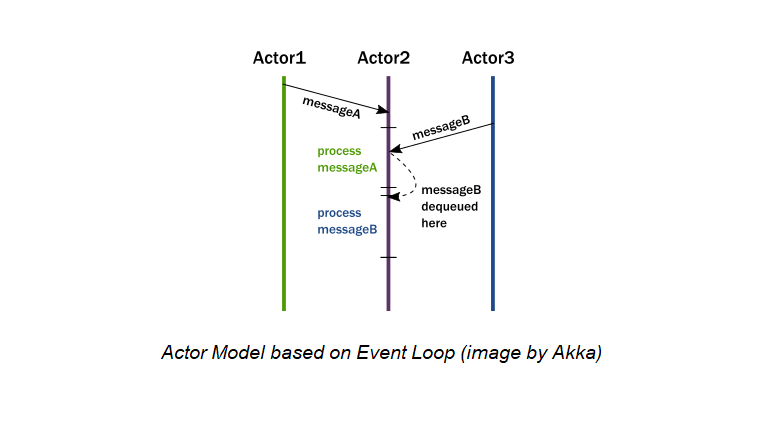
rotor is a non-intrusive event loop friendly C++ actor micro framework with hierarchical supervising, similar to its elder brothers like caf and sobjectizer. There is a bulk of important changes since the last release announcement v0.09

As Intel Threading Building Blocks (TBB) is being refreshed using new C++ standard, deprecating tbb::task interface, the need for high-level tasking interface becomes more obvious. In this article, I’m proposing yet another way of defining what a high-level parallel task programming model can look like in modern C++. I created it in 2014 and it was my last contribution to TBB project as its core developer after 9 wonderful years of working there. However, this proposal has not been used in production yet, so a new discussion might help it to be adopted.

The recent Qt 6 release compelled us to recheck the framework with PVS-Studio. In this article, we reviewed various interesting errors we found, for example, those related to processing dates. The errors we discovered prove that developers can greatly benefit from regularly checking their projects with tools like PVS-Studio.

The flag of the Netherlands consists of three colors: red, white and blue. Given balls of these three colors arranged randomly in a line (it does not matter how many balls there are), the task is to arrange them such that all balls of the same color are together and their collective color groups are in the correct order.
For simplicity instead of colors red, white, and blue we will be dealing with ones, twos and zeroes.
Let's start with our intuition. We have an array of zeroth, ones, and twos. How would we sort it? Well, we could put aside all zeroes into some bucket, all ones into another bucket, and all twos into the third. Then we can fetch all items from the first bucket, then from the second, and from the last bucket, and restore all the items. This approach is perfectly fine and has a great performance. We touch all the elements when we iterate through the array, and then we iterate through all the elements once more when we "reassamble" the array. So, the overall time complexity is O(n) + O(n) ~= O(n). The space complexity is also O(n) as we need to store all items in the buckets.
Can we do better than that? There is no way to improve our time complexity. However, we can think of a more efficient algorithm in regard to space complexity. How would we solve the problem without the additional buckets?
Let's make a leap of faith and pretend that somehow we were able to process a part of the array. We iterate through part of the array and put encountered zeroes and ones at the beginning of the array, and twos at the end of the array. Now, we switched to the next index i with some unprocessed value x. What should we do there?

There is an open project COVID-19 CovidSim Model, written in C++. There is also a PVS-Studio static code analyzer that detects errors very well. One day they met. Embrace the fragility of mathematical modeling algorithms and why you need to make every effort to enhance the code quality.