Pull to refresh

All streams

Show first
Rating limit
Level of difficulty

«If I had a heart...» Artificial Intelligence

Reading time8 min
Reach and readers3.9K

Most people fear of artificial intelligence (AI) for the unpredictability of its possible actions and impact [1], [2]. In regard to this technology concerns are voiced also by AI experts themselves - scientists, engineers, among whom are the foremost faces of their professions [3], [4], [5]. And you possibly share these concerns because it's like leaving a child alone at home with a loaded gun on the table - in 2021, AI was first used on the battlefield in completely autonomous way: with an independent determination of a target and a decision to defeat it without operator participation [6]. But let’s be honest, since humanity has taken in the opportunities this new tool could give us, there is already no way back – this is how the law of gengle works [7].

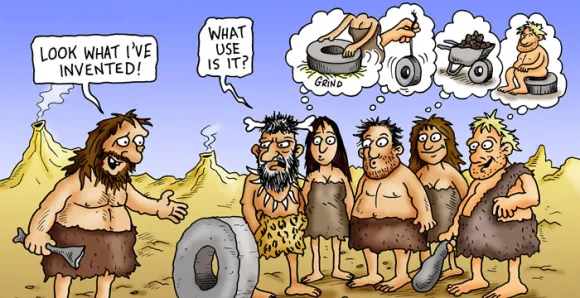
Imagine the feeling of a caveman observing our modern routine world: electricity, Internet, smartphones, robots... etc. In the next two hundred years in large part thankfully to AI humankind will undergo the number of transformations it has since the moment we have learned to control the fire [8]. The effect of this technology will surpass all our previous changes as a civilization. And even as a species, because our destiny is not to create AI, but to literally become it.

... more, give me more, give me more ...

Text-based CAPTCHA in 2022

Reading time7 min
Reach and readers7.6K

The first text-based CAPTCHA ( we’ll call it just CAPTCHA for the sake of brevity ) was used in 1997 by AltaVista search engine. It prevented bots from adding Uniform Resource Locator (URLs) to their web search engine.

Back then it was a decent defense measure. However the progress can't be stopped, and this defense was bypassed using OCR available at those times (for example FineReader).

CAPTCHA became more complex, noise was added to it, along with distortions, so the popular OCRs couldn’t recognize this text. And then OCRs custom made for this task appeared. It costed extra money and knowledge for the attacking side. The CAPTCHA developers were required to understand the challenges the attackers met, what distortions to add, in order to make the automation of the CAPTCHA recognition more complex.

The misunderstanding of the principles the OCRs were based on, some CAPTCHAs were given such distortions, that they were more of a hassle for regular users than for a machine.

OCRs for different types of CAPTCHAs were made using heuristics, and the most complicated part of it was the CAPTCHA segmentation for the stand along symbols, that subsequently could be easily recognized by the CNN (for example LeNet-5), also SVM showed a good result even on the raw pixels.

In this article I’ll try to grasp the whole history of CAPTCHA recognition, from heuristics to the contemporary automated recognition systems. We’ll figure out, if a CAPTCHA is still alive.

I’ll review the yandex.com CAPTCHA. The Russian version of the same CAPTCHA is more complex.

Read more

Collective meaning recognition

Reading time37 min
Reach and readers2K

The published material is in the Appendix of my book [1]

Modern civilization finds itself at a crossroads in which to choose the meaning of life. Because of the development of technology, the majority of the world's population may be "superfluous" - not in demand in the production of values. There is another option, where each person is a supreme value, an absolute individual and can be indispensably useful in the technology of the collective mind.

In the eighties of the last century, the task of creating a scientific field of "collective intelligence" was set. Collective intelligence is defined as the ability of the collective to find solutions to problems more effectively than each participant individually. The right collective mind must be...

Read more

Fintech in practice: how Quadcode develops technology for trading and banking

Reading time7 min
Reach and readers2.7K

Hello, I am Aleksandr Ivanov, CTO at Quadcode. We came to Habr to show the Fintech “kitchen”; we’ve been at it for 8 years, so we can already share our experience. In our blog we will talk about architectures, technologies, tools and life hacks.

Read more

A Step-by-Step Guide To Integrate Video Calling Features Within Apps Using WebRTC

Reading time10 min
Reach and readers6.1K

WebRTC integrations have emerged as a game-changer in the Video Calling Technology over the years. The protocol has redefined the way real-time video communications take Developers can integrate WebRTCs commonly available as JavaScript APIs to add audio and video solutions to their apps. place. Developers can integrate WebRTCs commonly available as JavaScript APIs to add audio and video solutions to their apps. This tutorial will take you through the steps in developing a two-way video call between two devices. 

WebRTC (Web Real-Time Communication) is a set of rules that can establish bidirectional and full-duplex communication between our two devices using JavaScript. It connects your devices and enables transfer of unlimited real-time audio and video across any operating system. However, the WebRTC agents created for both devices do not know any information about each other inorder to establish the media exchange. At this point, a third, mutually agreed-upon server is introduced. This server which connects the devices to transfer data with necessary information about the endpoints is known as the Signaling Server. 

Before we start off with the steps, it is necessary to become familiar with the basics of the integration process. 

Read more

Utilitarian blockchain. 1. Assets

Reading time8 min
Reach and readers1.6K
image

In the modern world, the term " **blockchain** " is steadily associated with cryptocurrencies, NFTs, mining, trading and financial pyramids. However, even among programmers and IT people there is not always a clear understanding of what it is and what it is for.

This article attempts to look at this still relatively new element of the information and human space in practical and slightly philosophical aspects.

> **Disclaimer**: The article will use simple language to explain non-trivial concepts, so non-critical distortion of technical details is possible.
Read more →

How to mimic Agile correctly?

Reading time16 min
Reach and readers1.8K

A similar article should have appeared earlier, about ten or fifthteen years ago, when Agile was just starting to be implemented in companies. How many mistakes, problems, conflicts could be avoided if managers immediately approached the issue correctly ...

But during this time, the experience of "implementing" Agile in different conditions, in different companies has accumulated, which should be generalized and widely disseminated.

Read more

Two Factor Authentication — More Security, Less Effort

Reading time5 min
Reach and readers1.5K

Today we're talking multi-factor authentication, also known as two-factor authentication, and 2-step verification. It's got a few names but what is it?

Well, essentially it's proving your identity in more than one way. The principle being that if one of these authentication factors is defeated, that's not enough to give access to your data. So your data should be secure if someone steals your password for example. It's not enough to just log in twice. These different authentication factors have to work in a fundamentally different way. So you can't just use a second password or a password in a pin; because passwords and pins both rely on the same thing - your memory. So if they have to work in different ways, what different factors are available for us to use? Well, here are some of the common ones.

Read more

Information is changed by entropy

Reading time2 min
Reach and readers1.2K

According to the no-cloning theorem it is impossible to create an independent and identical copy of an arbitrary unknown quantum state. We cannot delete any quantum information as well. All changes in time of the state vector in quantum mechanics are described by the action of unitary operators. Accordingly, there must be an operator performing a deleting operation. The operator must be a zero matrix in order to nullify quantum information totally in all cases. But a zero matrix is not a uninaty or hermitian matrix. Therefore there is no such unitary operator that can delete information.

   This might be proven in another way. Let us imagine the double-slit thought experiment where interference exists when we do not know about the system and interference does not when we know about the system. Assume we have a storage where the data is stored and the experiment is being conducted with knowing about the system. Suppose we destroy the storage. What does the screen in the experiment show us? Quantum mechanics tells us that there must not be interference. Should it appear after the data is destroyed? Since the wave function has collapsed it cannot be restored. If there is a chance to delete the information in the experiment, it means that the wave function must go back to the initial state and show us interference, which is a contradiction.

   Based on the foregoing, we will consider the quantum eraser experiment. In that experiment information is neither erased nor disappeared. It is being changed. That is the key point. We increase entropy. If there is a 50 per cent chance to get interference then the entropy = 1 (max value). The same with a spin. If we change spins of elementary particles, for example in the Stern–Gerlach experiment with different axes measurements, we do not delete the information about the states of particles, we increase the entropy. Changing does not equal deleting. 

Read more

Does GPS transmit different data into LNAV and CNAV messages?

Reading time2 min
Reach and readers3.2K

Different navigation message protocols are used for different navigation signal type. This is true even for a single system like NAVSTAR GPS. For example, L1C/A signals have a LNAV protocol, while L2C and L5 signals utilize a CNAV protocol. The newest L1C signal will use CNAV-2. 

The protocol defines a data distribution into frames, subframes, the subframes structure, transmission intervals, data resolution and so on. 

A navigation receiver use the navigation message data flow for several purposes:

1. The data flow allows to resolve a code ambiguity and set the signal time.

2. Ephemeris and clock values are used for the satellite position calculation, pseudorange corrections and coordinates computation.

3. The received data flow and navigation message data can be used for navigation symbols prediction. As result, we can use the wipe-off technique, expand discriminators and significantly increase tracking sensitivity:

Read more

PHDays 11: bootkit infection, sanitizers for the Linux kernel, the new face of OSINT, and phishing on official websites

Reading time3 min
Reach and readers2K

Positive Hack Days 11 will begin in a matter of weeks. This international forum on practical security will be held on May 18–19 in Moscow.

As per tradition, PHDays will have three big tracks dedicated to countering attacks (defensive), protection through attack (offensive), and the impact of cybersecurity on business. It is our pleasure to present the first talks.

Read more

Audio API Quick Start Guide: Playing and Recording Sound on Linux, Windows, FreeBSD and macOS

Reading time35 min
Reach and readers27K

Hearing is one of the few basic senses that we humans have along with the other our abilities to see, smell, taste and touch. If we couldn't hear, the world as we know it would be less interesting and colorful to us. It would be a total silence - a scary thing, even to imagine. And speaking makes our life so much fun, because what else can be better than talking to our friends and family? Also, we're able to listen to our favorite music wherever we are, thanks to computers and headphones. With the help of tiny microphones integrated into our phones and laptops we are now able to talk to the people around the world from any place with an Internet connection. But computer hardware alone isn't enough - it is computer software that really defines the way how and when the hardware should operate. Operating Systems provide the means for that to the apps that want to use computer's audio capabilities. In real use-cases audio data usually goes the long way from one end to another, being transformed and (un)compressed on-the-fly, attenuated, filtered, and so on. But in the end it all comes down to just 2 basic processes: playing the sound or recording it.

Today we're going to discuss how to make use of the API that popular OS provide: this is an essential knowledge if you want to create an app yourself which works with audio I/O. But there's just one problem standing on our way: there is no single API that all OS support. In fact, there are completely different API, different approaches, slightly different logic. We could just use some library which solves all those problems for us, but in that case we won't understand what's really going on under the hood - what's the point? But humans are built the way that we sometimes want to dig a little bit deeper, to learn a little bit more than what just lies on the surface. That's why we're going to learn the API that OS provide by default: ALSA (Linux), PulseAudio (Linux), WASAPI (Windows), OSS (FreeBSD), CoreAudio (macOS).

Read more