Pull to refresh

All streams

Show first
Period
Level of difficulty

How elliptic curve cryptography works in TLS 1.3

Reading time20 min
Reach and readers21K
image

A couple of reader alerts:

In order to (somewhat) simplify the description process and tighten the volume of the article we are going to write, it is essential to make a significant remark and state the primary constraint right away — everything we are going to tell you today on the practical side of the problematics is viable only in terms of TLS 1.3. Meaning that while your ECDSA certificate would still work in TLS 1.2 if you wish it worked, providing backwards compatibility, the description of the actual handshake process, cipher suits and client-server benchmarks covers TLS 1.3 only. Of course, this does not relate to the mathematical description of algorithms behind modern encryption systems.

This article was written by neither a mathematician nor an engineer — although those helped to find a way around scary math and reviewed this article. Many thanks to Qrator Labs employees.

(Elliptic Curve) Diffie-Hellman (Ephemeral)

The Diffie–Hellman legacy in the 21 century

Of course, this has started with neither Diffie nor Hellman. But to provide a correct timeline, we need to point out main dates and events.

There were several major personas in the development of modern cryptography. Most notably, Alan Turing and Claud Shannon both laid an incredible amount of work over the field of theory of computation and information theory as well as general cryptanalysis, and both Diffie and Hellman, are officially credited for coming up with the idea of public-key (or so-called asymmetric) cryptography (although it is known that in the UK there were made serious advances in cryptography that stayed under secrecy for a very long time), making those two gentlemen pioneers.

In what exactly?
Read more →

CMake: the Case when the Project's Quality is Unforgivable

Reading time11 min
Reach and readers2.1K

Picture 1

CMake is a cross-platform system for automating project builds. This system is much older than the PVS-Studio static code analyzer, but no one has tried to apply the analyzer on its code and review the errors. As it turned out, there are a lot of them. The CMake audience is huge. New projects start on it and old ones are ported. I shudder to think of how many developers could have had any given error.
Read more →

The story of how PVS-Studio found an error in the library used in… PVS-Studio

Reading time3 min
Reach and readers1.3K

Picture 1

This is a short story about how PVS-Studio helped us find an error in the source code of the library used in PVS-Studio. And it was not a theoretical error but an actual one — the error appeared in practice when using the library in the analyzer.
Read more →

Getting Started with the PVS-Studio Static Analyzer for C++ Development under Linux

Reading time4 min
Reach and readers2.5K
PVS-Studio supports analyzing projects developed in C, C++, C#, and Java. You can use the analyzer under Windows, Linux, and macOS. This small article will tell you the basics of analyzing C and C++ code in Linux environment.


Installation


There are different ways to install PVS-Studio under Linux, depending on your distro type. The most convenient and preferred method is to use the repository, since it allows auto-updating the analyzer upon releasing new versions. Another option is to use the installation package, which you can get here.
Read more →

Long journey to Tox-rs. Part 1

Reading time7 min
Reach and readers4K
Tox logo

Hi everyone!


I like Tox and respect the participants of this project and their work. In an effort to help Tox developers and users, I looked into the code and noticed potential problems that could lead to a false sense of security. Since I originally published this article in 2016 (in Russian), many improvements have been made to Tox, and I lead a team that re-wrote secure Tox software from scratch using the Rust programming language (check out Tox-rs). I DO recommend using tox in 2019. Let's take a look what actually made us rewrite Tox in Rust.


Original article of 2016


There is an unhealthy tendency to overestimate the security of E2E systems only on the basis that they are E2E. I will present objective facts supplemented with my own comments for you to draw your own conclusions.


Spoiler: The Tox developers agree with my points and my source code pull request was accepted.

Here go facts:

TLS 1.3 enabled, and why you should do the same

Reading time4 min
Reach and readers1.9K


As we wrote in the 2018-2019 Interconnected Networks Issues and Availability Report at the beginning of this year, TLS 1.3 arrival is inevitable. Some time ago we successfully deployed the 1.3 version of the Transport Layer Security protocol. After gathering and analyzing the data, we are now ready to highlight the most exciting parts of this transition.

As IETF TLS Working Group Chairs wrote in the article:
“In short, TLS 1.3 is poised to provide a foundation for a more secure and efficient Internet over the next 20 years and beyond.”

TLS 1.3 has arrived after 10 years of development. Qrator Labs, as well as the IT industry overall, watched the development process closely from the initial draft through each of the 28 versions while a balanced and manageable protocol was maturing that we are ready to support in 2019. The support is already evident among the market, and we want to keep pace in implementing this robust, proven security protocol.

Eric Rescorla, the lone author of TLS 1.3 and the Firefox CTO, told The Register that:
“It's a drop-in replacement for TLS 1.2, uses the same keys and certificates, and clients and servers can automatically negotiate TLS 1.3 when they both support it,” he said. “There's pretty good library support already, and Chrome and Firefox both have TLS 1.3 on by default.”
Read more →

Citymobil — a manual for improving availability amid business growth for startups. Part 2

Reading time8 min
Reach and readers1.1K


This is a second article out of a series «Citymobil — a manual for improving availability amid business growth for startups». You can read the first part here. Let’s continue to talk about the way we managed to improve the availability of Citymobil services. In the first article, we learned how to count the lost trips. Ok, we are counting them. What now? Now that we are equipped with an understandable tool to measure the lost trips, we can move to the most interesting part — how do we decrease losses? Without slowing down our current growth! Since it seemed to us that the lion’s share of technical problems causing the trips loss had something to do with the backend, we decided to turn our attention to the backend development process first. Jumping ahead of myself, I’m going to say that we were right — the backend became the main site of the battle for the lost trips.
Read more →

Particle systems: a Christmas story

Reading time6 min
Reach and readers3.1K


Christmas has always been one of my favourite times of the year. For me, Christmas is a season that brings so much love, laughter, happiness, and other magical things into our lives.

I was born and raised in Spain, more specifically in Tenerife, a sunny subtropical island in the middle of the Atlantic Ocean just off the African coast. I have to say that Christmas in Tenerife is very different to my the last two Christmases I’ve spent in London since joining Badoo.

One amazing plus of living in London is that I have got to see snow for the first time in my life, real snowflakes falling from the sky. Just incredible!

Talking of snowflakes, I have an interesting story to tell you about something that happened to me one day in the office the last Christmas.  It was right before I was heading home to Tenerife to spend a few days with my family.

It just so happened that last December I’d been assigned a very interesting ticket with the following description

Generating multi-brand multi-platform icons with Sketch and a Node.js script — Part #2

Reading time16 min
Reach and readers1.8K


This is the second part of a post about the creation of a pipeline that can take a Sketch file and export all the icons included in the file, in different formats, for different platforms, with the possibility of AB testing each icon.

You can read the first part of the post here.


The Sketch files, with all the icons collected, styled and properly named, were ready. Now it was time to start writing the code.

Suffice to say, the process was very much a trial and error: after the important initial code core, developed by my team lead Nikhil Verma (who set the script foundations), I went through an incremental process that required at least three phases of refactoring and quite a few revisions. For this reason, I won’t go into too much detail on how the script was developed, but rather focus on how the script works today, in its final shape.
Read more →

Why does Dodo Pizza need 250 developers?

Reading time4 min
Reach and readers4.1K
In autumn, we announced we were going to expand our IT team from 49 to 250 developers. And immediately we were buried under an avalanche of questions — mostly, people were interested why a pizza chain needs so many software engineers. How did we come up with such a number? So now I want to answer that.


Read more →

Indexes in PostgreSQL — 1

Reading time13 min
Reach and readers28K

Introduction


This series of articles is largely concerned with indexes in PostgreSQL.

Any subject can be considered from different perspectives. We will discuss matters that should interest an application developer who uses DBMS: what indexes are available, why there are so many different types of them, and how to use them to speed up queries. The topic can probably be covered in fewer words, but in secrecy we hope for a curious developer, who is also interested in details of the internals, especially since understanding of such details allows you to not only defer to other's judgement, but also make conclusions of your own.

Development of new types of indexes is outside the scope. This requires knowledge of the C programming language and pertains to the expertise of a system programmer rather than an application developer. For the same reason we almost won't discuss programming interfaces, but will focus only on what matters for working with ready-to-use indexes.

In this article we will discuss the distribution of responsibilities between the general indexing engine related to the DBMS core and individual index access methods, which PostgreSQL enables us to add as extensions. In the next article we will discuss the interface of the access method and critical concepts such as classes and operator families. After that long but necessary introduction we will consider details of the structure and application of different types of indexes: Hash, B-tree, GiST, SP-GiST, GIN and RUM, BRIN, and Bloom.

Before we start, I would like to thank Elena Indrupskaya for translating the articles to English.
Things have changed a bit since the original publication. My comments on the current state of affairs are indicated like this.
Read more →

Detecting Web Attacks with a Seq2Seq Autoencoder

Reading time7 min
Reach and readers6K
image

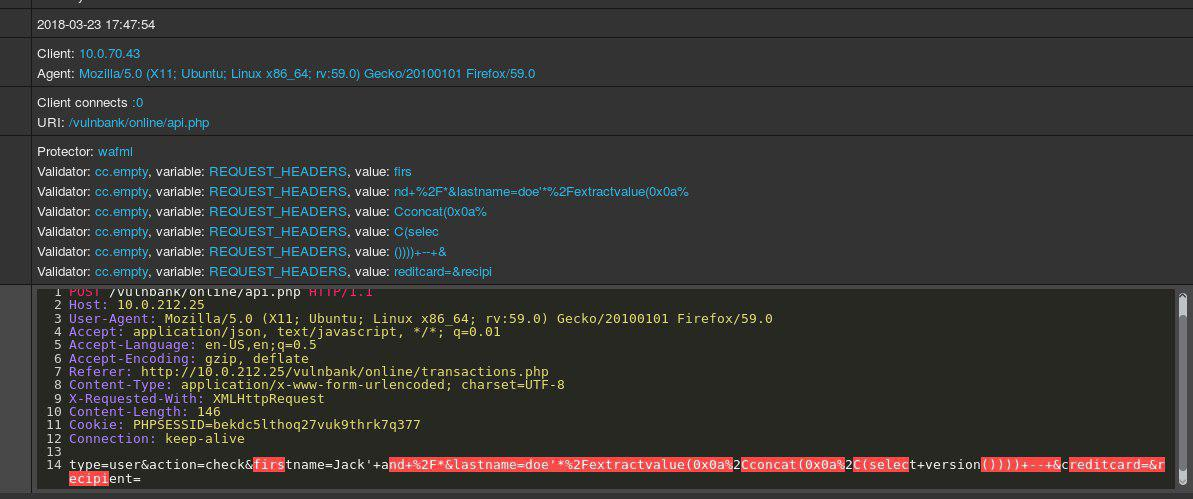
Attack detection has been a part of information security for decades. The first known intrusion detection system (IDS) implementations date back to the early 1980s.

Nowadays, an entire attack detection industry exists. There are a number of kinds of products—such as IDS, IPS, WAF, and firewall solutions—most of which offer rule-based attack detection. The idea of using some kind of statistical anomaly detection to identify attacks in production doesn’t seem as realistic as it used to. But is that assumption justified?
Read more →

C++ Binary Compatibility and Pain-Free Upgrades to Visual Studio 2019

Reading time4 min
Reach and readers4K

Visual Studio 2019 pushes the boundaries of individual and team productivity. We hope that you will find these new capabilities compelling and start your upgrade to Visual Studio 2019 soon.


As you are considering this upgrade, rest assured that Visual Studio 2019 makes it distinctively easy to move your codebase from previous versions of Visual Studio. This post captures the reasons why your upgrade to Visual Studio 2019 will be pain-free.


Read more →

On higher education, programmers and blue-collar job

Reading time13 min
Reach and readers9.2K


“Sometimes it happens that a man’s circle of horizon becomes smaller and smaller, and as the radius approaches zero it concentrates on one point. And then that becomes his point of view.”

David Hilbert
“When I thought I had hit rock bottom, someone knocked from below.”

Stanisław Jerzy Lec

Preface


Does a programmer need a higher education? The flow of opinions on this undoubtedly urgent topic has not dried up, so I have decided to express my view. It seems to me the general disappointment in education is due to the numerous processes and changes in the profession and it needs serious study. Below I will discuss the most common misconceptions, myths, and underlying causes of the phenomenon.
Read more →

How Brands Can Break Through the Tech Media Bubble

Reading time7 min
Reach and readers1.4K
Good luck getting people to read your branded tech story. Now, before you get mad, I’m sure you’ve got something great to share. I’m sure you found an exciting new solution to some sort of problem. All you want is for others to be as excited about it as you are. Sadly, the odds are not in your favour.

Read more →

Kalman Filter

Reading time9 min
Reach and readers6.8K


There are a lot of different articles on Kalman filter, but it is difficult to find the one which contains an explanation, where all filtering formulas come from. I think that without understanding of that this science becomes completely non understandable. In this article I will try to explain everything in a simple way.

Kalman filter is very powerful tool for filtering of different kinds of data. The main idea behind this that one should use an information about the physical process. For example, if you are filtering data from a car’s speedometer then its inertia give you a right to treat a big speed deviation as a measuring error. Kalman filter is also interesting by the fact that in some way it is the best filter. We will discuss precisely what does it mean. In the end of the article I will show how it is possible to simplify the formulas.
Read more →

Info Desk: «Internet Archive» — history, mission and subsidiary projects

Reading time6 min
Reach and readers2.2K


Probably, there are not so many users on Habr who have never heard about the «Internet Archive», a service that searches and stores the digital data that is important for all mankind, whether it be the Internet pages, books, videos or other type of information.

Who manages the Internet archive, when it appeared and what is its mission? Read about it in the today's «Inquiry».
Read more →

Machine Learning and Data Science: Academia vs. Industry

Level of difficultyMedium
Reading time8 min
Reach and readers19K

Machine Learning (ML) technologies are becoming increasingly popular and have various applications, ranging from smartphones and computers to large-scale enterprise infrastructure that serves billions of requests per day. Building ML tools, however, remains difficult today because there are no industry-wide standardised approaches to development. Many engineering students studying ML and Data Science must re-learn once they begin their careers. In this article, I've compiled a list of the top five problems that every ML specialist faces only on the job, highlighting the gap between university curriculum and real-world practice. 

Read more