Pull to refresh

All streams

Show first
Rating limit
Level of difficulty

Liza Alert: volunteers, who save lives

Reading time6 min
Reach and readers5.1K


Liza Alert search-and-rescue team has existed for eight years. It’s a volunteer organization, the fellowship of the ones who care, that searches for missing people effectively collaborating with the Ministry of Emergency Situations and the Ministry of Internal Affairs. Liza Alert collects the entries on missing people; they conduct various educational events, search management and search operations themselves. The team isn’t involved in any business activities, doesn’t have a checking account and doesn’t accept monetary donations.

Mail.Ru has recently provided Liza Alert with a free platform for services, extensively used for search-and-rescue operations. We decided to talk to Sergey Chumak — the head of Liza Alert IT branch — about the work of the volunteer emergency response group and how high-tech solutions aid them.
Read more →

Checking the Roslyn Source Code

Reading time21 min
Reach and readers2K
PVS-Studio vs Roslyn

Once in a while we go back to the projects that we have previously checked using PVS-Studio, which results in their descriptions in various articles. Two reasons make these comebacks exciting for us. Firstly, the opportunity to assess the progress of our analyzer. Secondly, monitoring the feedback of the project's authors to our article and the report of errors, which we usually provide them with. Of course, errors can be corrected without our participation. However, it is always nice when our efforts help to make a project better. Roslyn was no exception. The previous article about this project check dates back to December 23, 2015. It's quite a long time, in the view of the progress that our analyzer has made since that time. Since the C# core of the PVS-Studio analyzer is based on Roslyn, it gives us additional interest in this project. As a result, we're as keen as mustard about the code quality of this project. Now let's test it once again and find out some new and interesting issues (but let's hope that nothing significant) that PVS-Studio will be able to find.
Read more →

Russian Internet Segment Architecture

Reading time8 min
Reach and readers5.6K
As many of our readers know, Qrator.Radar is constantly researching global BGP connectivity, as well as regional. Since the Internet stands for “Interconnected Networks,” to ensure the best possible quality and speed the interconnectivity of individual networks should be rich and diverse, with their growth motivated on a sound competitive basis.

The fault-resistance of an internet connection in any given region or country is tied to the number of alternate routes between ASes. Though, as we stated before in our Internet Segments Reliability reports, some paths are obviously more critical compared to the others (for example, the paths to the Tier-1 transit ISPs or autonomous systems hosting authoritative DNS servers), which means that having as many reachable routes as possible is the only viable way to ensure adequate system scalability, stability and robustness.

This time, we are going to have a closer look at the Russian Federation internet segment. There are reasons to keep an eye on that segment: according to the numbers provided by the RIPE database, there are 6183 autonomous systems in Russia, out of 88664 registered worldwide, which stands for 6.87% of total.

This percentage puts Russia on a second place in the world, right after the USA (30.08% of registered ASes) and before Brazil, owning 6.34% of all autonomous systems. Effects of changes in the Russian connectivity could be observed across many other countries dependant on or adjacent to that connectivity, and ultimately by almost any ISP in the world.
Read more →

How Protonmail is getting censored by FSB in Russia

Reading time10 min
Reach and readers9.8K

A completely routine tech support ticket has uncovered unexpected bans of IP addresses of Protonmail — a very useful service for people valuing their Internet freedoms — in several regions of Russia. I seriously didn’t want to sensationalize the headline, but the story is so strange and inexplicable I couldn’t resist.


TL;DR


Disclaimer: the situation is still developing. There might not be anything malicious, but most likely there is. I will update the post once new information comes through.


MTS and Rostelecom — two of the biggest Russian ISPs — started to block traffic to SMTP servers of the encrypted email service Protonmail according to an FSB request, with no regard for the official government registry of restricted websites. It seems like it’s been happening for a while, but no one paid special attention to it. Until now.


All involved parties have received relevant requests for information which they’re obligated to reply.


UPD: MTS has provided a scan of the FSB letter, which is the basis for restricting the access. Justification: the ongoing Universiade in Krasnoyarsk and “phone terrorism”. It’s supposed to prevent ProtonMail emails from going to emergency addresses of security services and schools.


UPD: Protonmail was surprised by “these strange Russians” and their methods for battling fraud abuse, as well as suggested a more effective way to do it — via abuse mailbox.


UPD: FSB’s justification doesn’t appear to be true: the bans broke ProtonMail’s incoming mail, rather than outgoing.


UPD: Protonmail shrugged and changed the IP addresses of their MXs taking them out of the blocking after that particular FSB letter. What will happen next is open ended question.


UPD: Apparently, such letter was not the only one and there is still a set of IP addresses of VOIP-services which are blocked without appropriate records in the official registry of restricted websites.


Counting Bugs in Windows Calculator

Reading time11 min
Reach and readers42K

A few days ago, Microsoft made the source code of their Windows Calculator publicly available. Calculator is an application that has traditionally shipped with every Windows version. A number of Microsoft projects went open-source over the recent years, but this time the news was covered even by non-IT media on the very first day. Well, it's a popular yet tiny program in C++. Despite its size, we still managed to find a number of suspicious fragments in its code using the PVS-Studio static analyzer.
Read more →

Levelord, an Ordinary Moscow Resident: Interview with the Creator of Duke Nukem

Reading time20 min
Reach and readers6.9K
RUVDS together with Habr.com continues the series of interviews with interesting people in computer field. Previously we met Boris Yangel, who heads AI development of Yandex’s Alice voice assistant.

Today we bring you an interview with Richard (Levelord) Gray — level designer of such legendary games as Duke Nukem, American McGee Alice, Heavy Metal F.A.K.K.2, SiN, and Serious Sam. And he is the one who coined the famous phrase «You are not supposed to be here». Richard was born and spent most of his life in USA, but several years ago he moved to Moscow to his russian wife and daughter.

These who speak to Richard are Nick Zemlyanskiy, editor of Habr.com, and Nikita Tsaplin, co-founder and managing partner of RUVDS company.


→ Text and video in Russian

Generating multi-brand multi-platform icons with Sketch and a Node.js script — Part #1

Reading time10 min
Reach and readers2.5K


TL;DR


Using a custom build script in Node JS, it is possible to manipulate a series of Sketch files, and then, using an internal Sketch tool, automatically export their assets, to generate multiple icon libraries, for multiple platforms and different brands, that support dynamic colourisation of the assets via design tokens, and also AB testing of the assets via naming convention. Easy peasy :)


Well, actually it’s not that easy, but it can certainly be done. This post is a detailed explanation of how we did it, and what we discovered along the way.

The problem we were trying to solve


At Badoo we build a dating app. Actually, multiple dating apps. For multiple platforms (iOS, Android, Mobile Web, Desktop Web), across multiple teams.

We use hundreds of icons in our apps. Some of them are the same across different apps, some are very specific to the brands the apps reflect. The icons are continuously evolving, in sync with the evolution of the design. Sometimes completely new icons are added, while others get updated, and still others get dropped (although, they often remain in the codebase).
Read more →

.NET Reference Types vs Value Types. Part 2

Reading time10 min
Reach and readers3.4K


The Object base type and implementation of interfaces. Boxing


It seems we came through hell and high water and can nail any interview, even the one for .NET CLR team. However, let's not rush to microsoft.com and search for vacancies. Now, we need to understand how value types inherit an object if they contain neither a reference to SyncBlockIndex, not a pointer to a virtual methods table. This will completely explain our system of types and all pieces of a puzzle will find their places. However, we will need more than one sentence.


Now, let's remember again how value types are allocated in memory. They get the place in memory right where they are. Reference types get allocation on the heap of small and large objects. They always give a reference to the place on the heap where the object is. Each value type has such methods as ToString, Equals and GetHashCode. They are virtual and overridable, but don’t allow to inherit a value type by overriding methods. If value types used overridable methods, they would need a virtual methods table to route calls. This would lead to the problems of passing structures to unmanaged world: extra fields would go there. As a result, there are descriptions of value type methods somewhere, but you cannot access them directly via a virtual methods table.


This may bring the idea that the lack of inheritance is artificial


This chapter was translated from Russian jointly by author and by professional translators. You can help us with translation from Russian or English into any other language, primarily into Chinese or German.

Also, if you want thank us, the best way you can do that is to give us a star on github or to fork repository github/sidristij/dotnetbook.
Read more →

Is Haskell really the language of geniuses and academia?

Reading time9 min
Reach and readers27K


I once had a discussion with a founder of an Israeli startup developing a GPU-based database with a focus on speed. The work stack included Haskell and C++, among others, and the founder was complaining about how hard it is to find competent programmers. Which was part of the reason he came to Moscow.

I carefully asked if they considered using something more popular and new. And even though the answer was rather polite and well-supported with arguments, it still sounded like “Come on, don’t even bring up these toys”.

Until then, all I heard about Haskell could be summarized as “be VERY careful in dealing with it”. To get to know Haskell programmers better, I came to a topical Telegram chat with some questions. I was quite afraid at first, and, as it turned out, I was right.

Haskell doesn’t lend itself to popular explanation, and people seemingly don’t even try. If the topic is ever brought up, it’s only talked about in full depth and as objectively as possible. Someone wrote to me: “One of the defining features of both Haskell itself and its community is that they didn’t try to achieve any kind of mainstream recognition. Instead, they focused on building a logical, principal way of solving real problems over trying to appease the widest audience possible”

Nevertheless, a couple of people did tell me about their experiences, which are shown below.
Read more →

The story of how we changed the PVS-Studio icon

Reading time5 min
Reach and readers1.3K


The 7.0 release marked a new milestone in the history of the PVS-Studio analyzer — the analysis is now available not only for the code, written in C, C++, C#, but also in Java. In addition to this global improvement, some existing mechanisms for the analysis are refined and improved, diagnostic rules are added. There was another significant change that you could hardly missed. We changed the icon.

Note. In the article, you will not find cunning tricks or tips on designing icons. The purpose of the article is a bit different this time — it is to tell a story, and, if possible, make it interesting.
Read more →

Designing Sound for Pathfinder: Kingmaker

Reading time16 min
Reach and readers3.5K


Pathfinder: Kingmaker (PF:K for short) is a role-playing video game created by Owlcat Games, released in Fall 2018 on Steam and GoG. Inspired by classic Bioware games, this project uses a popular board game system ruleset, combat takes place in Real-Time with Pause, follows an isometric camera, and has a non-linear story with multiple unique endings.


In this article, I will share a little about how we worked on designing the audio throughout the game’s development including task management, the search for inspiration, and troubleshooting. An experienced specialist may not find anything particularly groundbreaking in this recap, but beginners and enthusiasts will definitely discover some points of interest.

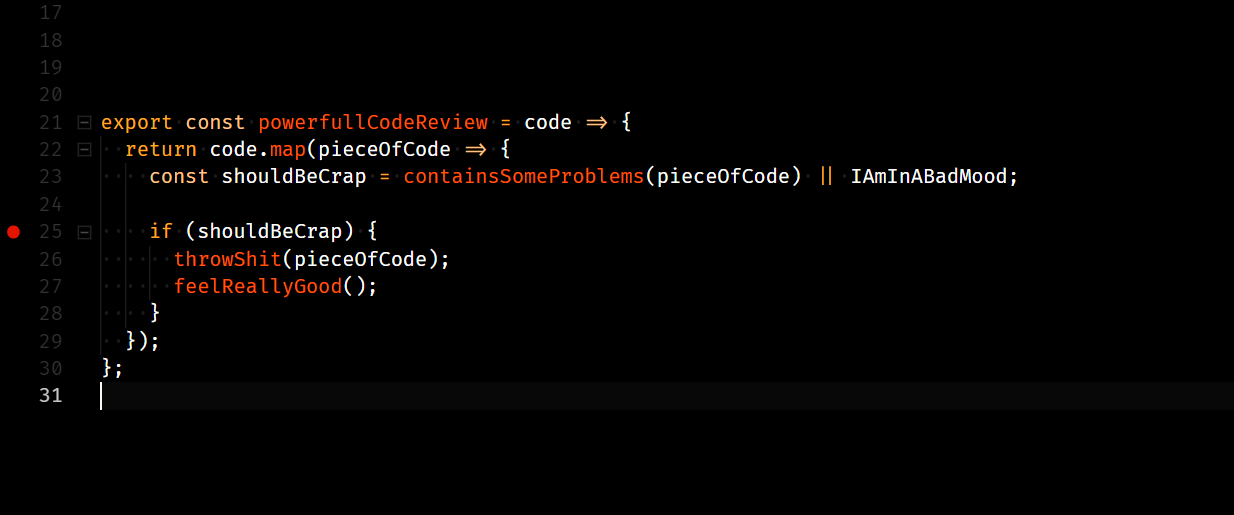
I ruin developers’ lives with my code reviews and I'm sorry

Reading time5 min
Reach and readers235K


Once upon a time there was a guy on my team so weak that he was going to be fired (a developer! Fired!). Every comment of mine was another nail in his coffin. I could almost hear the bang of the hammer every time I clicked “Submit review”. He was a nice person and I almost felt bad for him, but it didn’t stop me from tearing his work to shreds. I had an inalienable right to criticize his work, right? I’m a better developer, therefore I’m right. No one wants to say that bad code is good, right? He was eventually fired, not before leaving him without the customary bonus for a couple months.

I said to myself: “I’m not going to do his work, right? He was taking the place of a more talented developer. I did everything right”. But then I received another pull request for a review, and something changed. Drastically.
Read more →

.NET Reference Types vs Value Types. Part 1

Reading time16 min
Reach and readers8.1K

First, let’s talk about Reference Types and Value Types. I think people don’t really understand the differences and benefits of both. They usually say reference types store content on the heap and value types store content on the stack, which is wrong.


Let’s discuss the real differences:


  • A value type: its value is an entire structure. The value of a reference type is a reference to an object. – A structure in memory: value types contain only the data you indicated. Reference types also contain two system fields. The first one stores 'SyncBlockIndex', the second one stores the information about a type, including the information about a Virtual Methods Table (VMT).
  • Reference types can have methods that are overridden when inherited. Value types cannot be inherited.
  • You should allocate space on the heap for an instance of a reference type. A value type can be allocated on the stack, or it becomes the part of a reference type. This sufficiently increases the performance of some algorithms.

However, there are common features:


  • Both subclasses can inherit the object type and become its representatives.

Let’s look closer at each feature.


This chapter was translated from Russian jointly by author and by professional translators. You can help us with translation from Russian or English into any other language, primarily into Chinese or German.

Also, if you want thank us, the best way you can do that is to give us a star on github or to fork repository github/sidristij/dotnetbook.

Read more →

Introduce Static Analysis in the Process, Don't Just Search for Bugs with It

Reading time15 min
Reach and readers5.5K
This article is an authorized translation of the original post. The translation was made with the kind help of the guys from PVS-Studio. Thank you, guys!

What encouraged me to write this article is considerable quantity of materials on static analysis, which recently has been increasingly coming up. Firstly, this is a blog of PVS-Studio, which actively promotes itself on Habr posting reviews of errors, found by their tool in open source projects. PVS-Studio has recently implemented Java support, and, of course, developers from IntelliJ IDEA, whose built-in analyzer is probably the most advanced for Java today, could not stay away.

When reading these reviews, I get a feeling that we are talking about a magic elixir: click the button, and here it is — the list of defects right in front of your eyes. It seems that as analyzers get more advanced, more and more bugs will be found, and products, scanned by these robots, will become better and better without any effort on our part.

Well, but there are no magic elixirs. I would like to talk about what is usually not spoken in posts like «here are things that our robot can find»: what analyzers are not able to do, what's their real part and place in the process of software delivery, and how to implement the analysis properly.


Ratchet (source: Wikipedia).
Read more →

Flightradar24 — how does it work?

Reading time4 min
Reach and readers125K
I’m going to hazard a guess and say that everyone whose friends or family have ever flown on a plane, have used Flightradar24 — a free and convenient service for tracking flights in real time.


But, if my friends are any indication, very few people know that the service is community-driven and is supported by a group of enthusiasts gathering and sending data. Even fewer people know that anyone can join the project — including you.

Let’s see how Flightradar and similar other services works.
Read more →

Building a Private Currency Service Using Exonum

Reading time9 min
Reach and readers1.7K
Zero-knowledge proofs/arguments are an emerging cryptographic technology that promises to bring us closer to the Holy Grail of blockchain: providing data privacy and auditability.

Potential applications for zero-knowledge include, but are not limited to:


Another application for zero-knowledge proofs is helping blockchains scale. ZKPs allow for the “compressing” of computations for blockchain transactions without sacrificing security.

In this article, we describe how zero-knowledge (specifically, Bulletproofs) can be applied to build a privacy-focused service using Bitfury’s Exonum platform.

Read more →

Making Git for Windows work in ReactOS

Reading time10 min
Reach and readers5.4K

Good day to you! image


My name is Stanislav and I like to write code. This is my first english article on Habr which I made due to several reasons:


This article is an english version of my very first article on russian.


Let me introduce the main figures in this story who actually fixed the bug preventing Git from running in ReactOS — the French developer Hermès Bélusca-Maïto (or just Hermes with hbelusca nickname) and of course me (with x86corez nickname).


The story begins with the following messages from the ReactOS Development IRC channel:


Jun 03 18:52:56 <hbelusca> Anybody want to work on some small problem? If so, can someone figure out why this problem https://jira.reactos.org/browse/CORE-12931 happens on ReactOS? :D
Jun 03 18:53:13 <hbelusca> That would help having a good ROS self-hosting system with git support.
Jun 03 18:53:34 <hbelusca> (the git assertion part only).
Read more →

Server-provided animations in iOS apps

Reading time5 min
Reach and readers2.9K


Hi everyone! About six months ago we launched one of Badoo’s most exciting features: Live Streaming. One of its main functionalities is that viewers can send gifts to their favourite streamers to express their appreciation. We wanted to make the gifts as fancy and as engaging as possible, so it was decided to make some of them really lively, and by this I mean animated. And to engage people even more, we, the Badoo team, planned to update those gifts and animations every few weeks.

As an iOS engineer, you might have already guessed the challenge we faced here: the need to add new animations and remove the old ones was going to require a fair amount of work from the client side. We’d need both the Android and the iOS development teams for every release — which, when combined with the amount of time App Store reviews and approval often take, would mean it might be days before each update could go live. But we solved the problem, and I’m going to explain to you how.

Solution overview


By this stage, we already knew how to export Adobe After Effects (AAE) animations into the format readable by our iOS app using the Lottie library. This time though, we went a bit further: we decided to create a kind of animation storage service, available via the internet. In other words, we would store all the actual animations on the server and deliver them to the client apps on demand:
Read more →

Wanna Play a Detective? Find the Bug in a Function from Midnight Commander

Reading time5 min
Reach and readers6.7K

bug

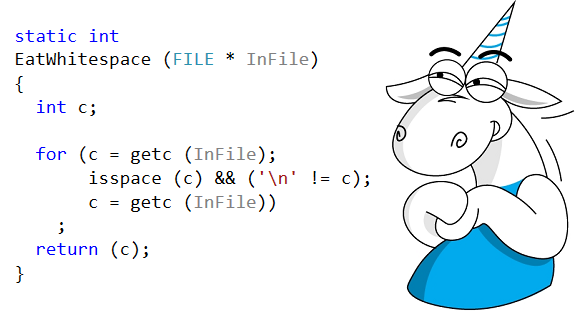
In this article, we invite you to try to find a bug in a very simple function from the GNU Midnight Commander project. Why? For no particular reason. Just for fun. Well, okay, it's a lie. We actually wanted to show you yet another bug that a human reviewer has a hard time finding and the static code analyzer PVS-Studio can catch without effort.
Read more →

PC Speaker To Eleven

Reading time12 min
Reach and readers36K
Known now as a «motherboard speaker», or just «beeper», PC Speaker has been introduced in 1981 along with the first personal IBM computer. Being a successor of the big serious computers for serious business, it has been designed to produce very basic system beeps, so it never really had a chance to shine bright as a music device in numerous entertainment programs of the emerging home market. Overshadowed by much more advanced sound chips of popular home game systems, quickly replaced with powerful sound cards, it mostly served as a fallback option, playing severely downgraded content of better sound hardware.

«System Beeps» is a music album in shape of an MS-DOS program that features original music composed for PC Speaker using the same basic old techniques like ones found in classic PC games. It follows the usual retro computing demoscene formula — take something rusty and obsolete, and push it to eleven — and attempts to reveal the long hidden potential of this humble little sound device. You can hear it in action and form an opinion on how successful this attempt was at Bandcamp, or in the video below. The following article is an in-depth overview of the original PC Speaker capabilities and making of the project, for those who would like to know more.