Pull to refresh
1400.66

Popular science

Popular science as is

Show first
Rating limit
Level of difficulty

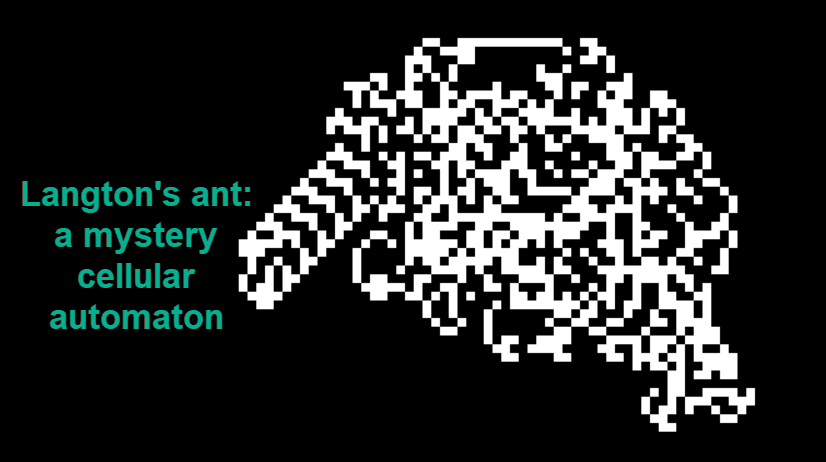
Langton's ant: a mystery cellular automaton

Reading time4 min
Reach and readers3.9K

The life of Langton's Ant seems sad and lonely, but, as we'll soon discover, he is not ready to put up with such an outrageous situation and is trying his best to escape. American scientist Christopher Langton invented his ant back in 1986. Since then, no one has been able to explain the strange behavior of this mysterious model...
Read more

The Collatz conjecture is the greatest math trick of all time

Reading time4 min
Reach and readers4.5K

On the Internet and in non-fiction literature you can often find various mathematical tricks. The Collatz conjecture leaves all such tricks behind. At first glance, it may seem like some kind of a trick with a catch. However, there is no catch. You think of a number and repeat one of two arithmetic operations for it several times. Surprisingly, the result of these actions will always be the same. Or, may be not always?

Read more

PyGMTSAR is Next Generation Interferometric Synthetic Aperture Radar (InSAR) Software for Everyone

Reading time6 min
Reach and readers4K

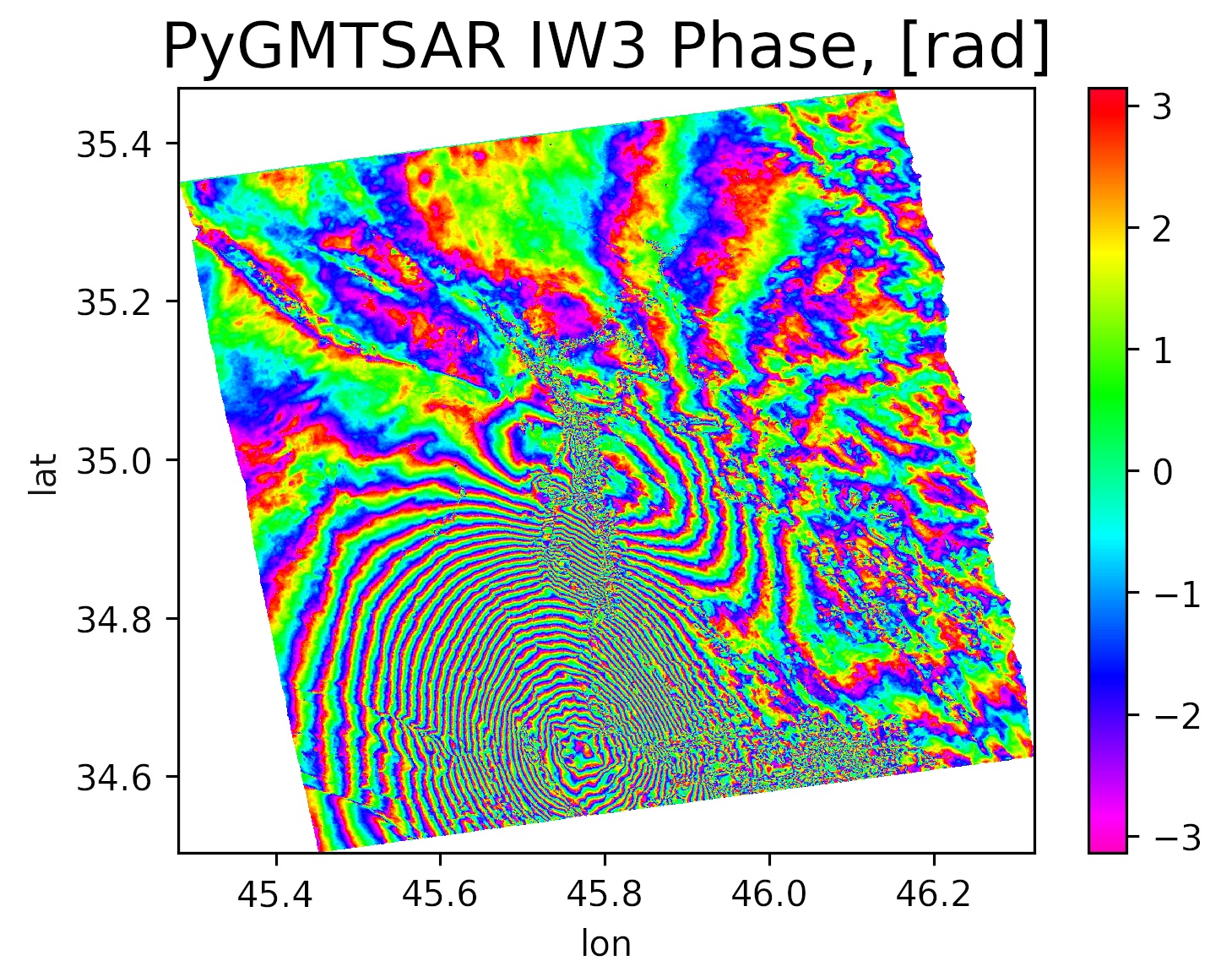
Do you need to produce satellite interferometry results for your work or study? Or should you find the way to process terabytes of radar data on your common laptop? Maybe you aren't confident about the installation and usage of the required software. Fortunately, there is the next generation of satellite interferometry products available for you. Beginners can build the results easily and advanced users might work on huge datasets. Open Source software PyGMTSAR is available on GitHub for developers and on DockerHub for advanced users and on Google Colab for everyone. This is the cloud-ready product, and it works the same as do you run it locally on your old laptop as on powerful cloud servers.


Read more →

Conceptogram as a method to create more effective technical documentation

Reading time5 min
Reach and readers1.3K

Konstantin Kotelnik, an analyst at Innotech, ponders over making technical documentation easier to understand for developers and helping the clip-thought generation work effectively with large quantities of data. Read the article to find out about the potential emergence of a graphical IT-Esperanto and the standardisation of technical language.

Read more

PopMech and its ancestors: a foray into the history of tech

Reading time4 min
Reach and readers2K

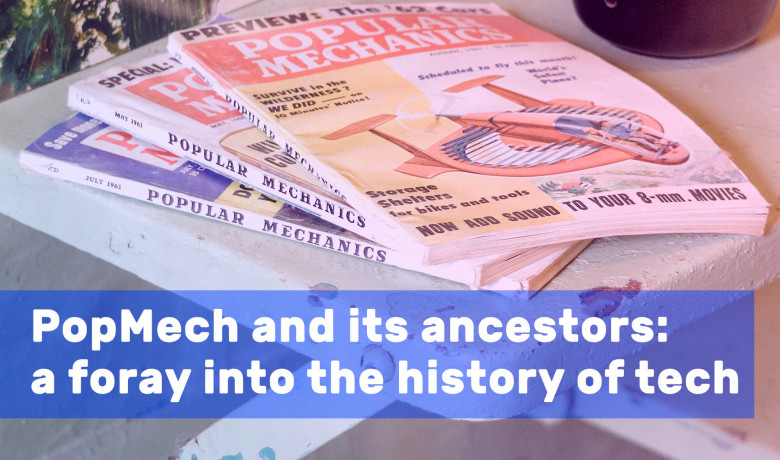
Many of us grew up reading a classic, that was a staple of many home libraries. However, it doesn’t seem to be as prominent as it once was. To understand the ongoing shift in tech coverage, we need to explore its roots.

Continue Reading

Common misconceptions about space-grade integrated circuits

Reading time27 min
Reach and readers23K

Space exploration was always fascinating, and recent developments have reignited the interest to the heights never seen since the last man stood on the Moon. People argue about Mars exploration and features of spaceships as their grandparents would’ve done if the internet existed fifty years ago. I’m an electronics engineer working in the aerospace industry, so I know a thing or two about the technical background of this stuff — and I see that these things aren’t common knowledge, and people often have significantly skewed ideas about the reasons behind many things and decisions. Namely, I’d love to speak of some misconceptions about radiation hardened integrated circuits and the means of protection from radiation-induced damage.

So, let's start our journey

Tensodrone that do not break, and what does architecture, robotic manipulator and copter have in common

Reading time8 min
Reach and readers2K
We had ten broken drones in a year, test flights twice a day, three PhDs in the team, a prototype of sushi sticks and a desire to find a way to stop hitting drones.

Very controversial, very unusual, very strange, but it works! At the intersection of architecture, collaborative robotics and unmanned aerial vehicles. 

Introducing: Tensodrone™.


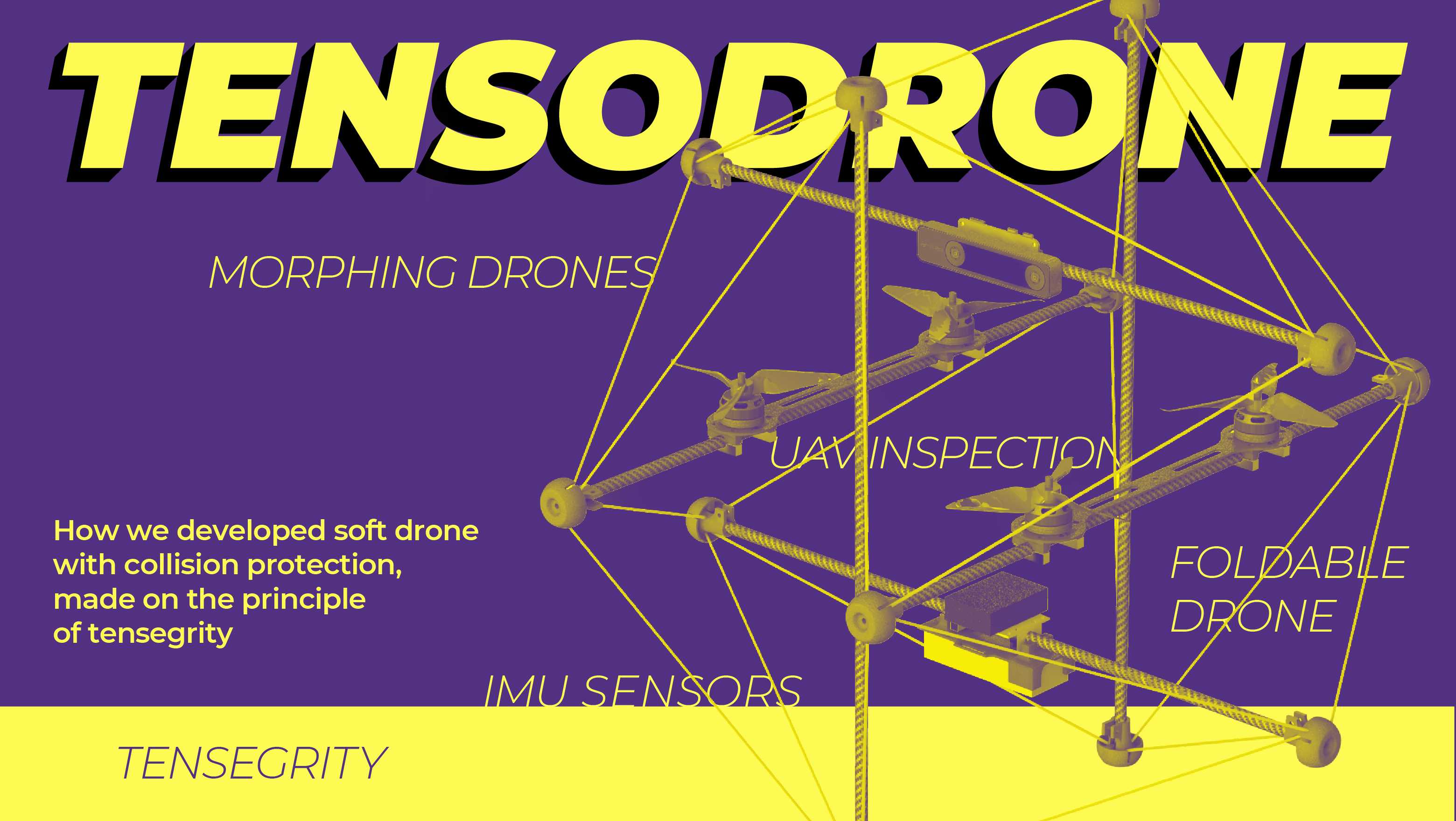
Tensodrone is a multi-rotor UAV of a new design with collision protection, made on the principle of tensegrity. This approach allows for the combination of the protective cage and the airframe in one structure, increasing impact resistance with less weight. The project is a vivid example of the interaction of various teams of the Center for Competences of the National Technology Initiative in the field of «Robotics and Mechatronics» established at the Innopolis University in 2018.

The QC House of Cards

Reading time4 min
Reach and readers811
There’s Gold in Them Thar Hills

Gold rushes can make people crazy. 1848 was enough of an indicator of that. When Sam Brannan announced to the world: ‘Gold! Gold! Gold from the American River!’, half the world’s population (or so it seemed to the tiny California population which lived there at the time) descended on the soon to be the newest state of the union.

San Francisco, before a small hamlet with a few hundred pioneers living there, became a centre of vice, murder and debauchery overnight.

image

Two hundred years before tulip mania hit Europe, and like in California with its argonauts or 49ers, it impoverished more than it made rich. In the early 2000s, too, the Dot.Com bubble created a speculative tendency in people when irrationality took over all reason.
Read more →

Four Ways Quantum Computing Will Change Artificial Intelligence Forever

Reading time4 min
Reach and readers2.2K
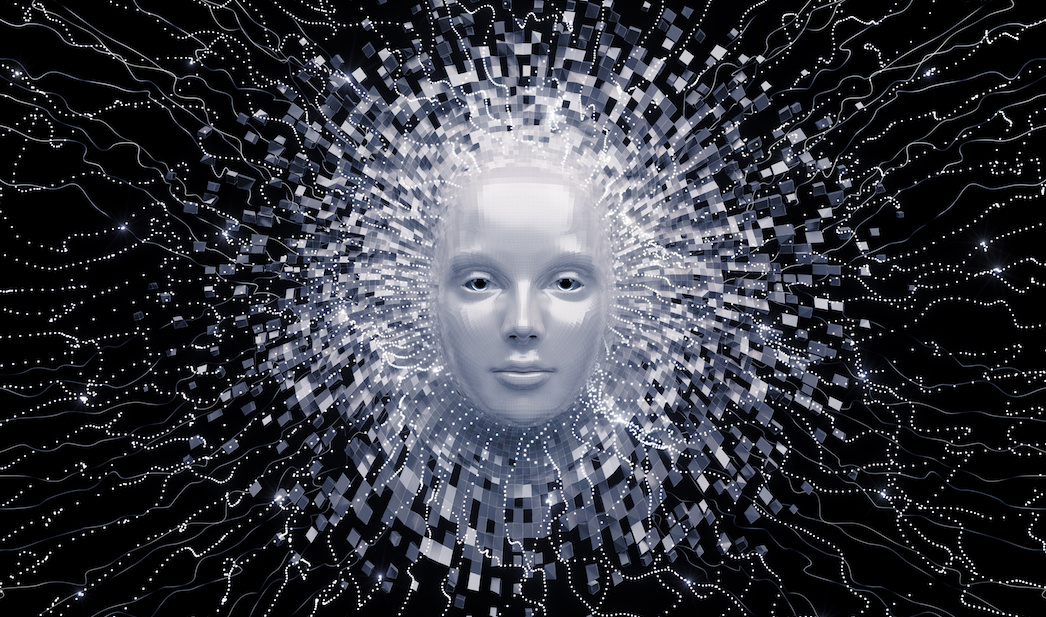
If science were a dating app, quantum physics and machine learning probably wouldn’t be a match. They’re from completely different fields and often require completely different backgrounds and skills. But, throw in a little quantum computing and, suddenly, that science-matchmaking app becomes Tinder and the attraction between the two is palpable.
image

(Credit: cmo.adobe.com/articles/2017/5/how-will-artificial-intelligence-impact-business-tlp-ptr.html#gs.5zlifl)

Even though the extent of change that quantum computing will unleash on AI is up for debate, many experts now more than suspect that quantum computing will definitely alter AI at some level. Analysts from bank holding company BBVA, for example, point toward the natural synergy between quantum computing and AI as reasons why quantum machine learning will eventually best classical machine learning.

“Quantum machine learning can be more efficient than classic machine learning, at least for certain models that are intrinsically hard to learn using conventional computers,” says Samuel Fernández Lorenzo, a quantum algorithm researcher who collaborates with BBVA’s New Digital Businesses area. “We still have to find out to what extent do these models appear in practical applications.”
Read more →

Could Quantum Computing Help Reverse Climate Change?

Reading time4 min
Reach and readers1.3K
The unique powers of quantum computation may give humanity an important weapon — or several weapons — against climate change, according to one quantum computer pioneer.
One of the possible solutions for the excess carbon in the atmosphere and to reach global climate goals is to suck it out. It sounds pretty easy, but, in fact, the technology to do so cheaply and easily isn’t quite here yet, according to Jeremy O’Brien Chief Executive Officer, PsiQuantum, a quantum computing startup.

Currently, there is no way to simulate large complex molecules, like carbon dioxide. Current classical computers cannot simulate these types of molecules because the problem grows exponentially with the size or complexity of the simulated molecules, according to O’Brien, who wrote an article outlining the issue at the World Economic Forum’s annual meeting held recently.

“Crudely speaking, if simulating a molecule with 10 atoms takes a minute, a molecule with 11 takes two minutes, one with 12 atoms takes four minutes and so on,” he writes. “This exponential scaling quickly renders a traditional computer useless: simulating a molecule with just 70 atoms would take longer than the lifetime of the universe (13 billion years).”
Read more →

Scientists Turn a Quantum Computer into a Time Machine — At least, for a Second…

Reading time5 min
Reach and readers2.3K
Scientists said they were able to return the state of a quantum computer a fraction of a second into the past, according to a university press release. The researchers, who are from the Moscow Institute of Physics and Technology, along with colleagues from the U.S. and Switzerland, also calculated the probability that an electron in empty interstellar space will spontaneously travel back into its recent past. The study came out recently in Scientific Reports.
“This is one in a series of papers on the possibility of violating the second law of thermodynamics. That law is closely related to the notion of the arrow of time that posits the one-way direction of time: from the past to the future,” commented the study’s lead author Gordey Lesovik, who heads the Laboratory of the Physics of Quantum Information Technology at MIPT.

While the researchers don’t expect you to take a trip back to the high school prom just yet, they added that the time reversal algorithm could prove useful for making quantum computers more precise.

“Our algorithm could be updated and used to test programs written for quantum computers and eliminate noise and errors,” Lebedev explained.

The researchers said that the work builds on some earlier work that recently garnered headlines.

“We began by describing a so-called local perpetual motion machine of the second kind. Then, in December, we published a paper that discusses the violation of the second law via a device called a Maxwell’s demon,” Lesovik said. “The most recent paper approaches the same problem from a third angle: We have artificially created a state that evolves in a direction opposite to that of the thermodynamic arrow of time.”
Read more →

Research in rejuvenation biotechnology – where are we now?

Reading time2 min
Reach and readers1.6K


Certainly this event is an example of some of the people in our longevity community coming in and just taking over a little bit of somebody else's conference to talk about longevity… but really exposing the rest of the community to it. I'm finding that at every event I go to, I'd really love to have conference presentations where I get to talk about some interesting thing about the longevity industry, because there are a lot of really interesting things going on.

But every presentation turns out to be «hey, we exist, please notice us — because this is really, really important.» Everything that you guys think that you are doing in medicine is about to be up-ended, because suddenly we're going to be actually able to stop people from getting sick and incapacitated and debilitated in old age. This is happening right now, the first rejuvenation therapies exist. But nobody notices.
Read more →

The World’s Top 12 Quantum Computing Research Universities

Reading time5 min
Reach and readers4.8K
In just a few years, quantum computing and quantum information theory has gone from a fringe subject offered in small classes at odd hours in the corner of the physics building annex to a full complement of classes in well-funded programs being held at quantum centers and institutes at leading universities.

The question now for many would-be quantum computer students is not, “Are there universities that even offer classes in quantum computing,” but, rather, “Which universities are leaders at quantum computing research.”

We’ll look at some of the best right now:

The Institute for Quantum Computing — University of Waterloo


The University of Waterloo can proudly declare that, while many universities avoided offering quantum computing classes like cat adoption agencies avoided adoption applications from the Schrodinger family, this Canadian university went all in.

And it paid off.
Read more →

Mind traps: how scientists fool themselves

Reading time5 min
Reach and readers2.3K
Even the most honest of scientists are regularly misled by their cognitive biases. They often go to great lengths to find proof for whatever seems logical, while dismissing evidence to the contrary.

Yet this issue is rarely discussed — because it remains an embarrassing subject.

Read more →

Novel Coronavirus nCOV/2019-nCoV/NCP/COVID19: Forecasts, Statistics, Protection, News,[4th reprint, 06.03|

Reading time108 min
Reach and readers6.9K

Translated by authorNovel Coronavirus nCOV/2019-nCoV/NCP/COVID19: Forecasts, Statistics, Protection, News, World: ~2500 [4th reprint, 28.02]


КДПВ


image

In Chinese
https://hmp.me/cxq9


image
image
Incomplete data from December 31 to February 19

imageIncomplete data for the entire period


New news
Updated Charts for 2019-nCov

I started creating my own site, everything new will be on it.
Post-cyberpunk: what you need to know about the latest trends in speculative fiction

Reading time5 min
Reach and readers3.3K
Cyberpunk has become an integral part of our pop culture. Everyone is familiar with at least some works in the genre and their particular flavour of dystopian technologically advanced universes. But science fiction is always evolving. In this piece, we’ll be taking a look at cyberpunk’s successors and the futures they envision — from pan-African empires to shopping culture gone amok.

Weekend Picks: light reading for STEM majors

Reading time4 min
Reach and readers1.8K
The weekend is upon us, and so is the paralysis that comes with having nothing to do. Fear not, our editorial team picked 9 books on science and tech worth picking up on a cold winter day. You’ll learn about the history of space exploration, join a physicist on a surprisingly science-appropriate hike, and more.

Holographic Principle, new type gyroscope, information without light speed limit, teleportation of physical objects…

Reading time59 min
Reach and readers14K
Warning

First, all the objects and theories described in this article have the status of hypothetical at the moment. That is, the holographic hypothesis and string theories have not been experimentally confirmed many.

Second, a fundamentally new type of mechanical gyroscope with six degrees of freedom is proposed for experimental verification (base) of hypotheses. Of the two and three degrees of freedom mechanical gyroscopes known to science, this is the last of the possible types with the maximum number of degrees of freedom in the holonomic system (GYRO_6DoF).

Third, with the advent of the experimental base — the tops of the physical pyramid, string theories, and the holographic hypothesis, which is actually the foundation of the future Theory of Everything, are temporarily removed from criticism until the moment of practical implementation of the experiment and measurements.


Abstract

Even people far from physics know that the maximum possible data transmission rate of any signal is equal to the speed of light in a vacuum. It is denoted by the letter «c», and this is about 300 thousand kilometers per second. The speed of light in a vacuum is one of the fundamental physical constants. The impossibility of achieving speeds exceeding the speed of light in three-dimensional space is a deduction from Einstein's Special Theory of Relativity (SRT). Usually, when it is argued that SRT prohibits the transmission of the information above the speed of light, an implicit assumption is made that there is no other way other than to «bind information» to a photon and transmit it. However, there is another way. The well-known physical hypothesis — the Holographic Principle (a modern and widely used tool in theoretical physics) points to an interesting phenomenon: “Phenomena taking place in three-dimensional space can be projected onto a remote screen without losing information” — Leonard Susskind “The World as a Hologram ”[p. 3].

image

Read more →

Authors' contribution