Preserve old public domain newspapers and books from archive websites

We are losing history in all forms, and maybe you can help to preserve it.
Wikimedia Commons will accept your scans of 19th-century books, newspapers, documents.

Interesting stories from the past

We are losing history in all forms, and maybe you can help to preserve it.
Wikimedia Commons will accept your scans of 19th-century books, newspapers, documents.

There are things in the IT industry whose even existence has become a beautiful myth.
The knowledge described in this article is extremely rare, as it has previously been held by individuals with an academic degree, special training, and, most importantly, access to the necessary equipment.

Recently, The BCI, one of the leading institutes working in the field of organizational resilience and business continuity, issued its regular report BCI Operational Resilience Report 2023 in collaboration with Riskonnect, who work with risk management solutions.
One of the questions they asked the respondents was if there was a difference between organizational resilience and operational resilience. As the answers demonstrated, for most respondents (and in most companies) these terms were used as synonyms. Having studied the report, the colleagues brought up another matter – The BCI introduced the new term of "organizational resilience" in addition to "business continuity" and "operational resilience".
If we search Habr for "Business Continuity", "DRP", "BCP", or "BIA", we’ll find quite enough posts by my colleagues (I’ve met some of them face to face and worked with the others) about data system recovery, data system testing, fault-tolerant infrastructure, and some other things. Yet, hardly any of them explain where all of it has come from, how it is changing, where it is heading – and why.
I thought the time has come to change the situation for the better and answer some of the questions like where business continuity provisions and operational resilience has come from, how they are changing, and where this trend is heading and why. To share my thoughts about development of the industry and its current de-facto state in case of a mature (or not too mature) introduction level – some things I’ve stated for my own use.
Yes, we need IT
The foundation of our civilization is tools. We didn't just evolve to a state that allowed us to use them, we began to improve them ourselves. The tools are becoming more intricate, more efficient and more perfect. It can be a hammer, an industrial robot, or a monetary relationship.
Some of our tools are difficult to grasp or comprehend, they are more like an element or a subject of study: the Internet, the media, the transport system. It is even difficult to call them tools, rather it is a reflection of our activities. For simplicity, we will call everything that people do with their own hands a tool, meaning that they speed us up, make our life easier and more comfortable.
Why do we need tools? On the one hand, they help to solve emerging problems, on the other hand, they raise the standard of living. We enjoy creating tools. I would say it's one of our instincts.
For the functioning of our body, we need some amount of mathematics. The processes in our head reflect this math into our language. We can write the language in the form of symbols. With the help of symbols, we can convey the discovery of one person to another or a thousand others. This allows us to build more and more complex tools. And most importantly, we really like it: the brain encourages us every time we invent or achieve something. Therefore, our tools are developing with us. The mechanisms of their development and improvement are sewn into us.
Migratory birds fly south in autumn, north in spring. It's their instinct. Ants build an anthill — it's their instinct. If people are left in satiety and peace, they begin to encode secret messages in the Bible, create complex etiquette, form mathematics, experiment with materials.

At the beginning of the year 2021, Qrator Labs is celebrating its 10 year anniversary. On January 19 our company marks the official passing of a formal 10 years longevity mark, entering its second decade of existence.
Everything started a little bit earlier - when at the age of 10 Alex saw the Robotron K 1820 - in 2008, when Alexander Lyamin - the founder and CEO of Qrator Labs, approached the Moscow State University superiors, where he worked as a NOC engineer at the time, with an idea of a DDoS-attack mitigation research project. The MSU's network was one of the largest in the country and, as we know now, it was the best place to hatch a future technology.
That time MSU administration agreed, and Mr Lyamin took his own hardware to the university, simultaneously gathering a team. In two years, by summer 2010, the project turned out to be that successful. It courted the DDoS attack of a bandwidth exceeding the MSU's upstream bandwidth capability. And on June 22 MSU superiors gave Mr Lyamin a choice - to shut down or find money to incorporate.
Alexander Lyamin chose to incorporate with his own means, which effectively meant that the needed infrastructure must be built from scratch. The initial design should be distributed instead of concentrated within one network, which resources were not enough for this specific task. And by September 1, 2010, those first server sites were ready and running.

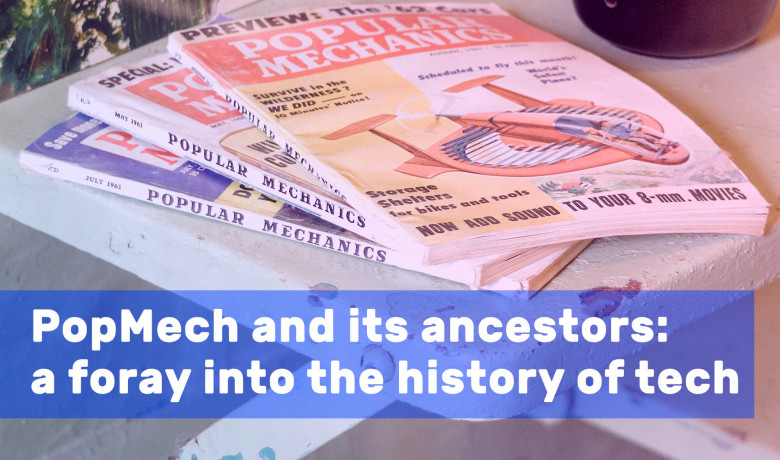
Many of us grew up reading a classic, that was a staple of many home libraries. However, it doesn’t seem to be as prominent as it once was. To understand the ongoing shift in tech coverage, we need to explore its roots.
I like to read the memoirs of people who observed the computers taking first steps in their countries. They always have something romantic about them. Usually, such memories are greatly influenced by the circumstances of that encounter with his first computer: it could be the workplace, or education establishment, it could be just an unexpected and random thing.